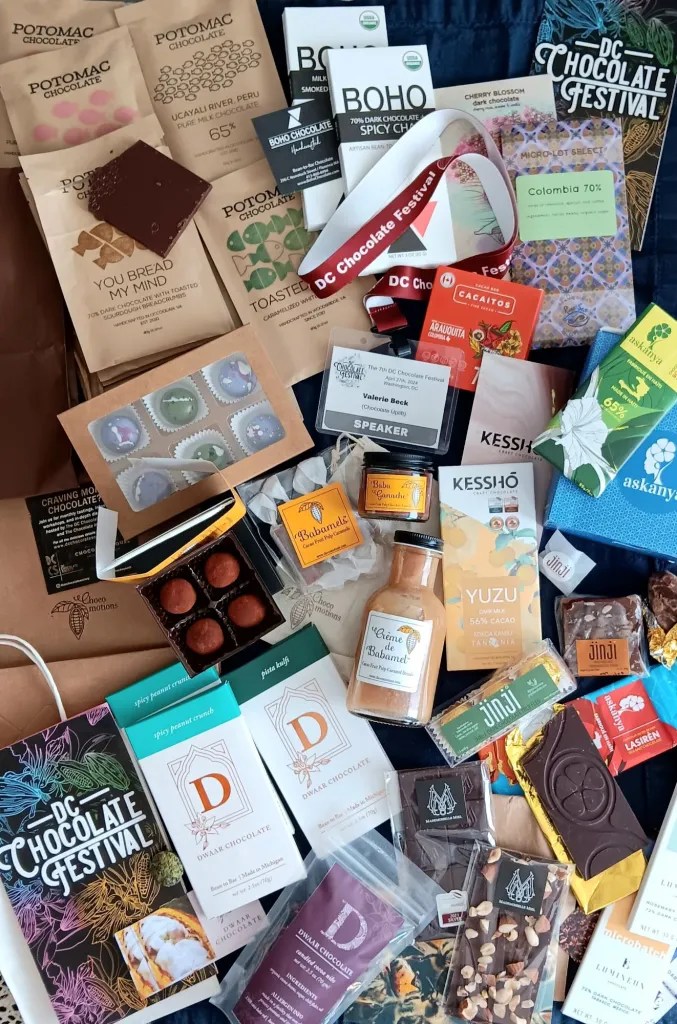
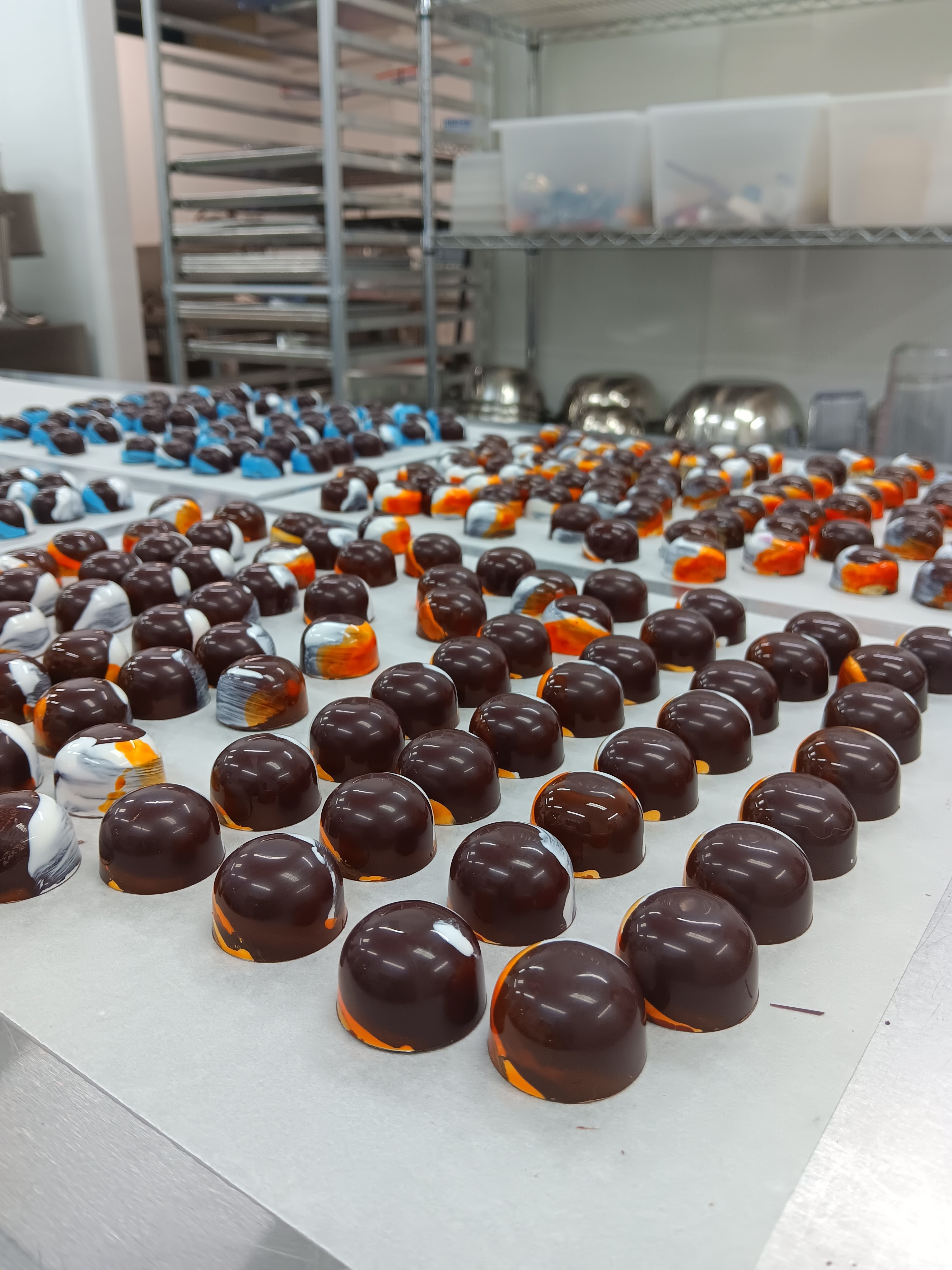
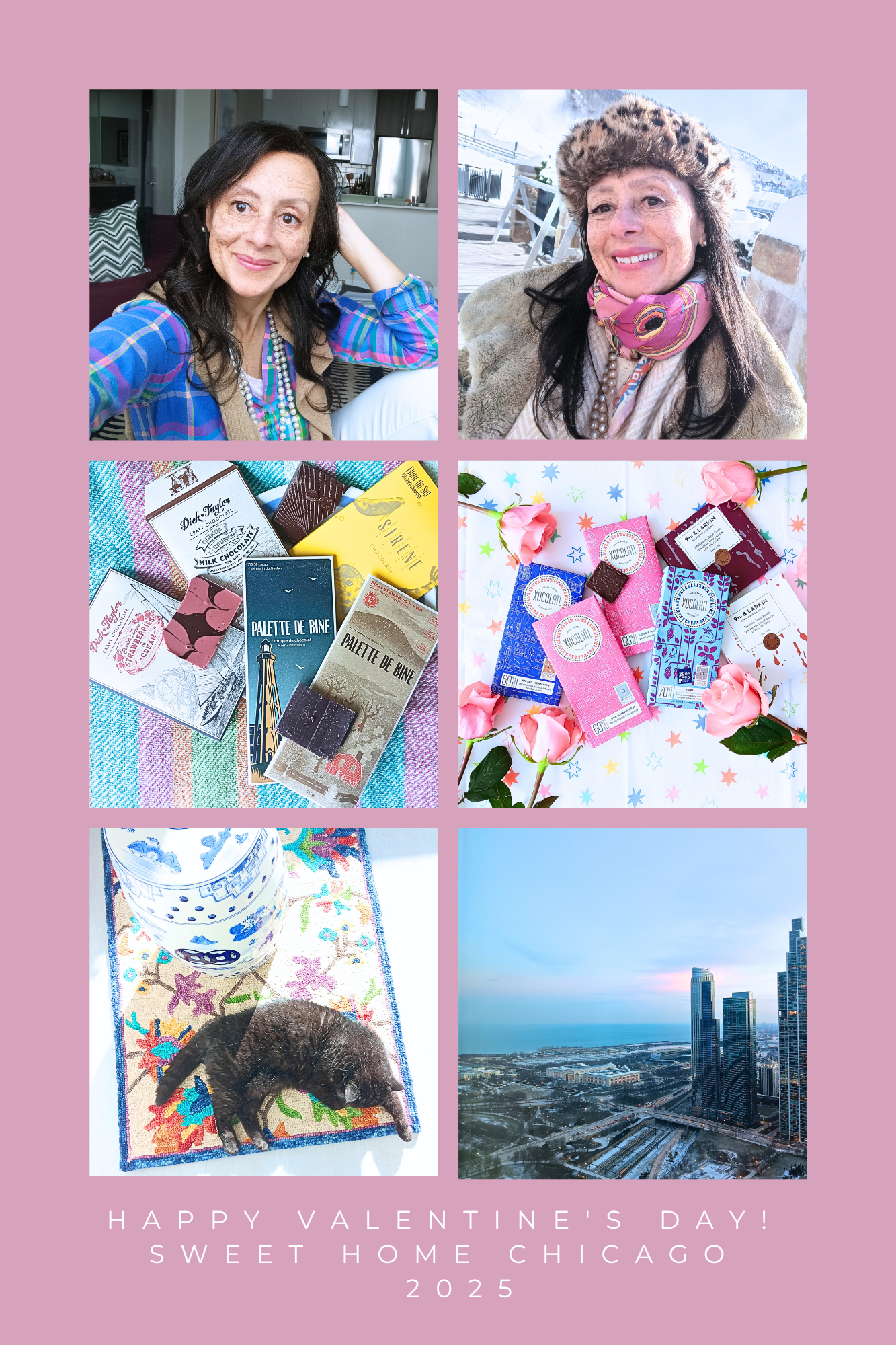
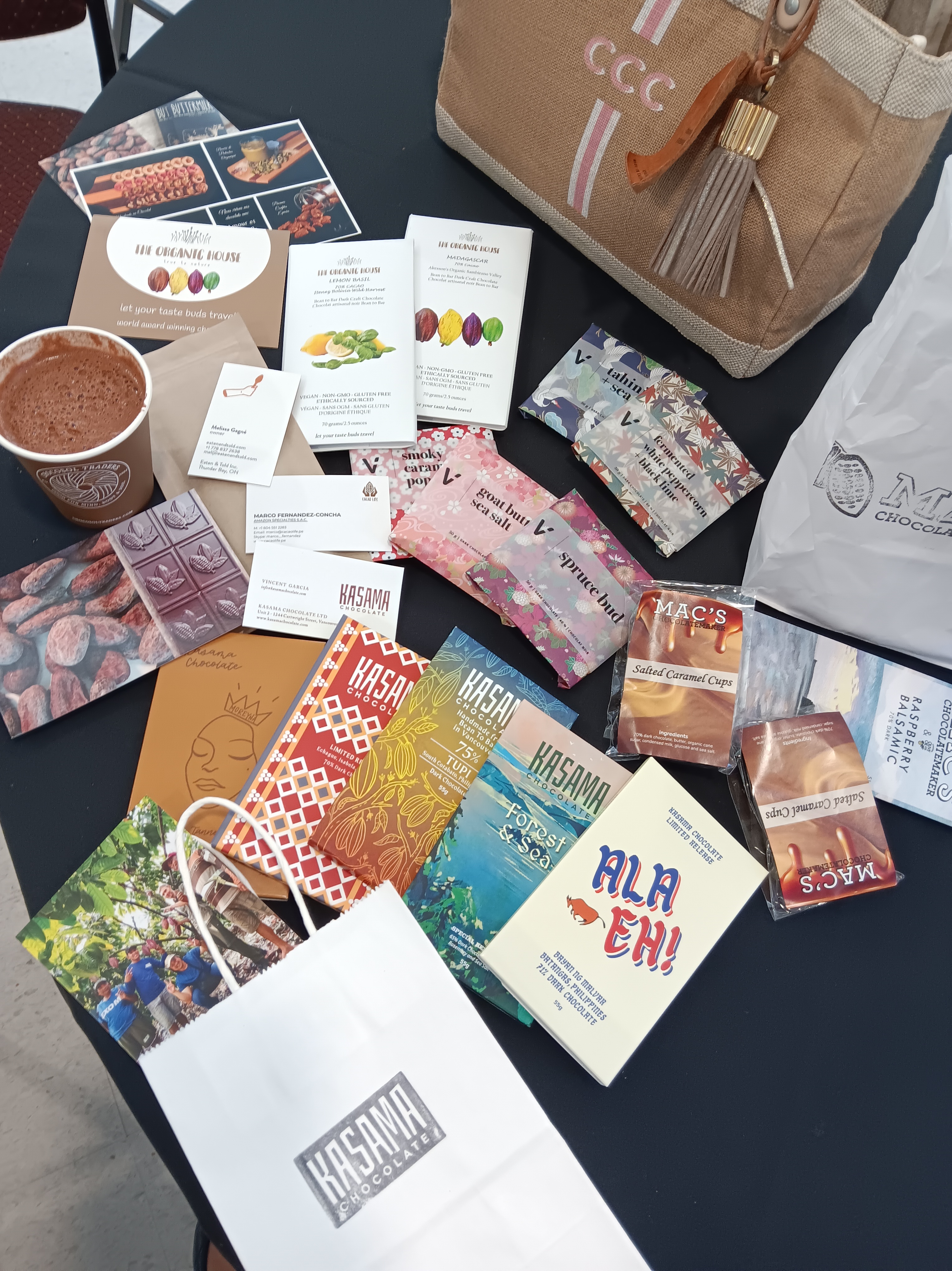
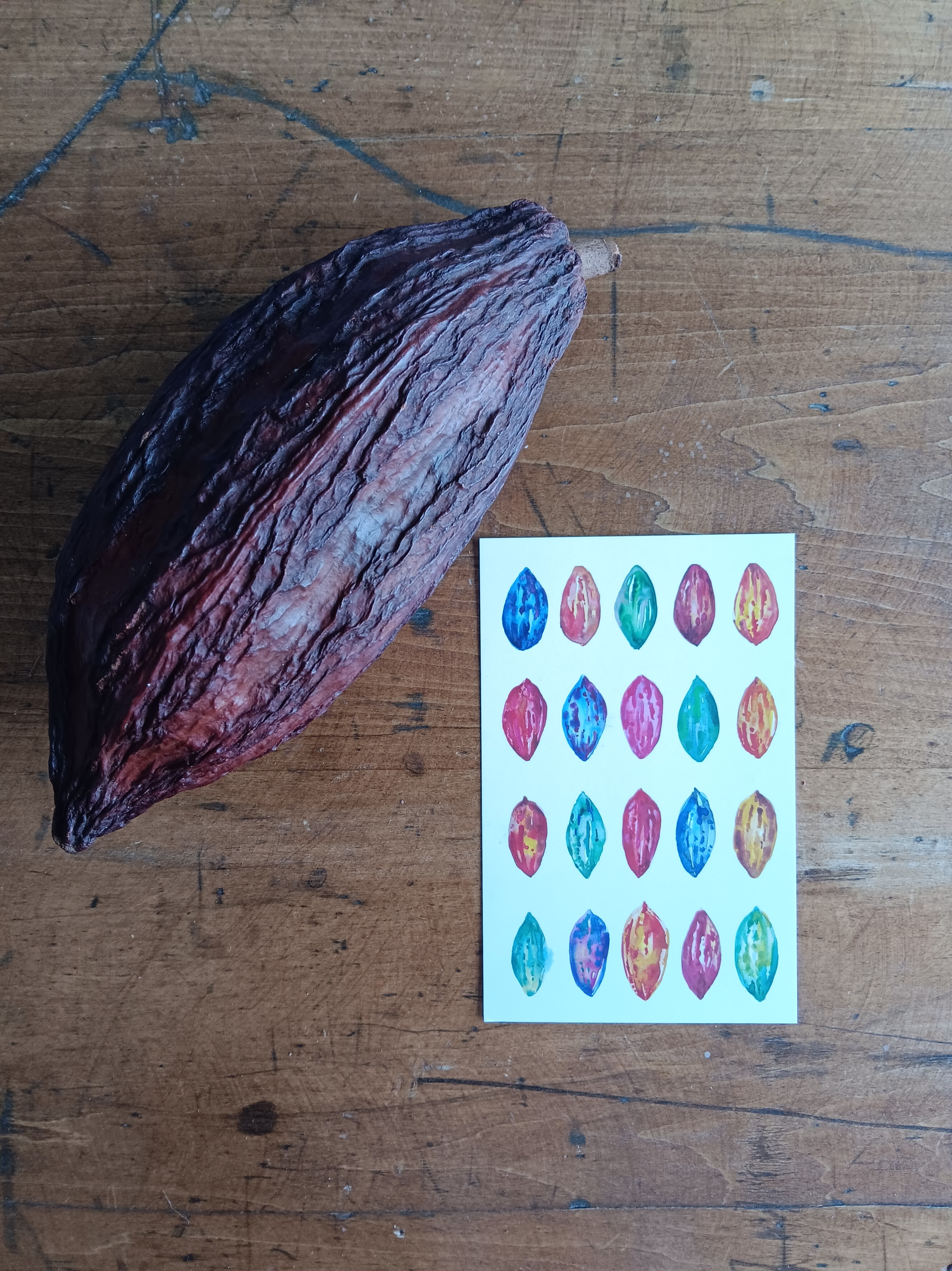
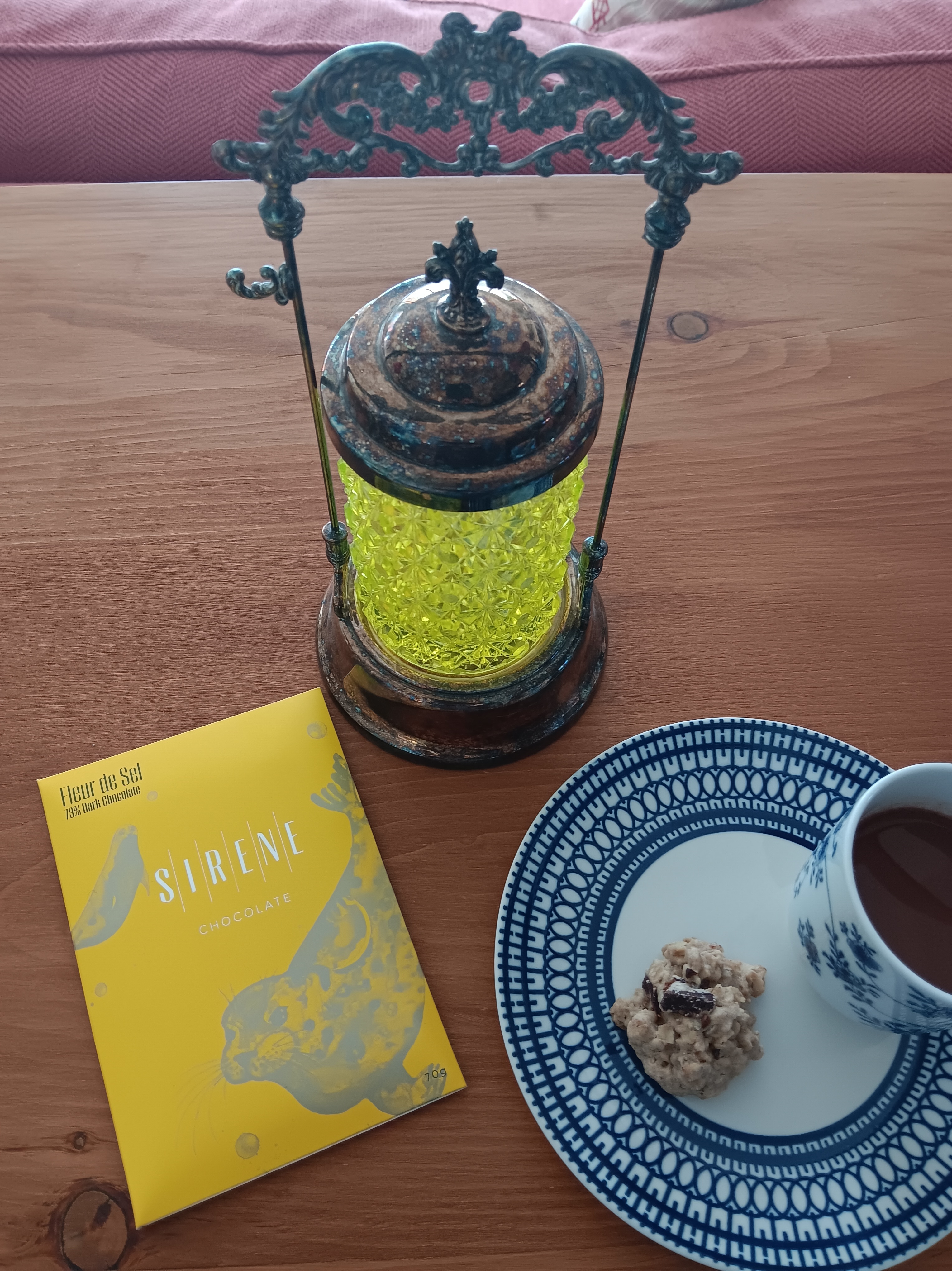
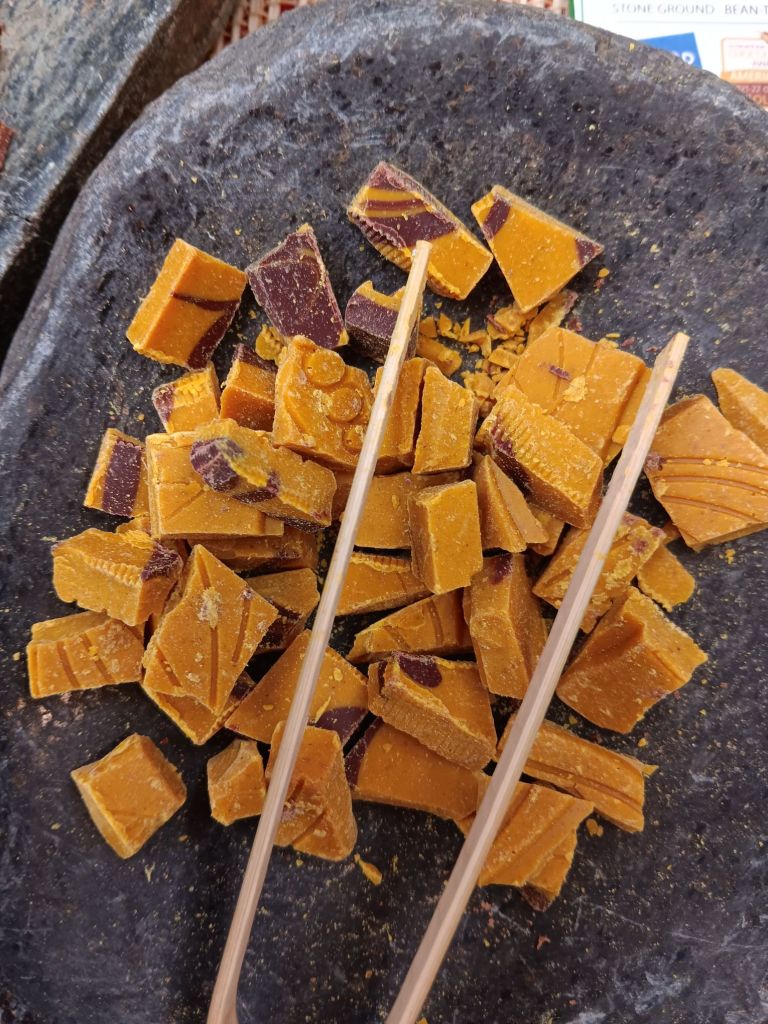
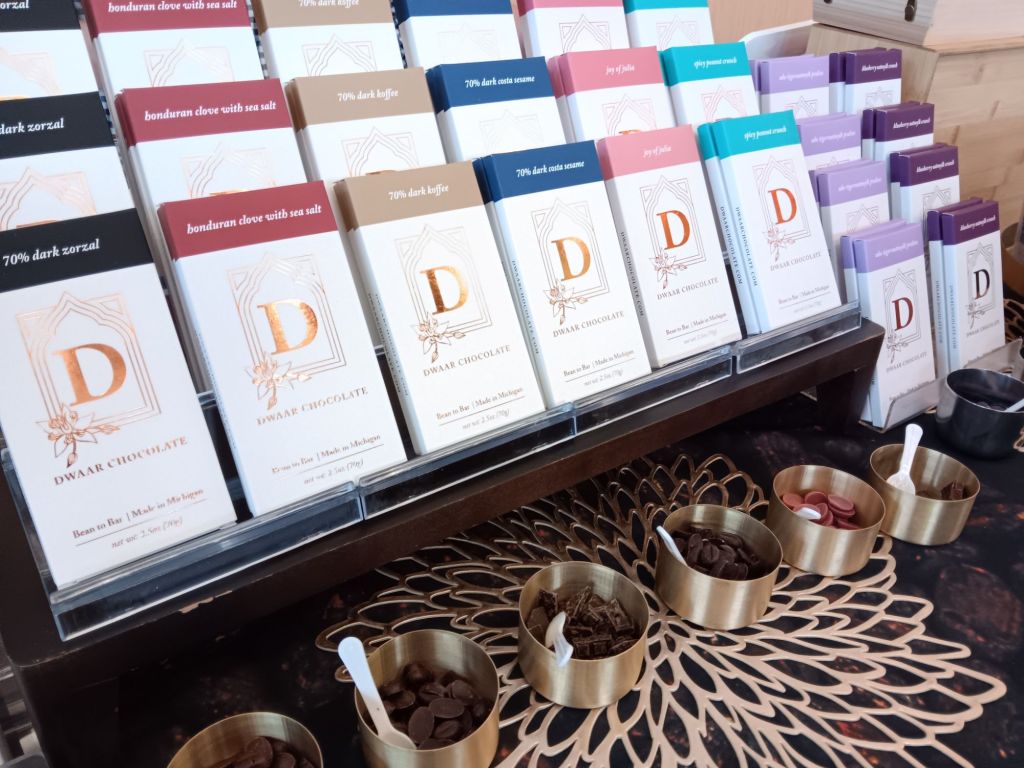
I’m can hardly wait to give a talk and tasting at the DC Chocolate Festival again this year; look what came back with me from last year’s Festival!
Hi there!
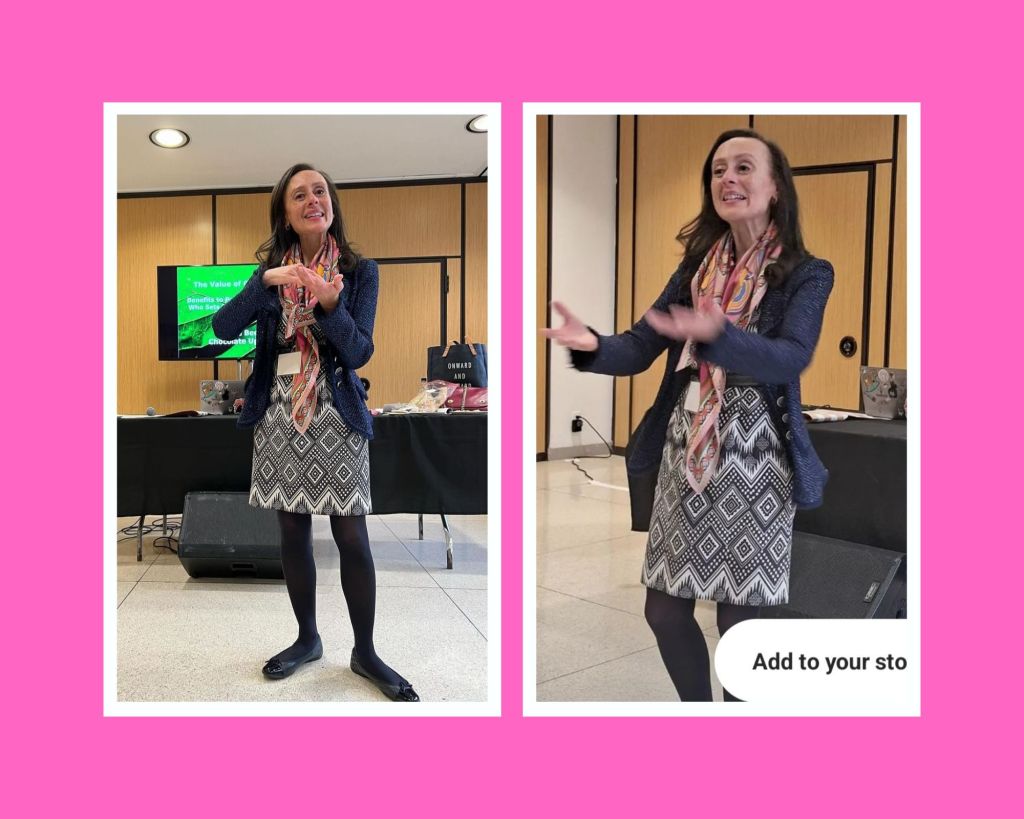
I am honored and excited to give a chocolate talk and tasting Friday, April 25, 2025, at 2:30pm, at the DC Chocolate Festival!
I’ve titled my talk “Artisanal or Industrial, Food or Fake? Making Conscious Chocolate Choices,” and if you are in DC, I hope you will join me in person for a fun, fascinating, and delicious time! In any case, I’ll post my slides here soon, and will post photos after the event.
Event details:
Date: Friday, April 25, 2025
Time: 2:30pm ET for my talk; vendor hall open Friday from 2:00pm – 5:30pm and 6:00 – 9:00pm, and Saturday from 10:30am – 2:00pm and 2:00pm – 5:00pm
Location: La Maison Française, Embassy of France in the U.S., Washington, DC, 4101 Reservoir Rd NW 20007
Hosted by: The Chocolate House DC — @dcchocolatefestival
2:30 pm – 3:15 pm Valerie Beck (founder, Chocolate Uplift and Chicago Chocolate Tours) Title: Artisanal or Industrial, Food or Fake? Making Conscious Chocolate Choices Chocolate can be a standardized bulk ingredient in an industrial product with a tainted supply chain, or an exquisite and ethically created specialty that delivers complexity, flavor, and health, while uplifting people and planet. How to tell the difference? We’ll look at how cacao is harvested, fermented, dried, roasted, ground, and developed into finished chocolate, and at how to choose chocolate consciously by deciphering labels, as we enjoy a tasting trip from cocoa bean to chocolate bar. We’ll focus on the rise of “craft” or “bean-to-bar” chocolate, and sample the work of small-batch chocolate makers, as we peer back into the history and ahead to the future of one of the most beloved foods in the world.
Before speaking at the Ottawa Chocolate Show, October 2024
Hello, bonjour!
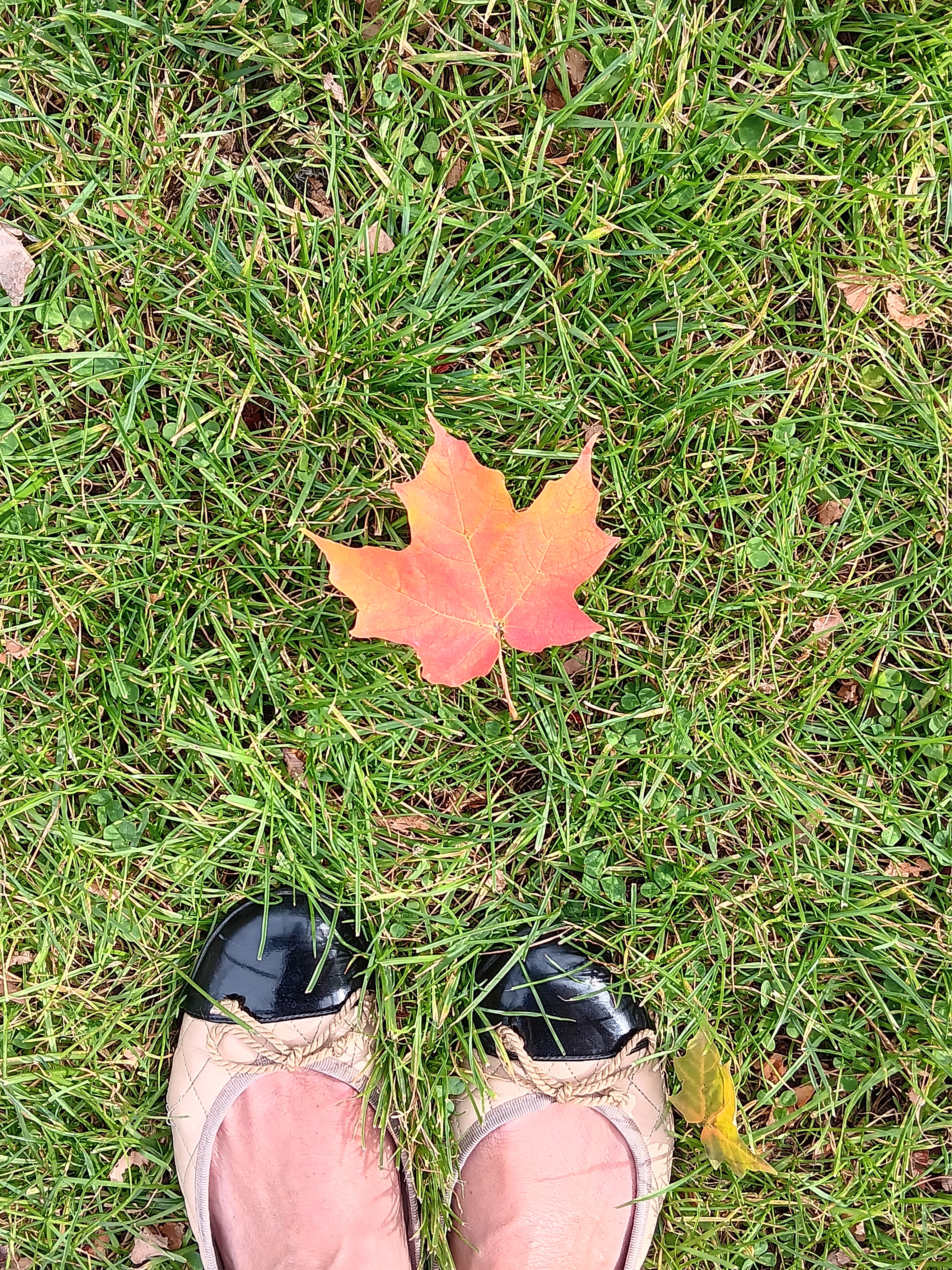
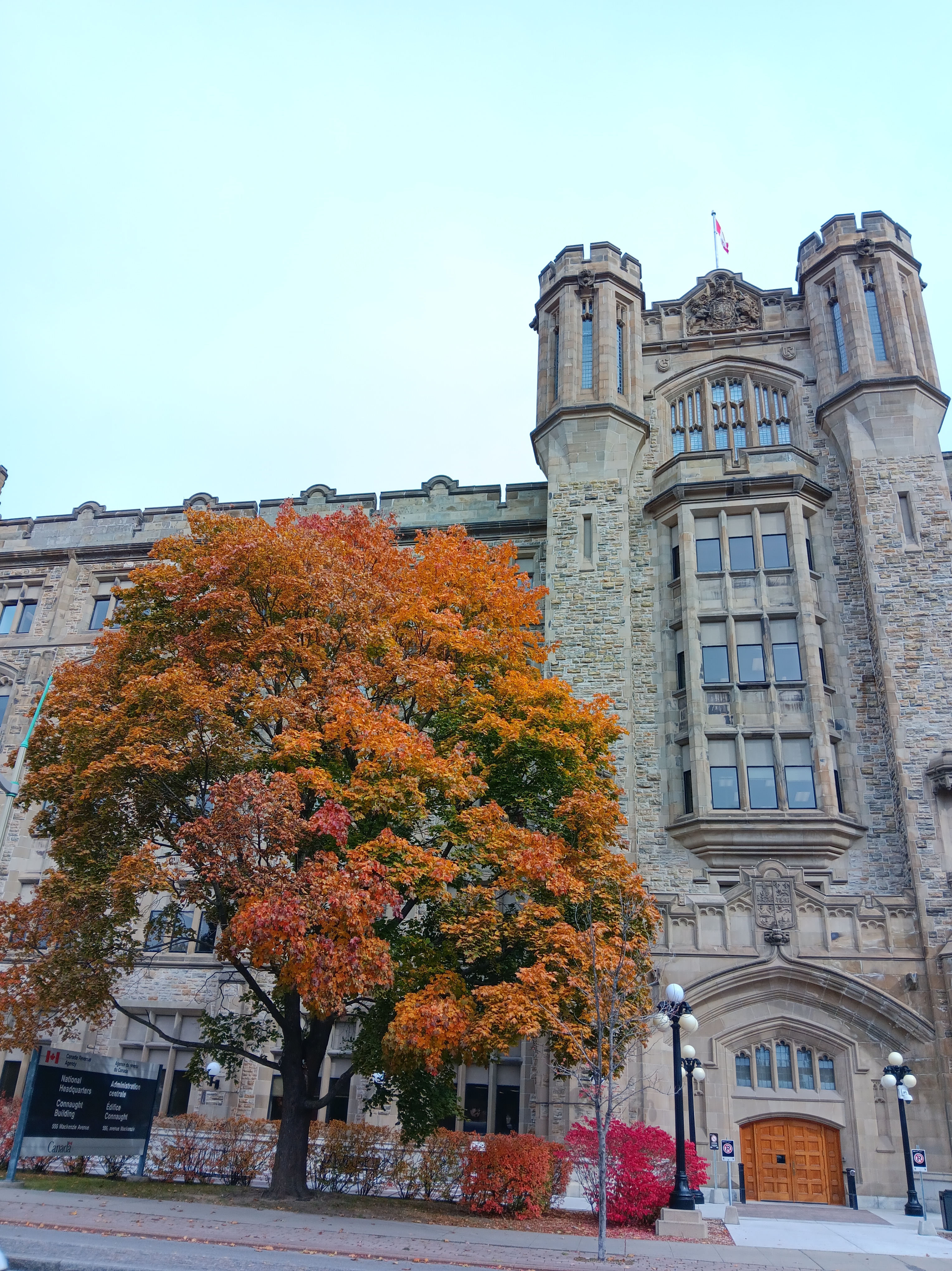
That is, “hi” Ottawa style, as friendly greetings in Canada’s capital city tend to encompass the English-speaking and Francophone approaches.
I have visited the beautiful country of Canada approximately a dozen times. At least four visits were during family vacations from Chicago when I was a child; the drive from Chicago to the Canadian border at Sault Ste Marie, Michigan, takes around seven and a half hours. My mother told me today, when I asked for her recollections, that for my first visit, before I was one year old, she bought me a fluffy pink snowsuit to wear. She added that later, I waded in Lakes Ontario, Huron, and Superior from the Canadian sides, just as at home I splashed in Lake Michigan. My love of the immense saltless seas that are the glorious Great Lakes began early and expanded, just like my love of Nature’s perfect food: chocolate!
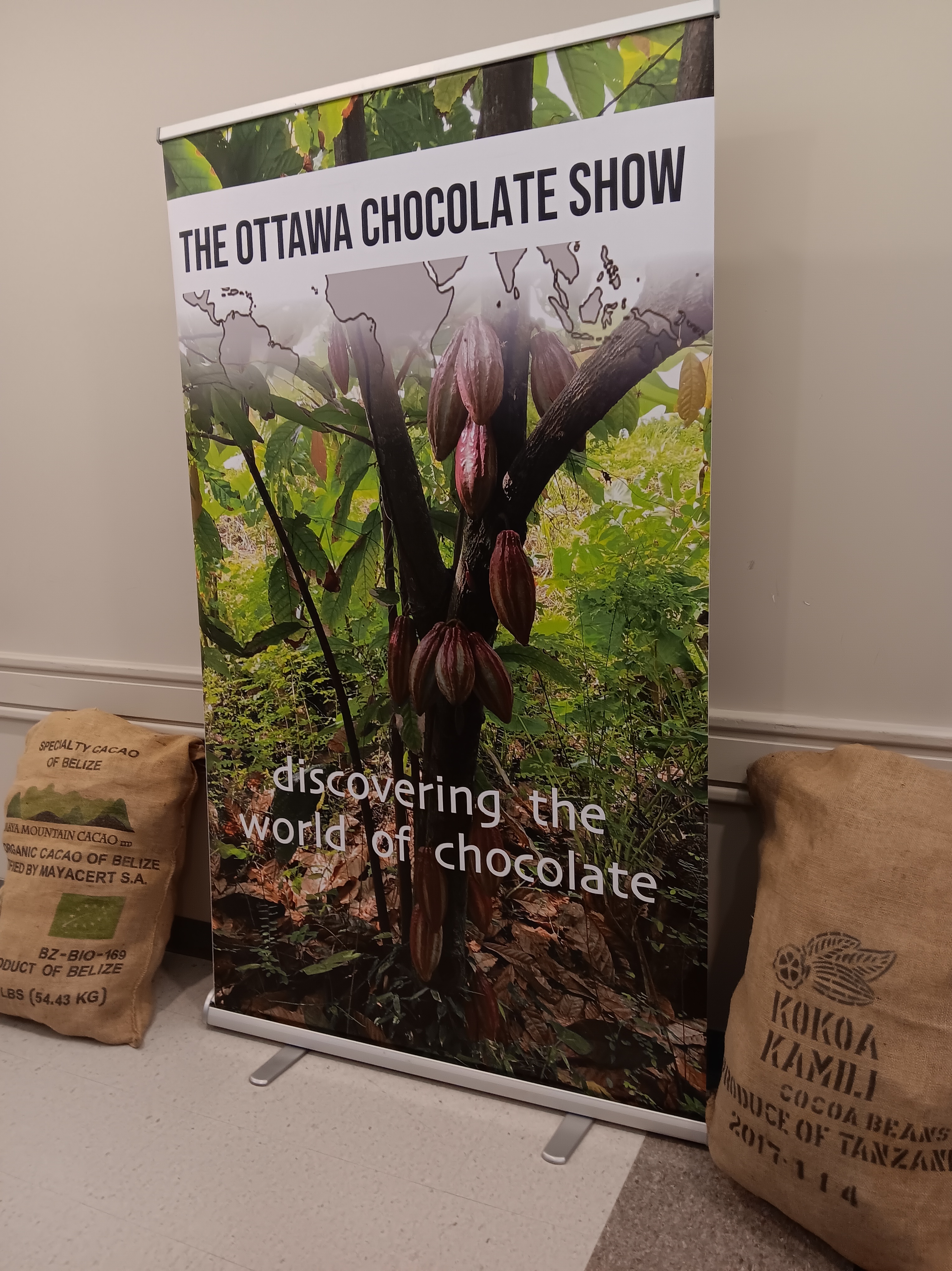
I visited Canada most recently to speak at the Ottawa Chocolate Show in October 2024, and to rent a lake house in the woods of the Laurentian Mountains north of Montreal for six weeks after that! (Two summers ago, I visited Canada accidentally for fifteen minutes during a harmless mishap at the Minnesota border; a story for another day! : )
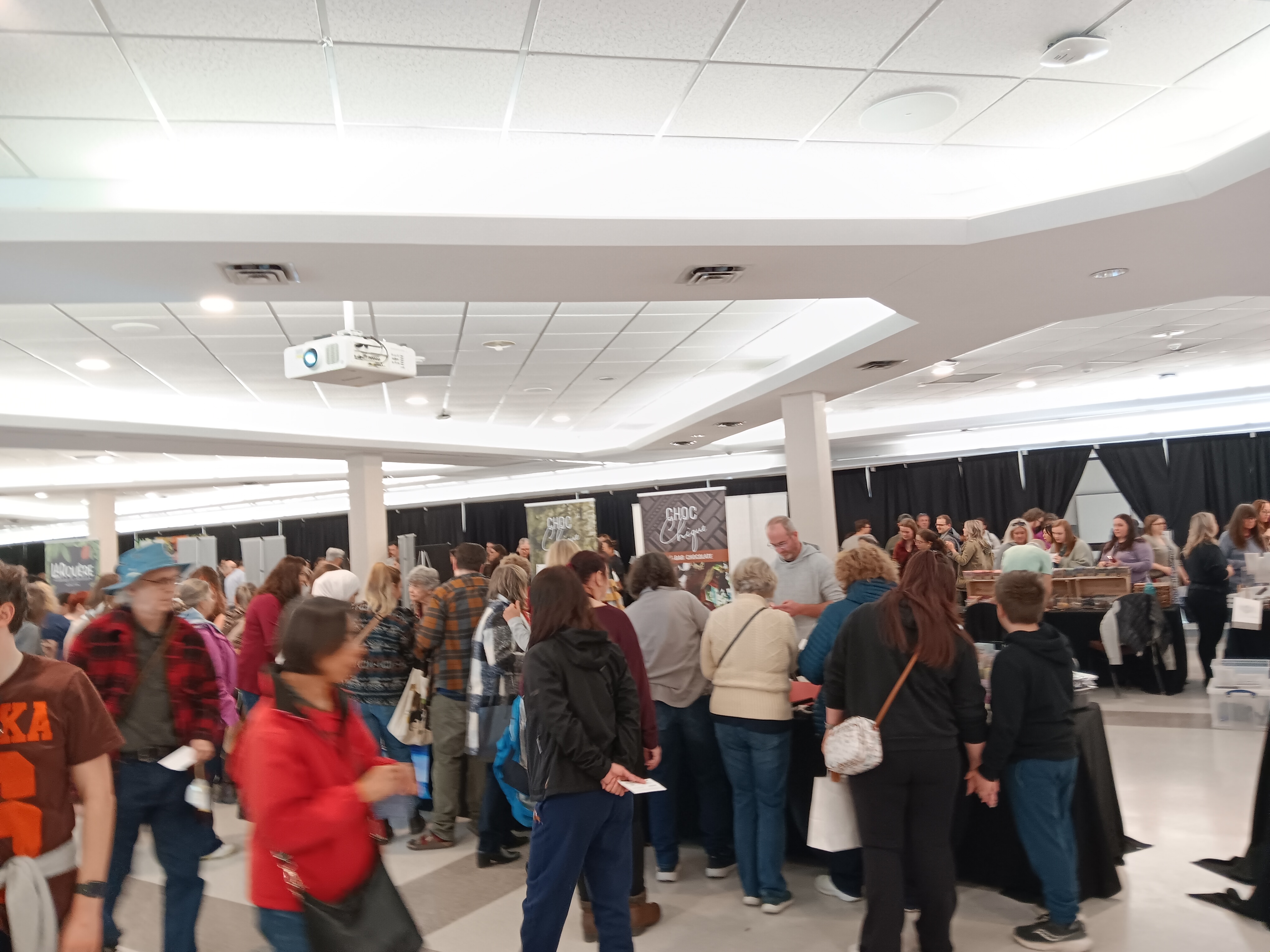
The Ottawa Chocolate Show consisted of an impressive array of Canadian craft chocolate makers, confectioners, and chocolate enthusiasts. I felt honored and grateful to be part of the event and the excitement by speaking on how to make ethically conscious chocolate choices, and sharing delicious chocolate from both sides of the border! Here are the slides from my talk, as I promised my fantastic audience members.
I hope you will enjoy scrolling below for text and photos describing and depicting moments from awesome Ottawa and captivating Canada.
Thank you!
Valerie (Valérie en français)
Part I. At the Ottawa Chocolate Show with Canada Friends / Chocolate Wizards
What did I find at the Ottawa Chocolate Show? An almost incredibly large abundance of top-notch craft chocolate made in Canada, and a heart-warming plentitude of top-notch Canadian and other friends old and new!
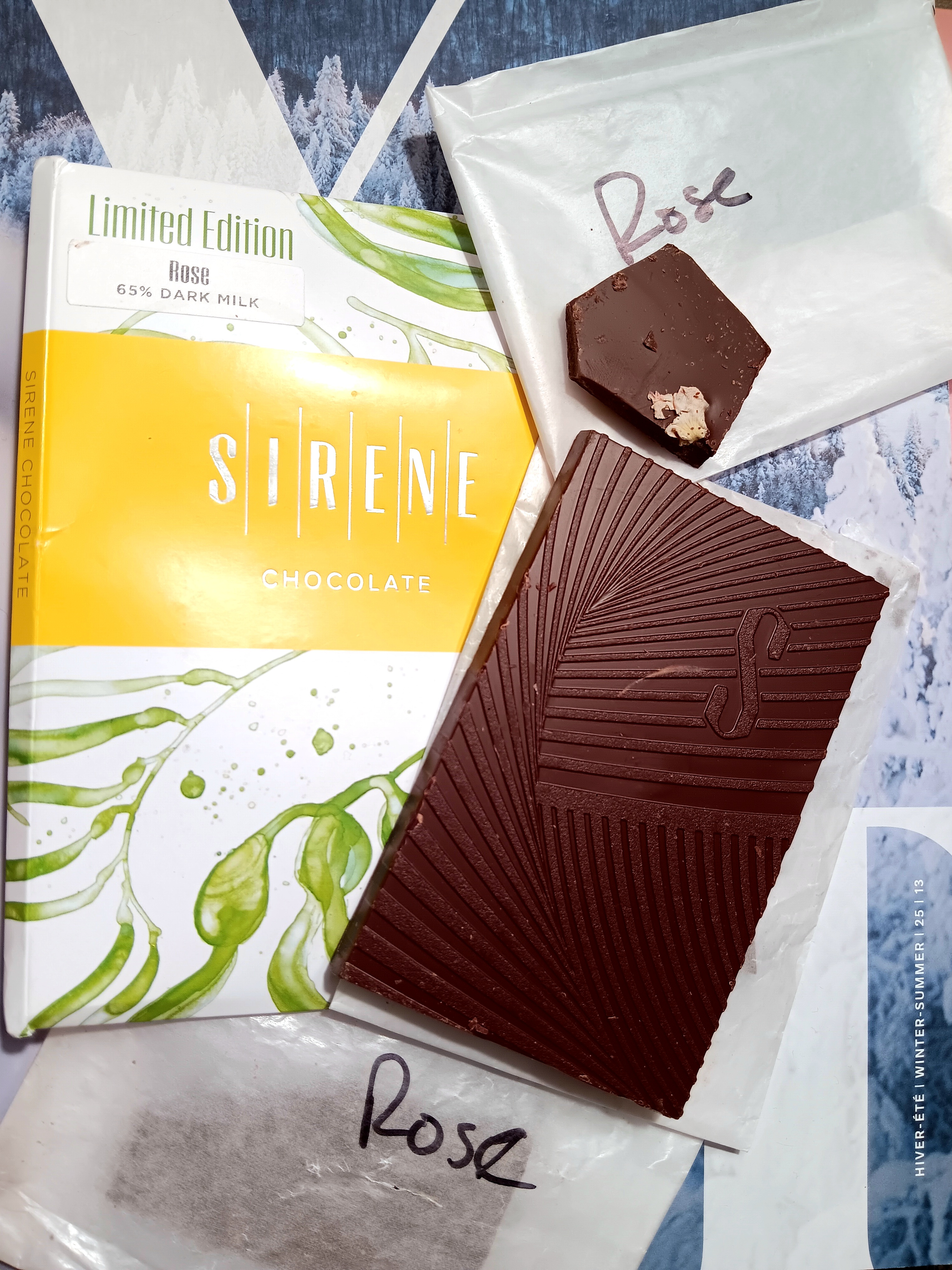
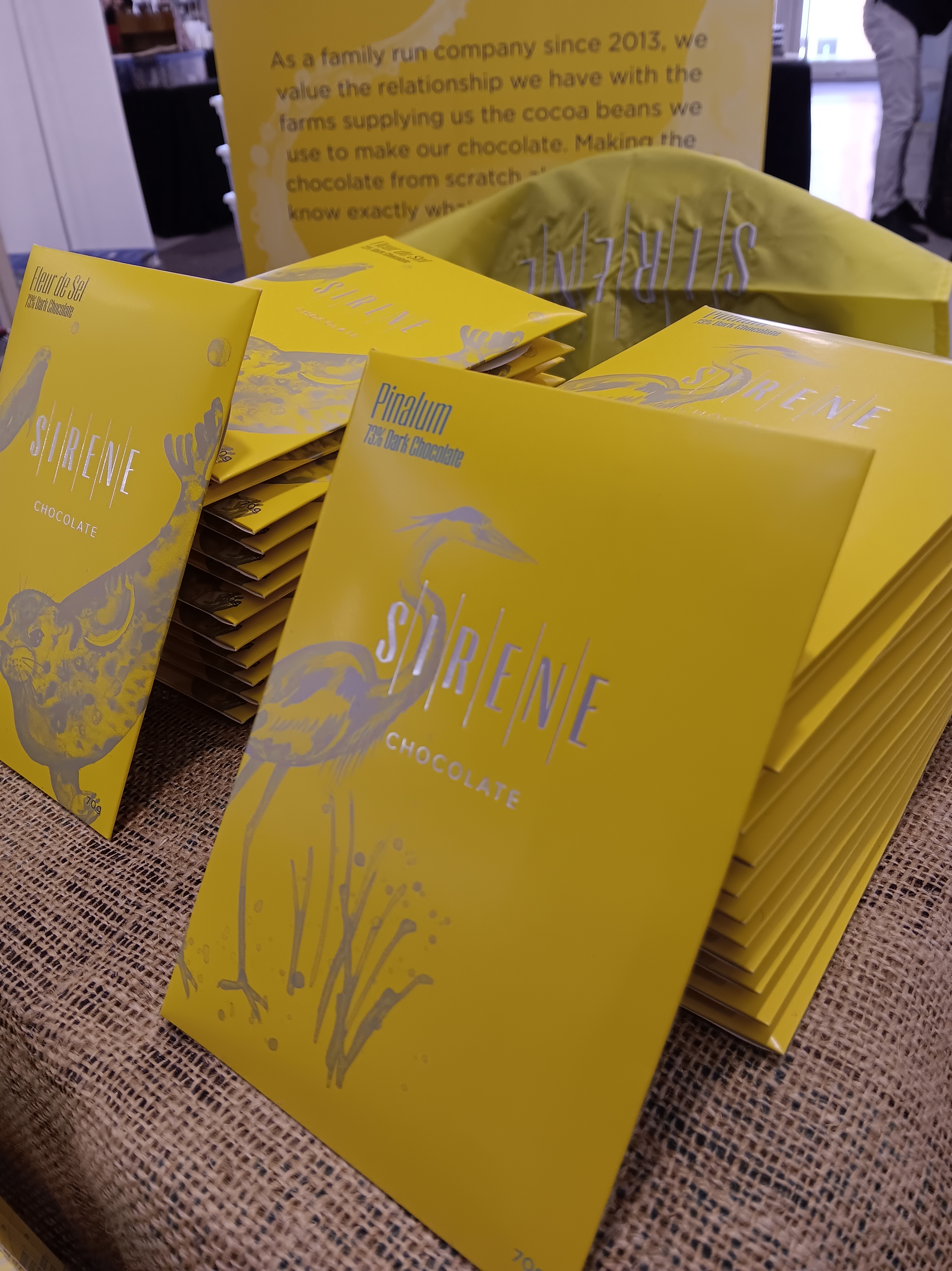
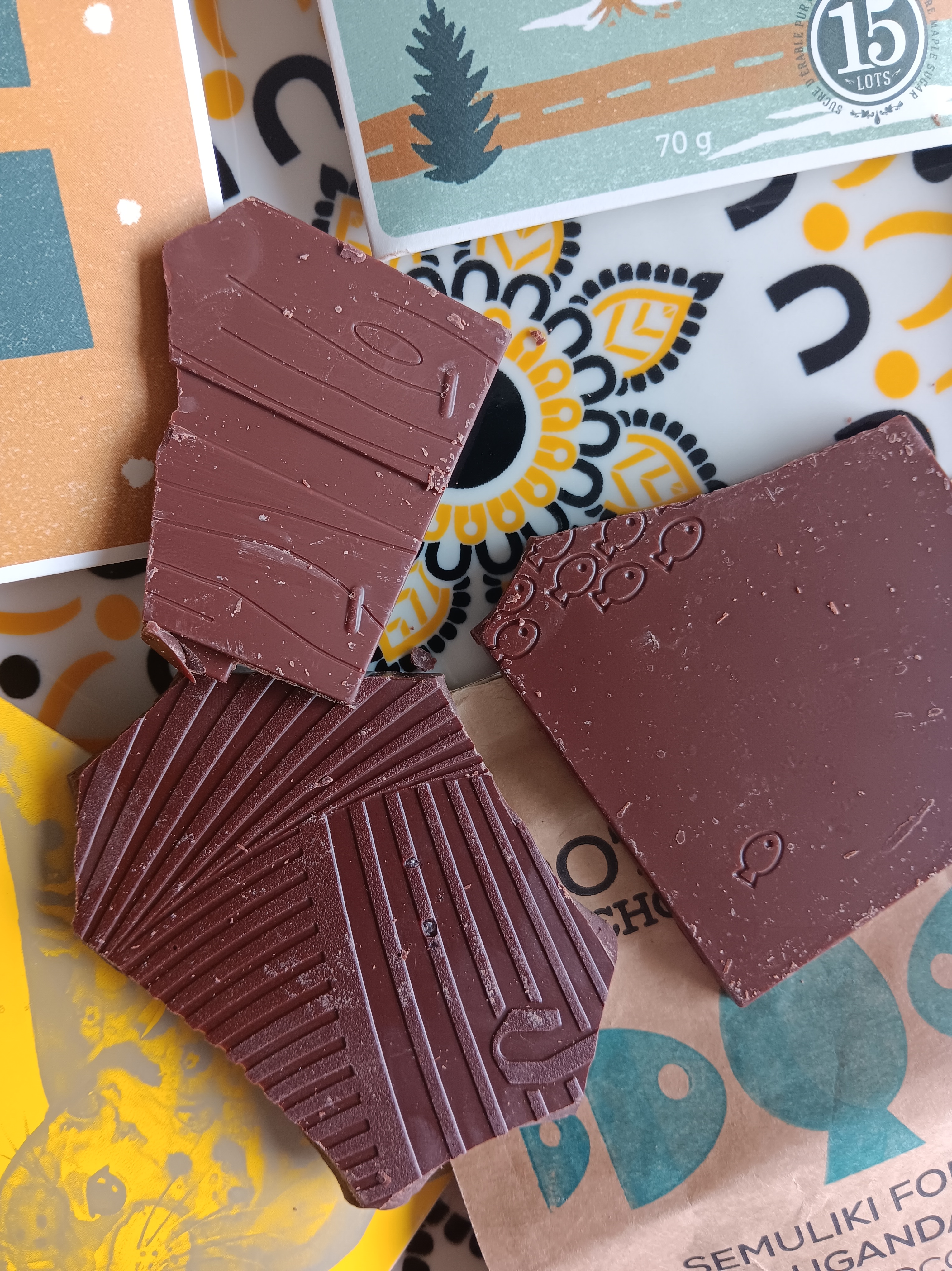
It was a delight to see my dear friend and first-class bean-to-bar chocolate maker Taylor Kennedy of sensational Sirene Chocolate at the Ottawa Chocolate Show, where he shared his exquisite new Nootka Rose dark milk chocolate bar. Yes: edible flowers are involved! Taylor crafts the chocolate from Semuliki Forest Uganda cacao, and adds flavor and petals from wild roses native to Vancouver Island. The chocolate has a pleasing complexity and is easy to eat; here come some of my signature non-flavor-related tasting notes:
The Sirene Nootka Rose bar tastes like a Golden Age pink-tinged afternoon dream in the dynamic yet comforting verdant heart of Nature.
The aroma brings out pink geraniums and roses on a sun-splashed windowsill.
A bar to love!
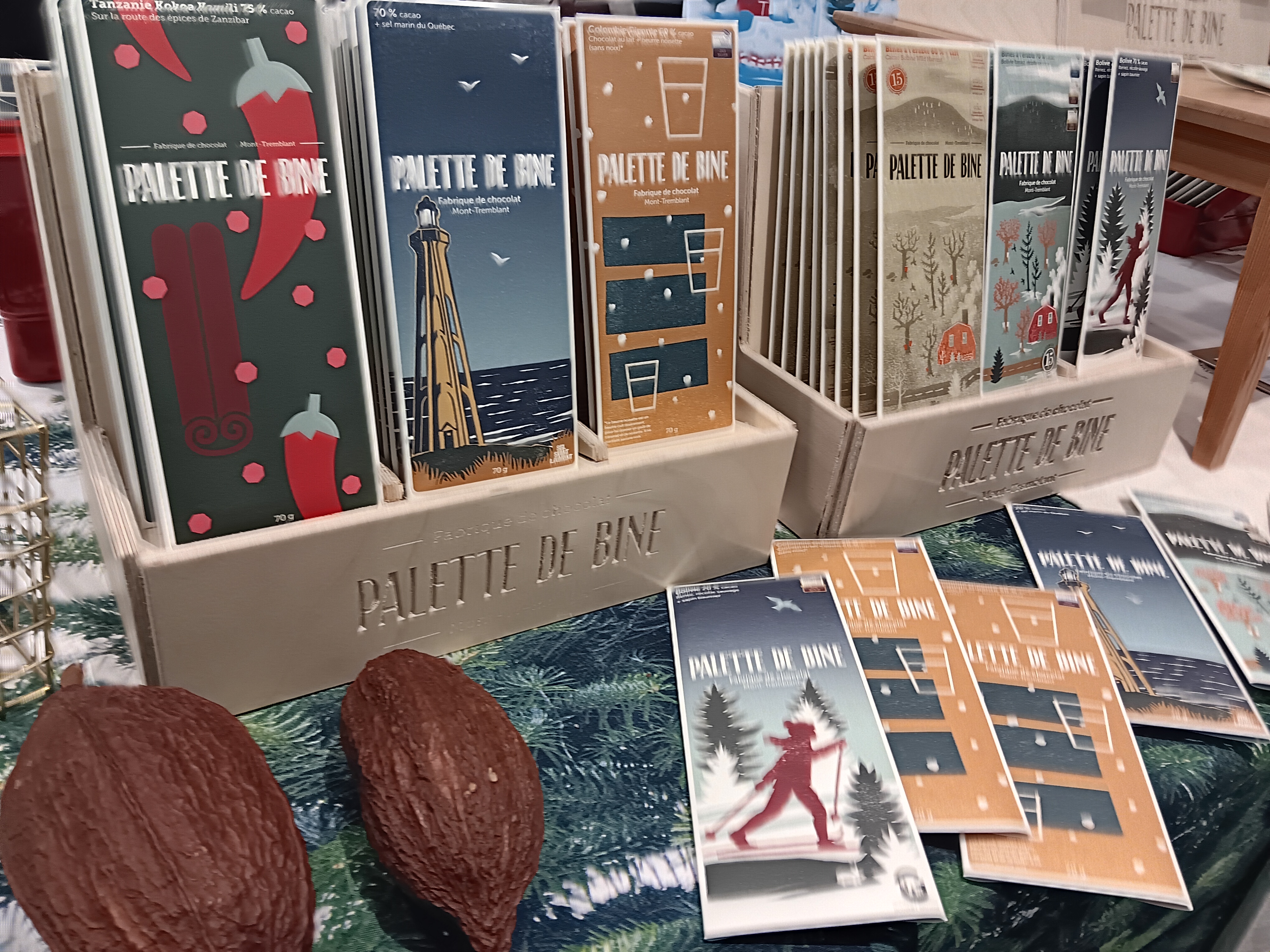
I was also thrilled to catch up with dear Christine Blais of refined yet down-to-earth Palette de Bine (who generously allowed me to present the world premiere of her deeply rich new Hawaii chocolate to my Ottawa audience; perhaps I will write a separate post about my visits to her bean-to-bar chocolate production space and shop).
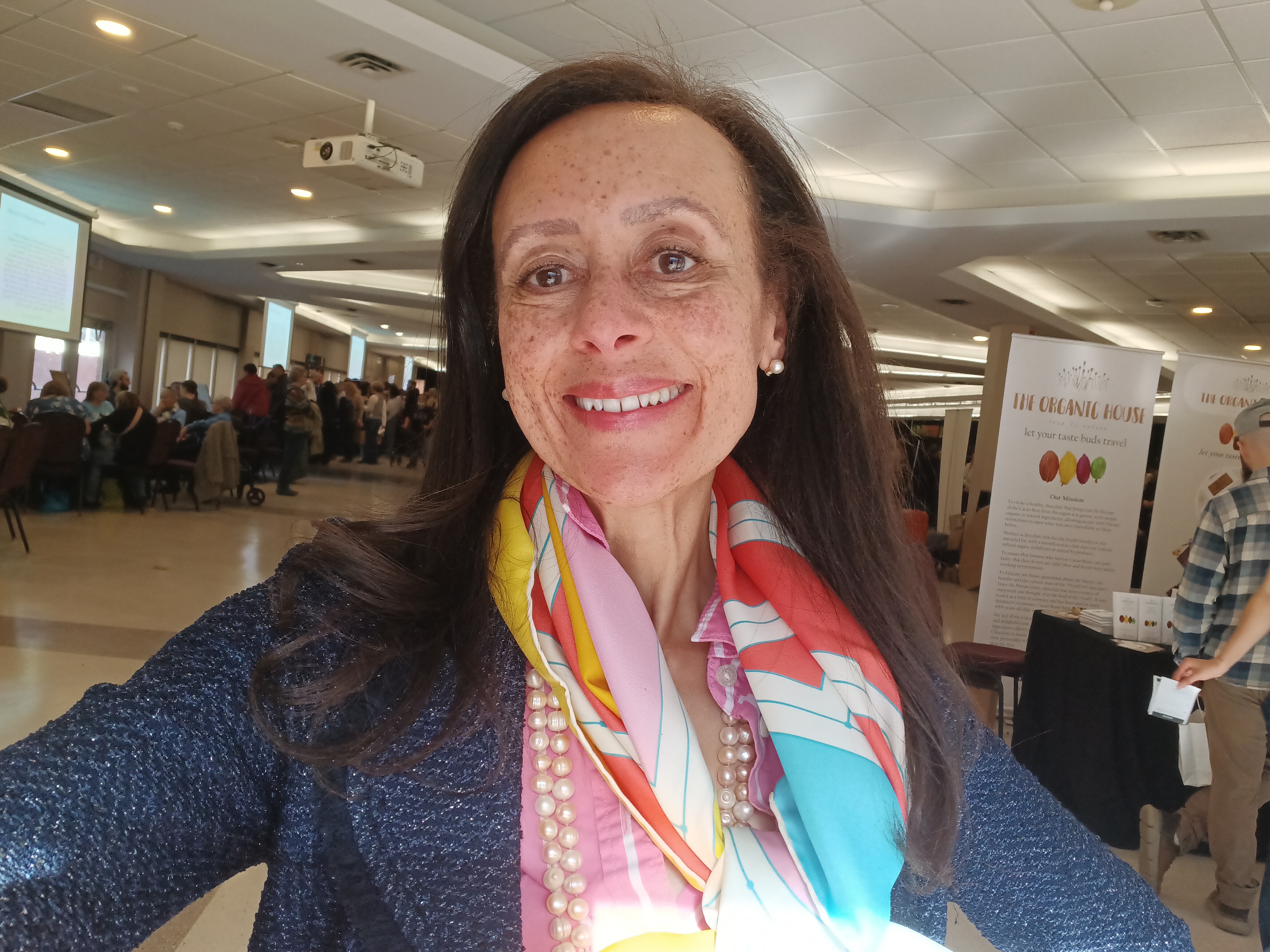
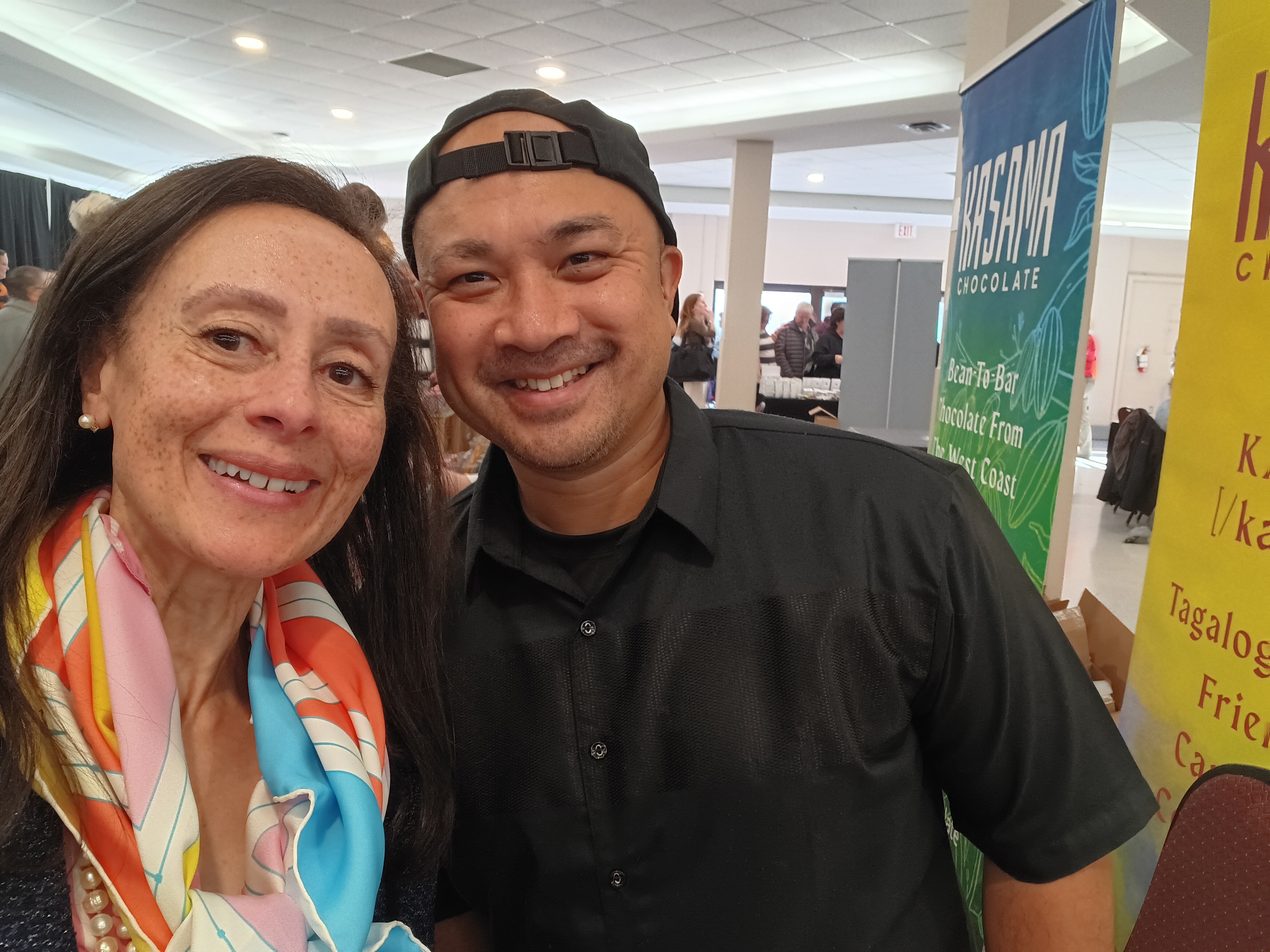
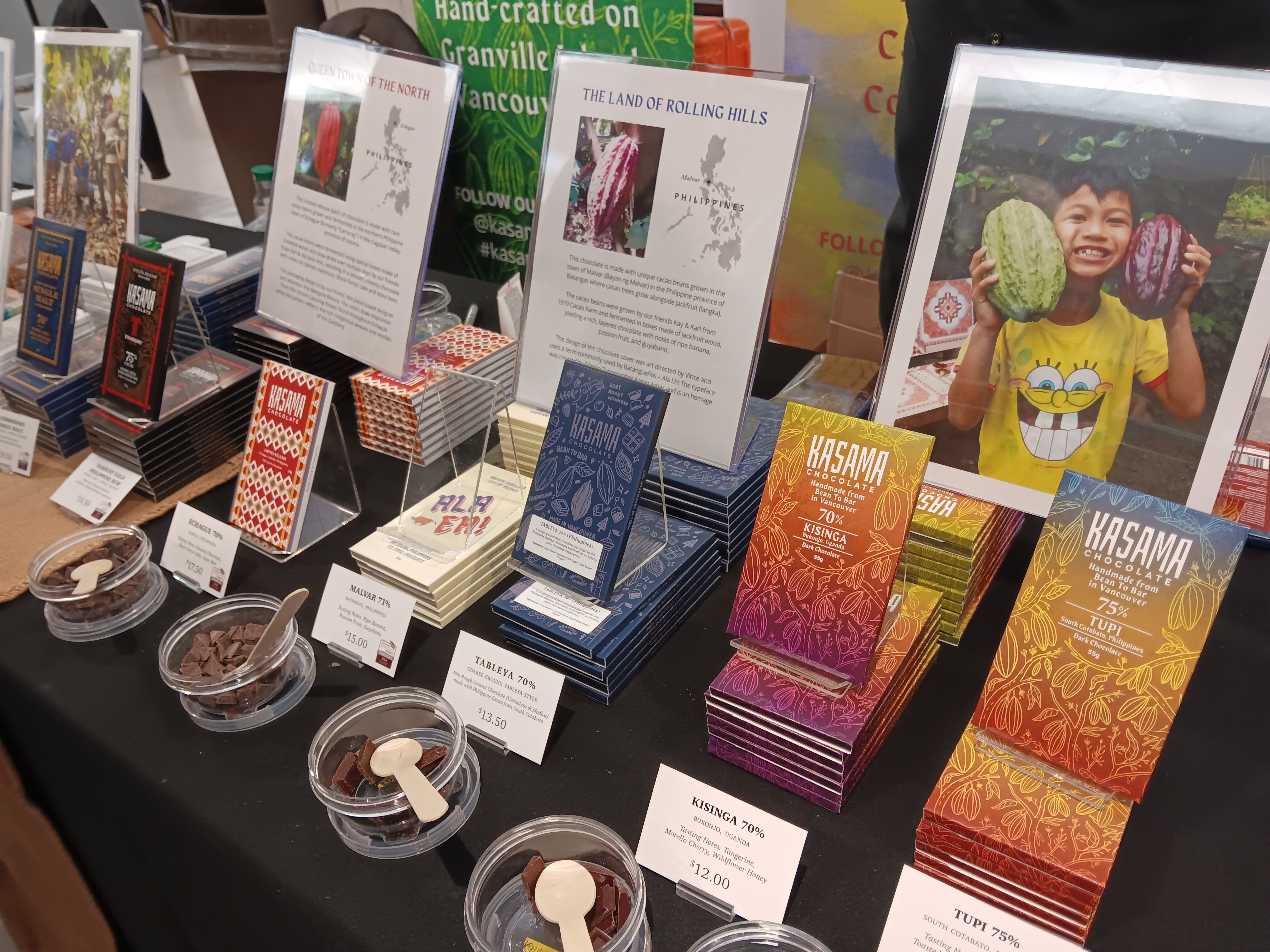
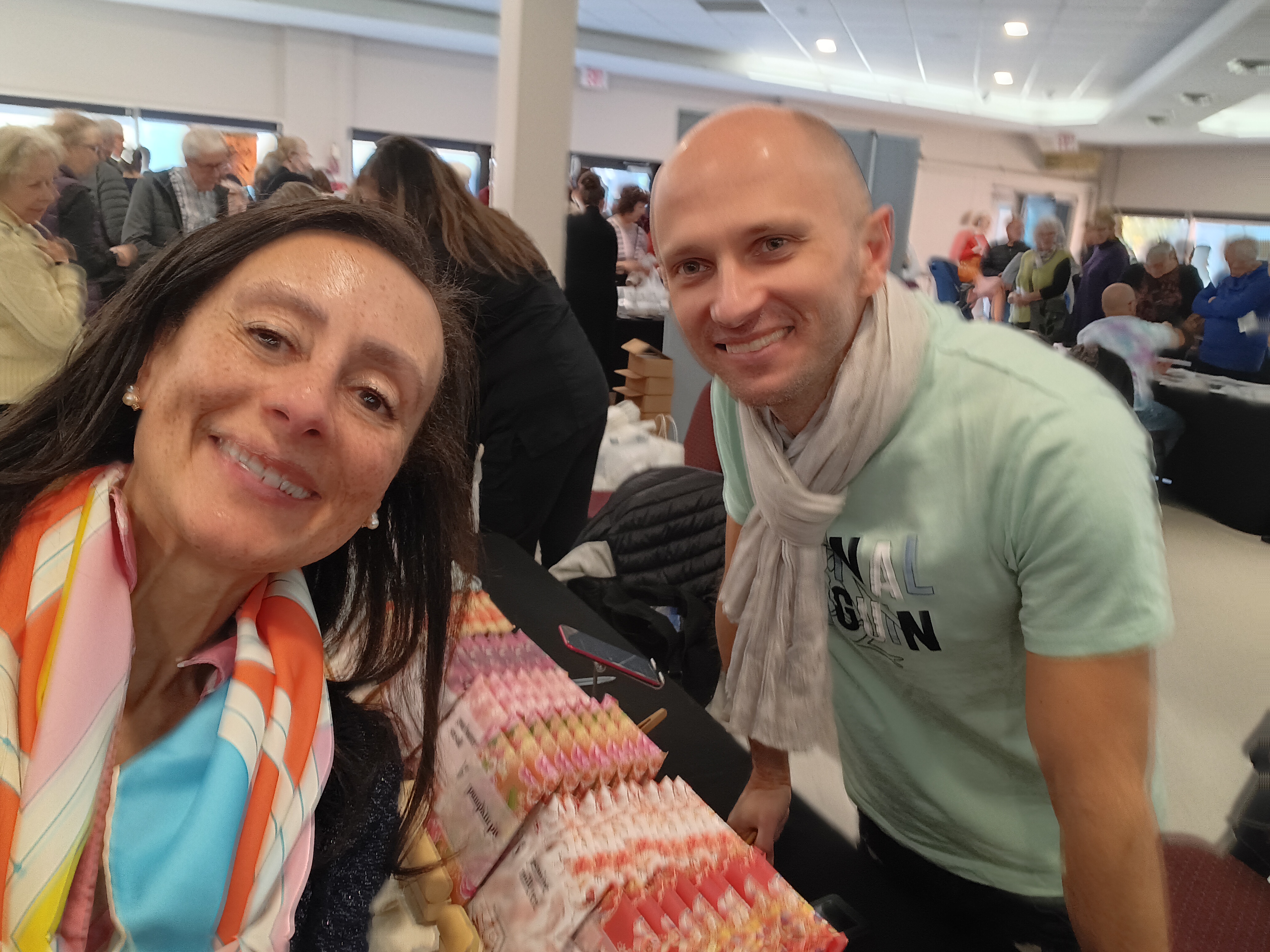
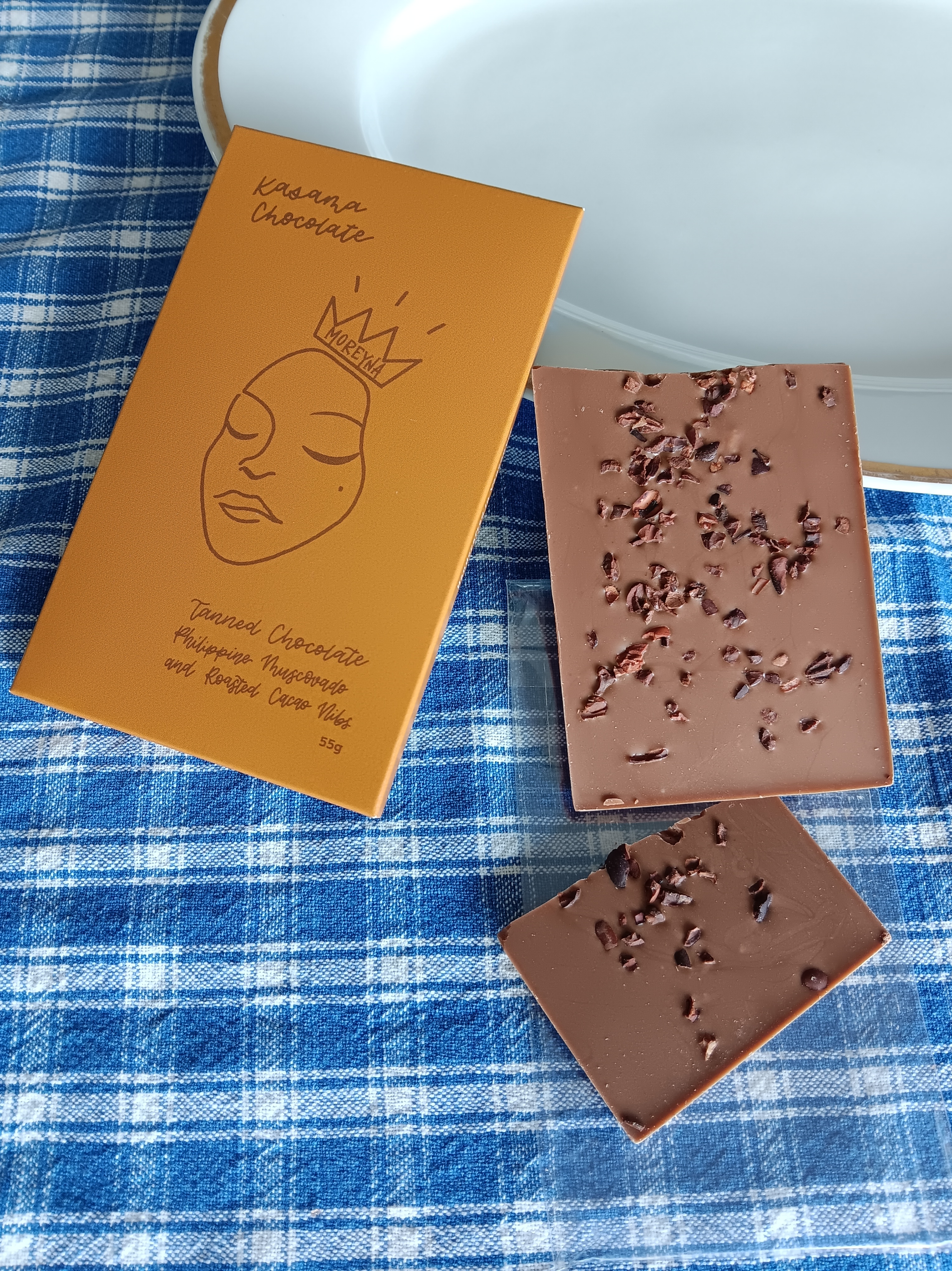
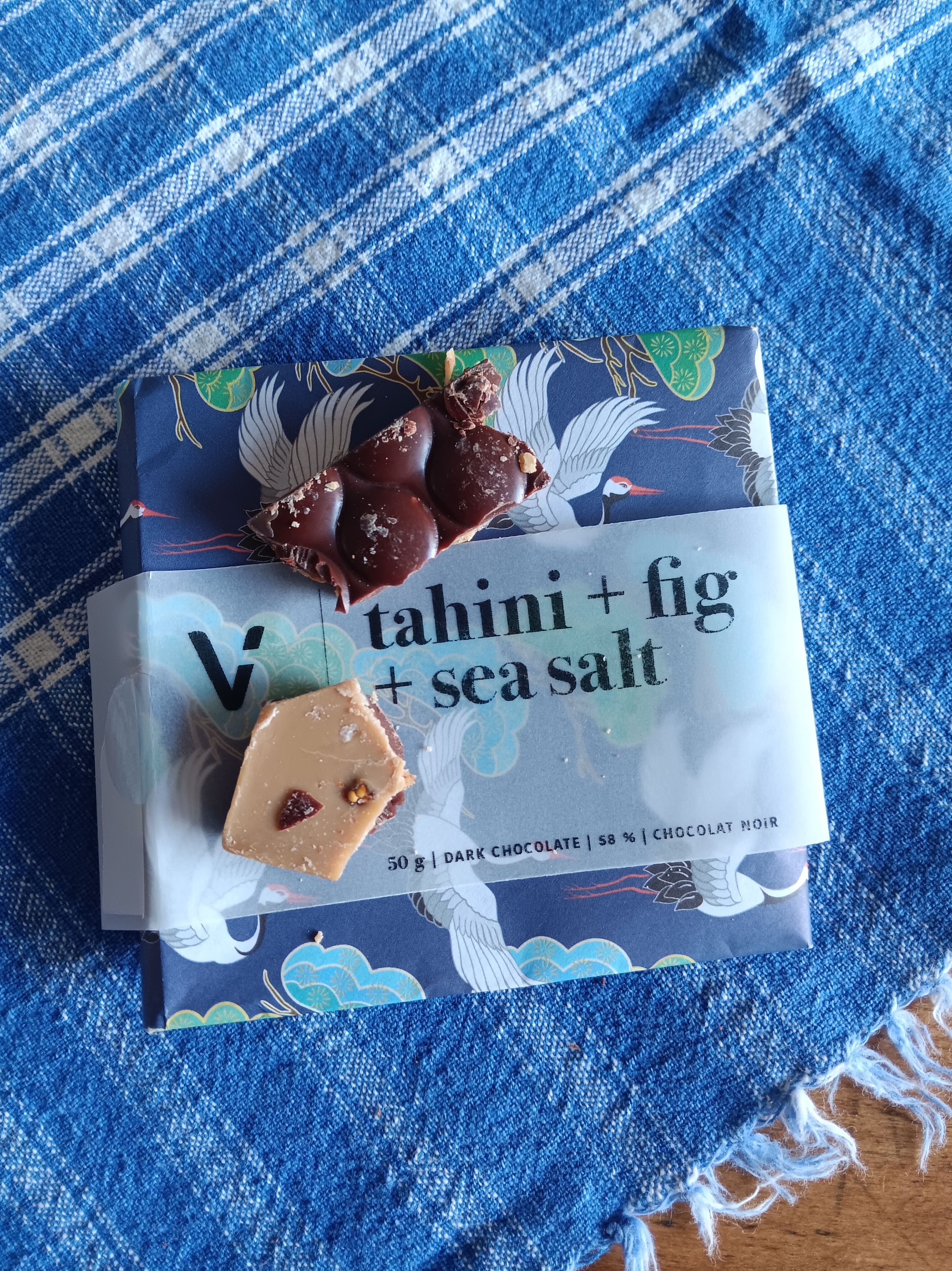
And I loved chatting with second-meeting-friend Vince of sophisticated yet fun Kasama Chocolate (could I stop eating Kasama’s unique Moreyna Muscovado “Tanned” White Chocolate with Roasted Cacao Nibs? I could not); and with online-turned-in-person-friend Serge of ultra-creative Vaka Chocolate (could I stop eating the tahini+ fig + sea salt dark/white chocolate bar? I could not)!
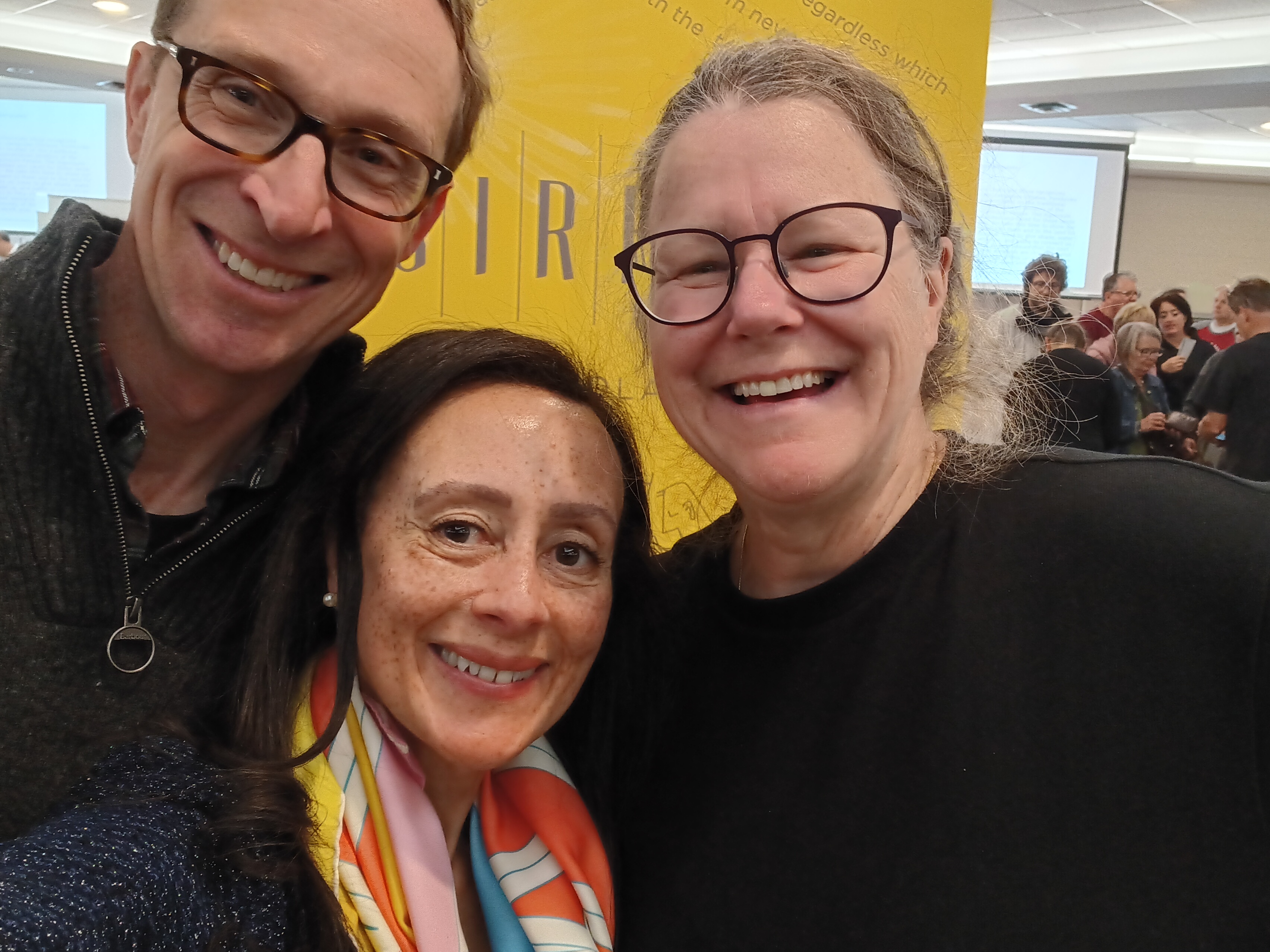
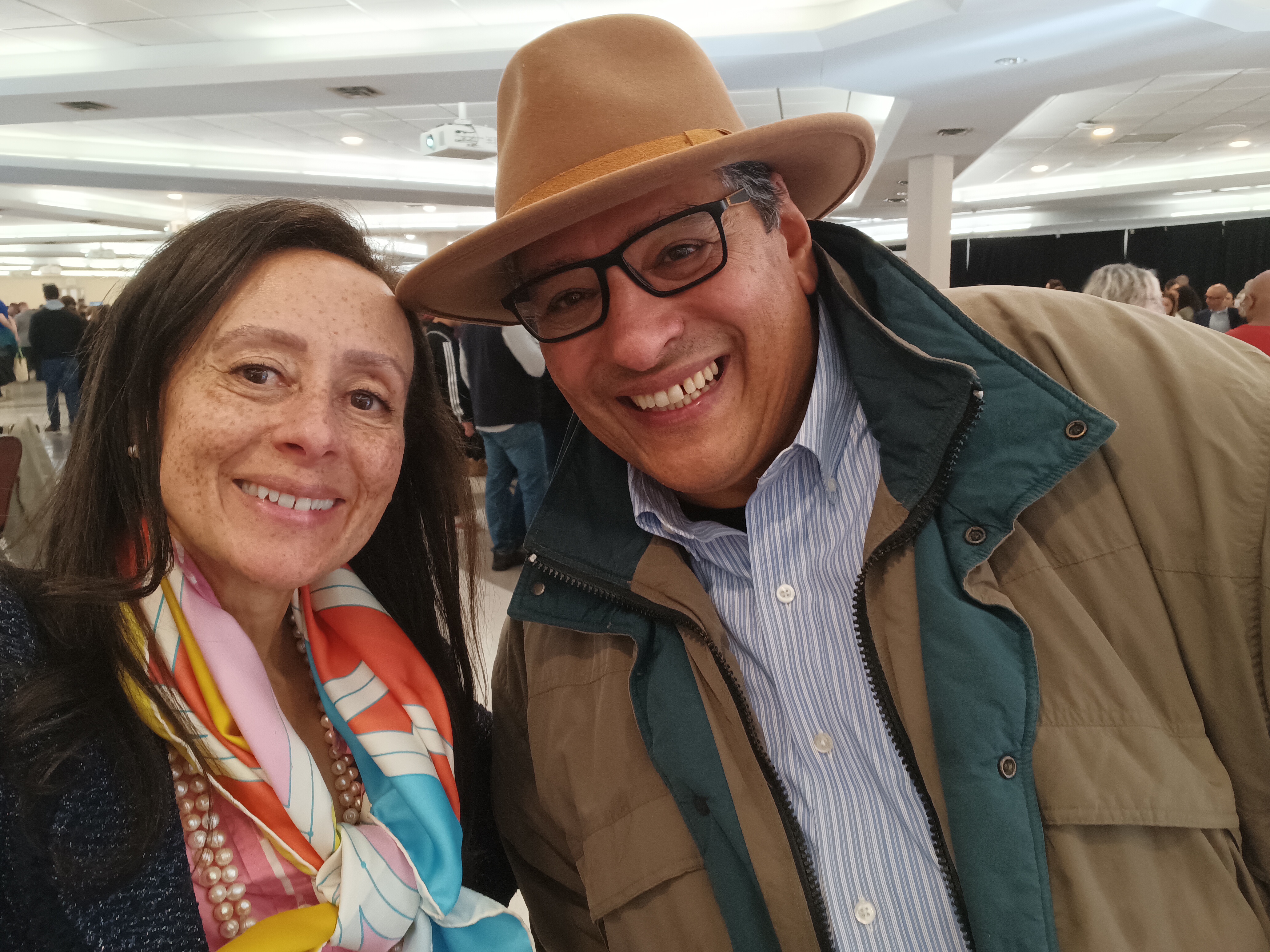
At the Ottawa Chocolate Show with Taylor Kennedy of Sirene Chocolate of Victoria, British Columbia, Canada, and Christine Blais of Palette de Bine of Mt. Tremblant, Quebec, Canada; thank you to both for allowing me to share your scrumptious chocolate with audience members at the talk I gave at the Show!With Vince Garcia of Kasama Chocolate of Vancouver, Canada, at the Ottawa Chocolate ShowWith Serge Savchuk of Vaka Chocolate of Ontario, Canada, at the Ottawa Chocolate ShowCCC on my tote bag = Cacao, Chocolate, and Community, or Curiosity, Character, and Contribution — the 3Cs either way!
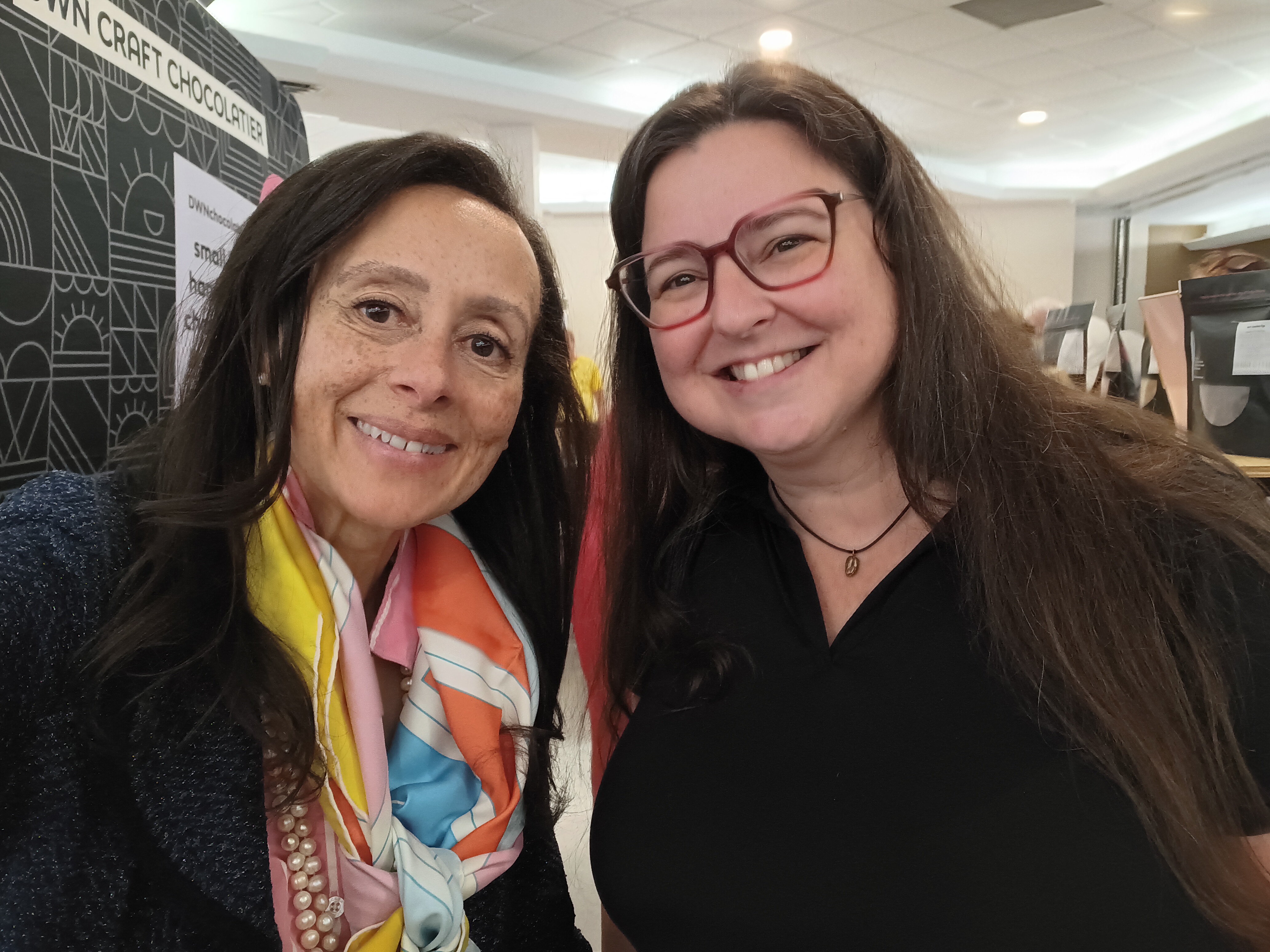
It was also wonderful to meet Instagram friend and artist Cyndi Clement of @canadianchocoholic, and to catch up with legendary cacao importer Juan Gonzalez of The Mexican Arabica Bean Co., both based in Canada!
With cacao-inspired artist CyndiClementWith Juan Gonzalez of MABCO – the Mexican Arabica Bean Company
Part II. Sweet Speaker: My Talk at the Ottawa Chocolate Show, and a Few More Thank-Yous, Plus More Chocolate
I felt fortunate to speak to amazing chocolate lovers and hold a presentation on “Exploring Chocolate from Bean to Bar: Making Conscious Chocolate Choices.” We discussed how to identify ethical chocolate by looking for the cacao country of origin and a clean ingredients list on the bar, and by considering my 5 Ss of first-class chocolate:
slavery free,
soy- and synthetic-free,
sustainable and soil regenerative,
small-batch,
scrumptious!
We tasted some amazing chocolate as I shared chocolate history, health benefits, and hopes, and as we had a fun, fascinating, and delicious time during an upbeat almost-hour!
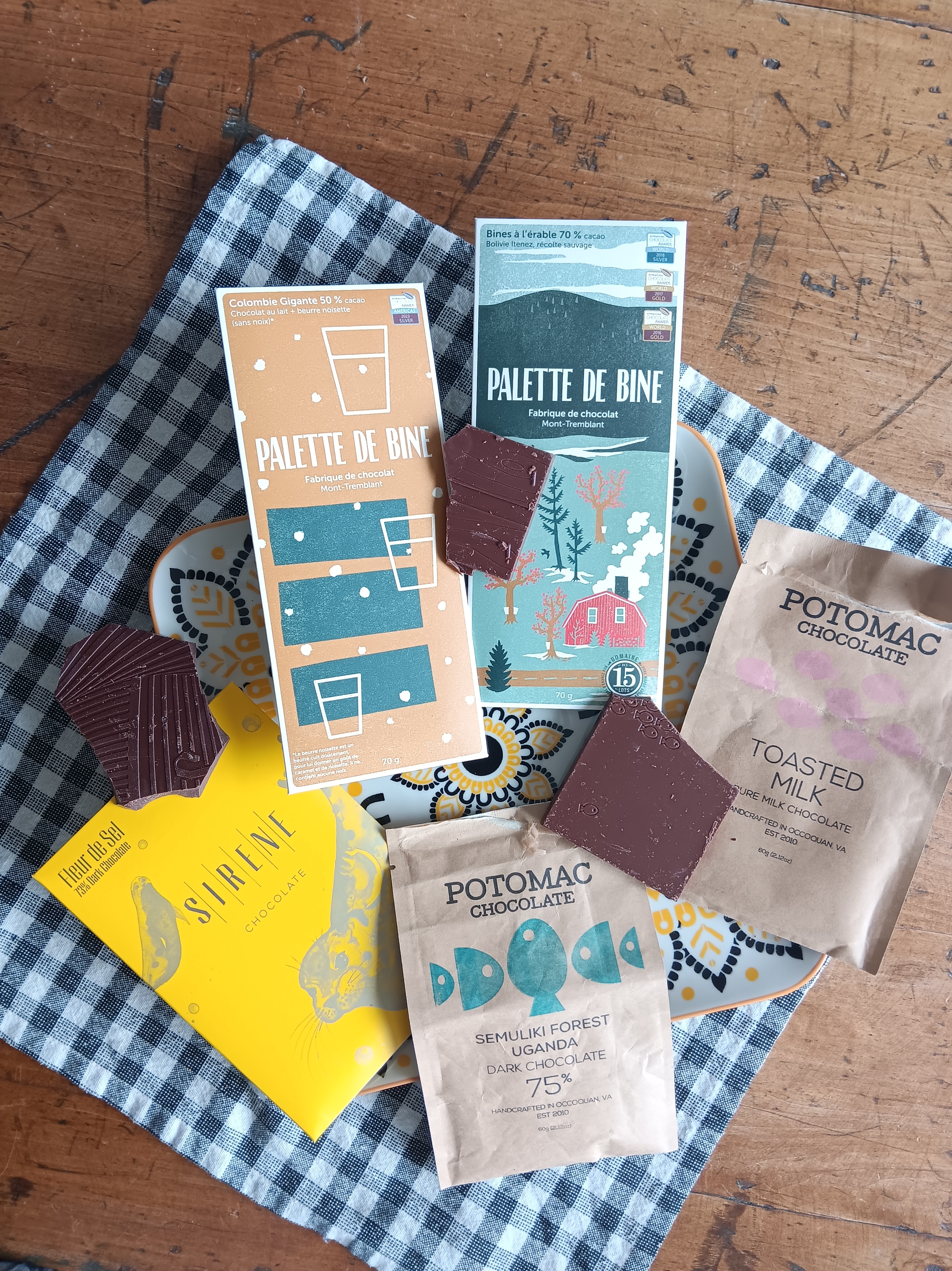
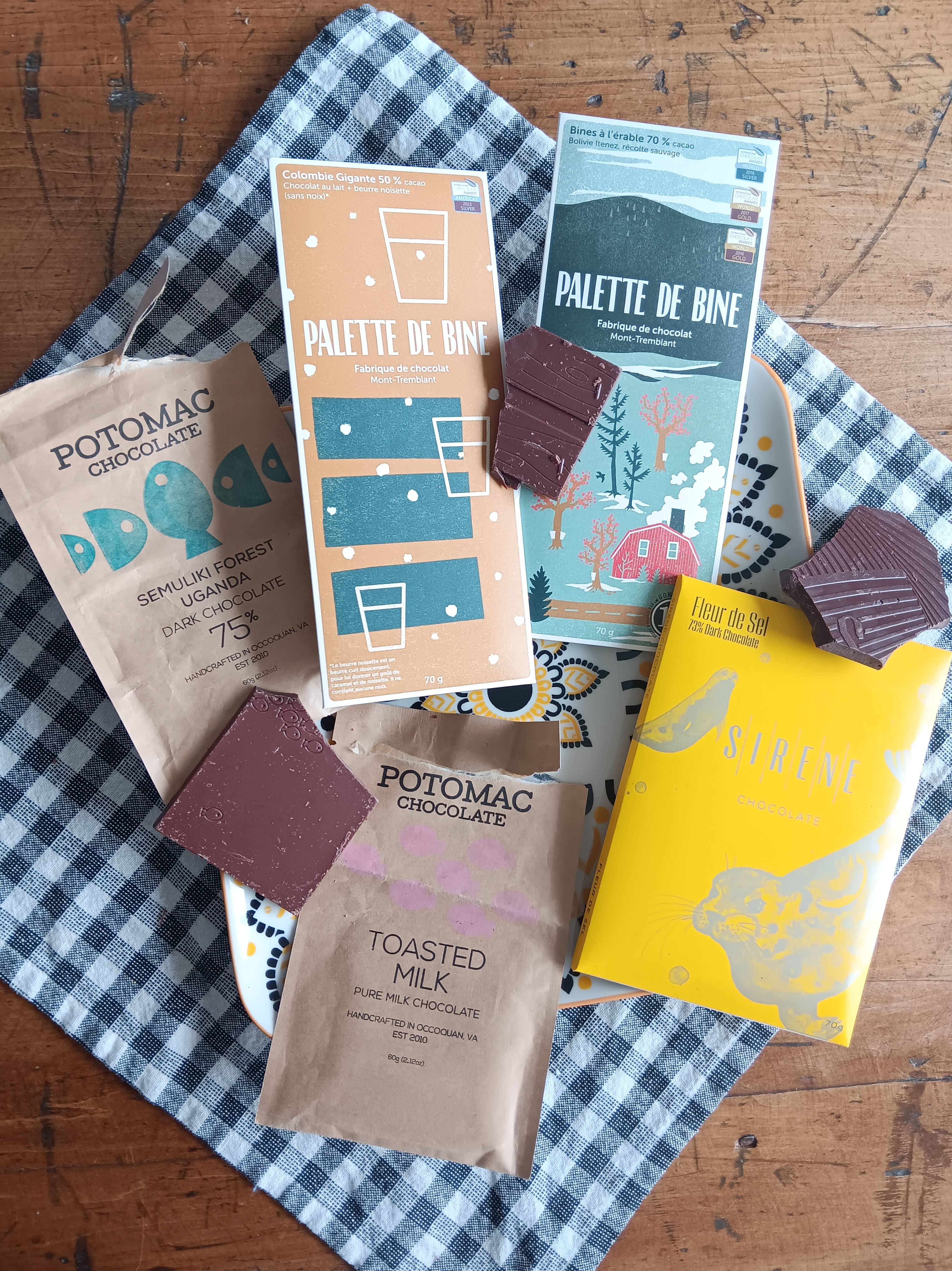
Staged after the show; some of what I shared at my talk during the show: Sirene Chocolate of Canada, Palette de Bine of Canada, Potomac Chocolate of the US (which is made by dear Ben Rasmussen near the US capital of Washington DC, and which I brought to Canada’s capital city of Ottawa to represent cross-continental friendship. : ) Not shown: the Golden Age cookies I baked for the audience (though photos of some Golden Age cookies I baked later in Quebec are below), plus cacao from Zorzal of the Dominican Republic by way of Crow & Moss Chocolate of the US.
Thank you to Erik Hansen of (exquisitely precise and delicious) DesBarres Chocolate and Joanne Mutter of (gorgeous chocolate shop) JoJo Coco for co-founding and organizing such a marvelous show, and for kindly including me — a Chicagoan in Canada! Thank you too to the volunteers who kept the Show running and the samples at my presentation organized and circulating, and to the fantastic Canadian craft chocolate makers and chocolate lovers!
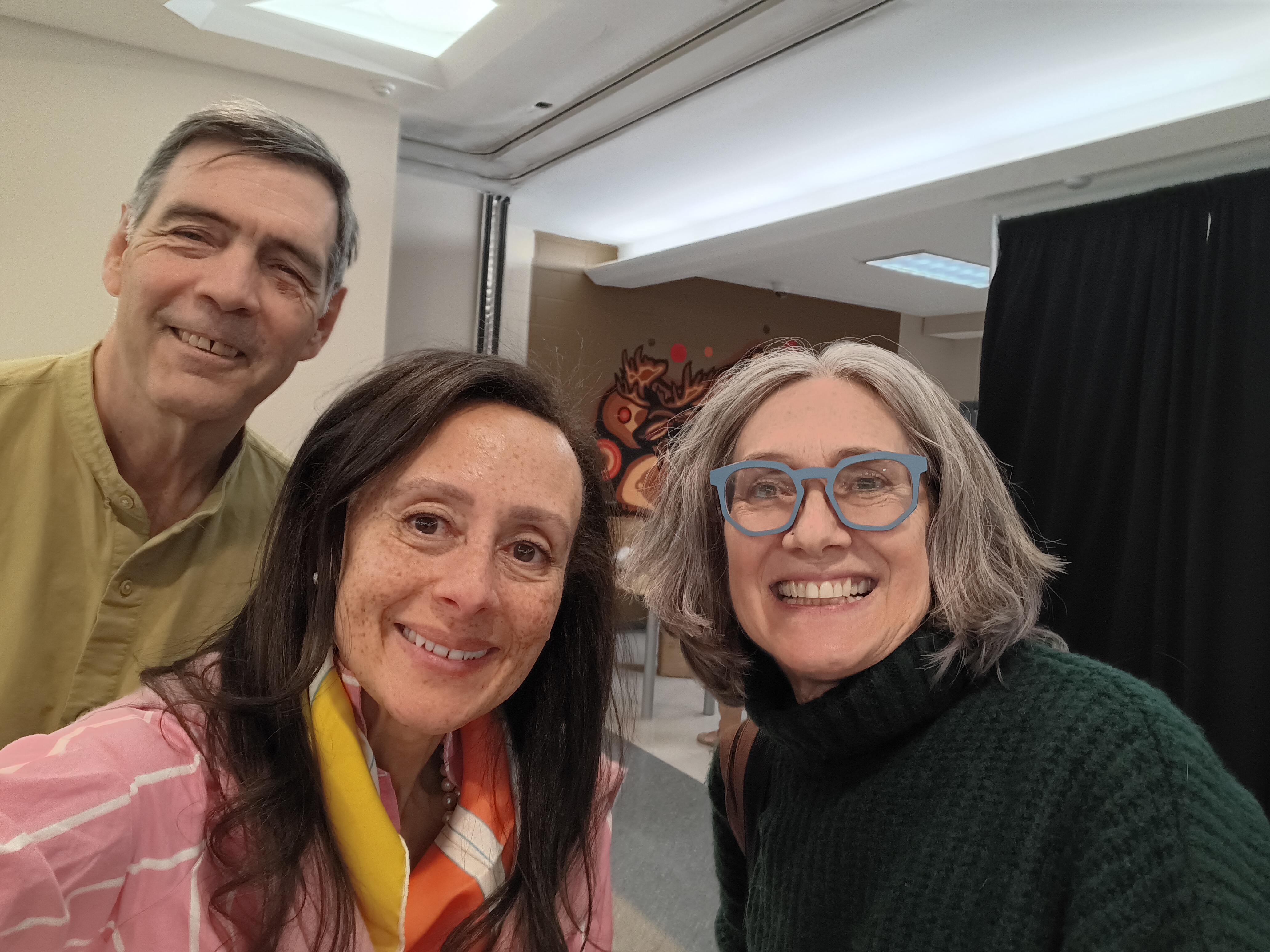
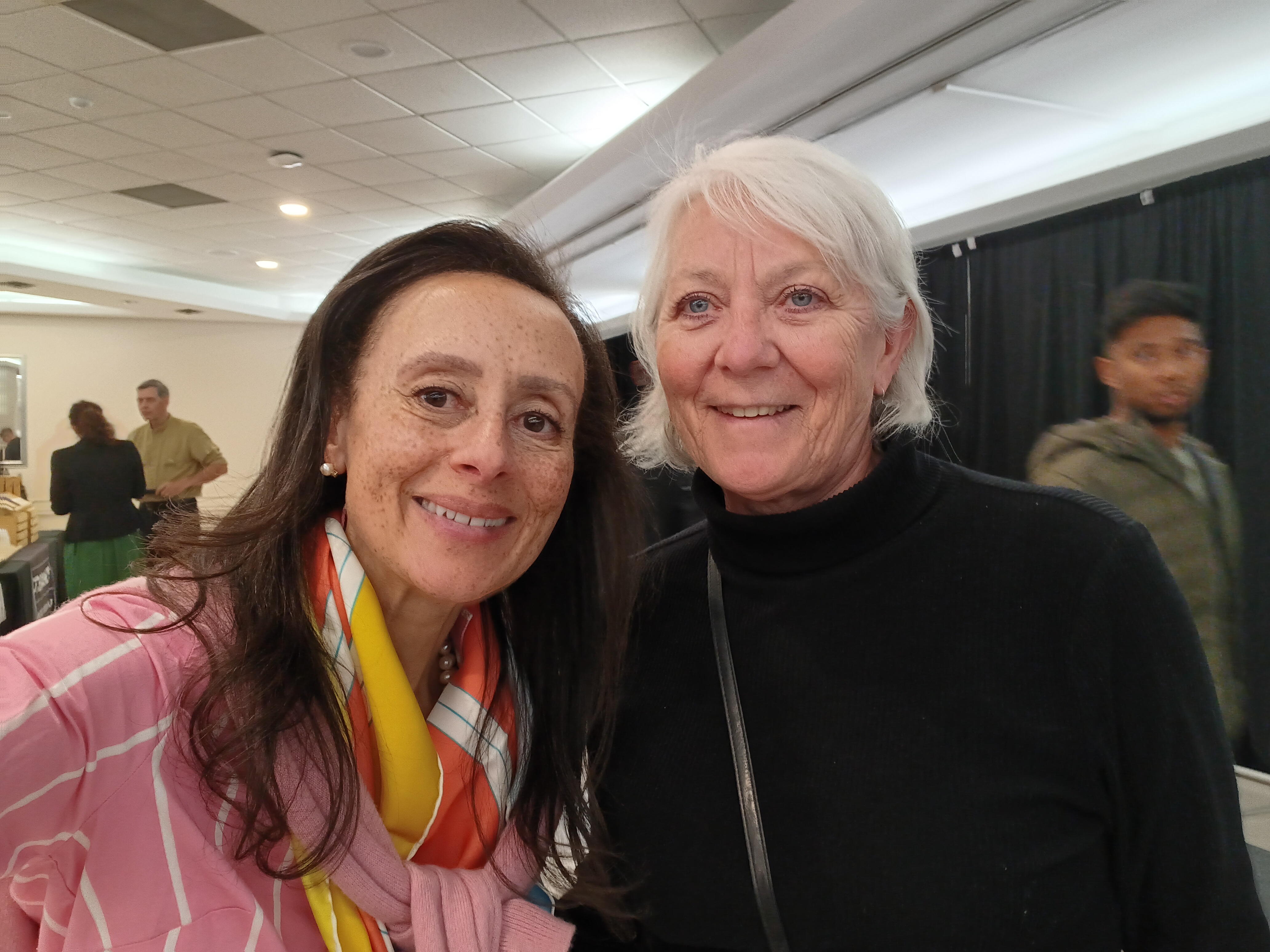
With Erik Hansen of DesBarres Chocolate and the Ottawa Chocolate Show, and (my fellow American) Barb Genuario of DC Chocolate Society. Barb and I didn’t get the chance to chat at the Show, and I still need to ask her what she was doing there : ) With Joanne Mutter of JoJo Cocoa and the Ottawa Chocolate Show
Keep scrolling down for:
the links and slides from my talk, as incorporated into an email with Erik,
followed by more photos from the show,
photos of Ottawa, and
photos I staged of chocolate from the show after the show —
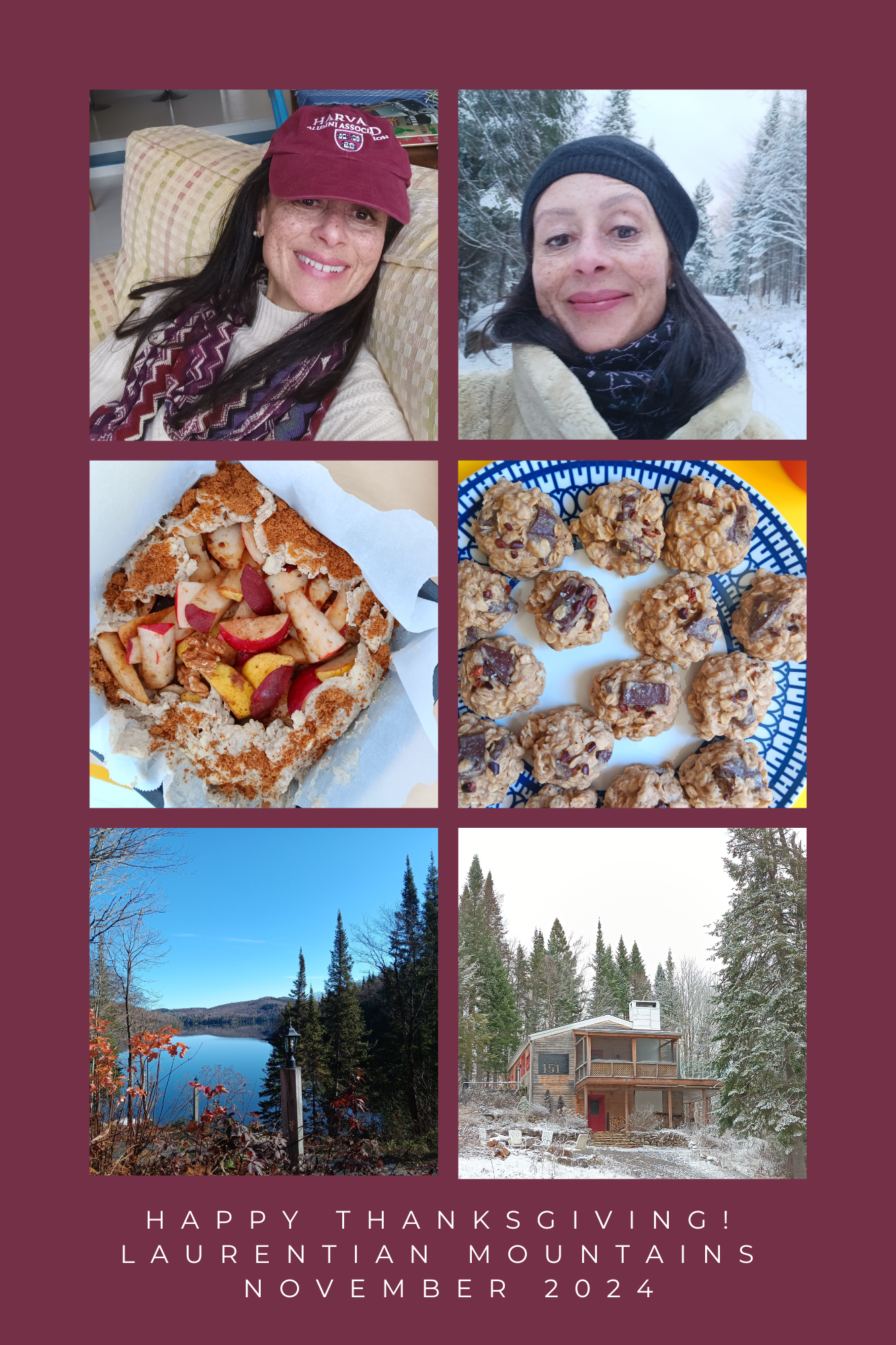
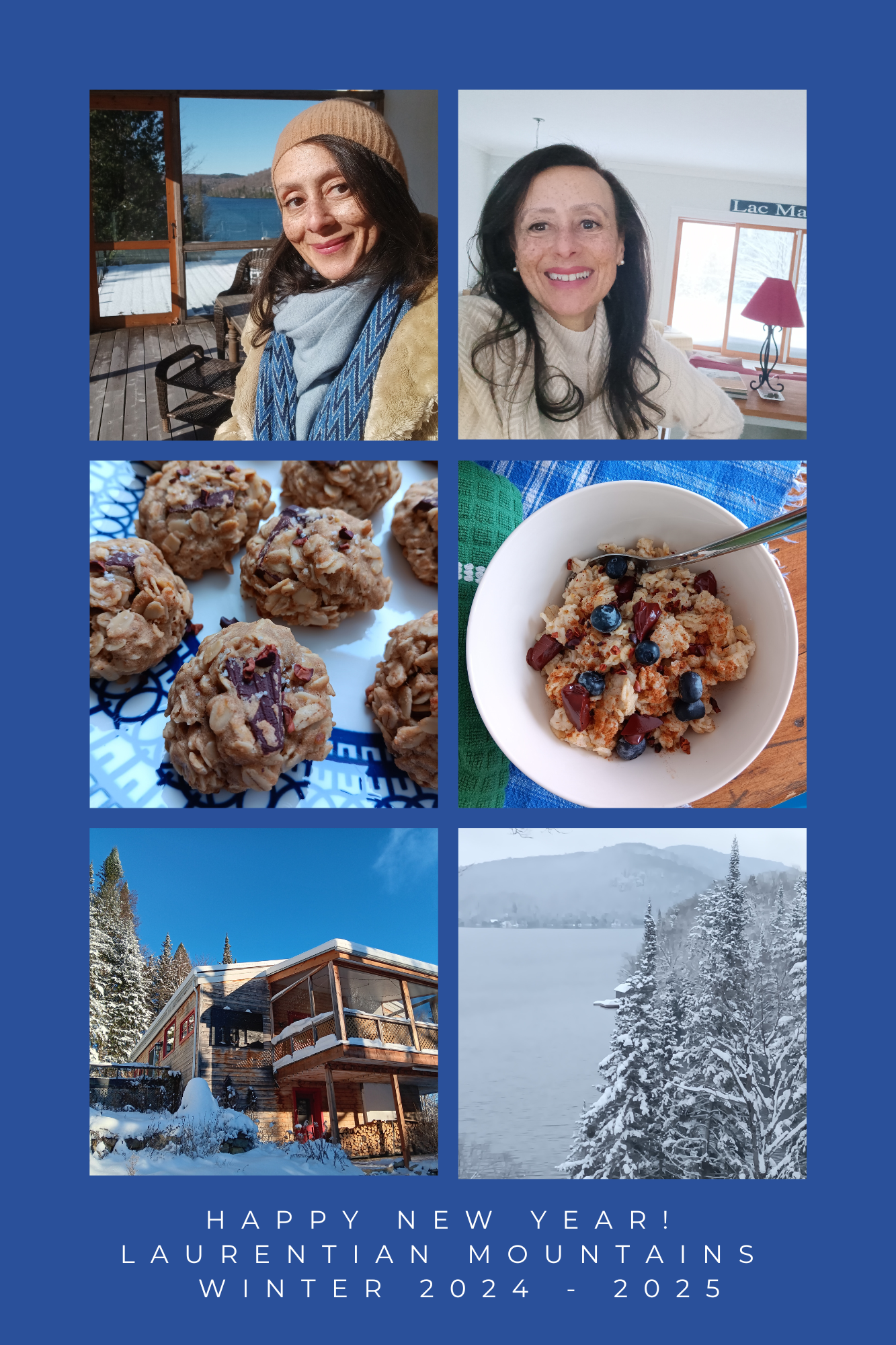
plus photo montages of Thanksgiving and Holiday 2024 at the lake house I rented in the Laurentian Mountains 1 hour and 40 minutes north of Montreal!
(and a funny customs / border crossing moment at the end, before a few more photos, that is : )
*****
Part III. Pre-Show Email, with Links to Videos and Slides
Hi Erik,
Thanks for the helpful information! I’m excited for the show.
Valerie Beck is a graduate of Harvard Law School and Harvard College; a chocolate services entrepreneur who founded Chicago Chocolate Tours and grew the business to 5 cities with 50 employees; a consultant through Chocolate Uplift to small-batch chocolate makers and growers in ethical cacao supply channels; a mentor of students who seek to follow their own paths; and a believer that we are creating a Golden Age of empathy and equality, courage and common sense, justice and joy, liberty and love.
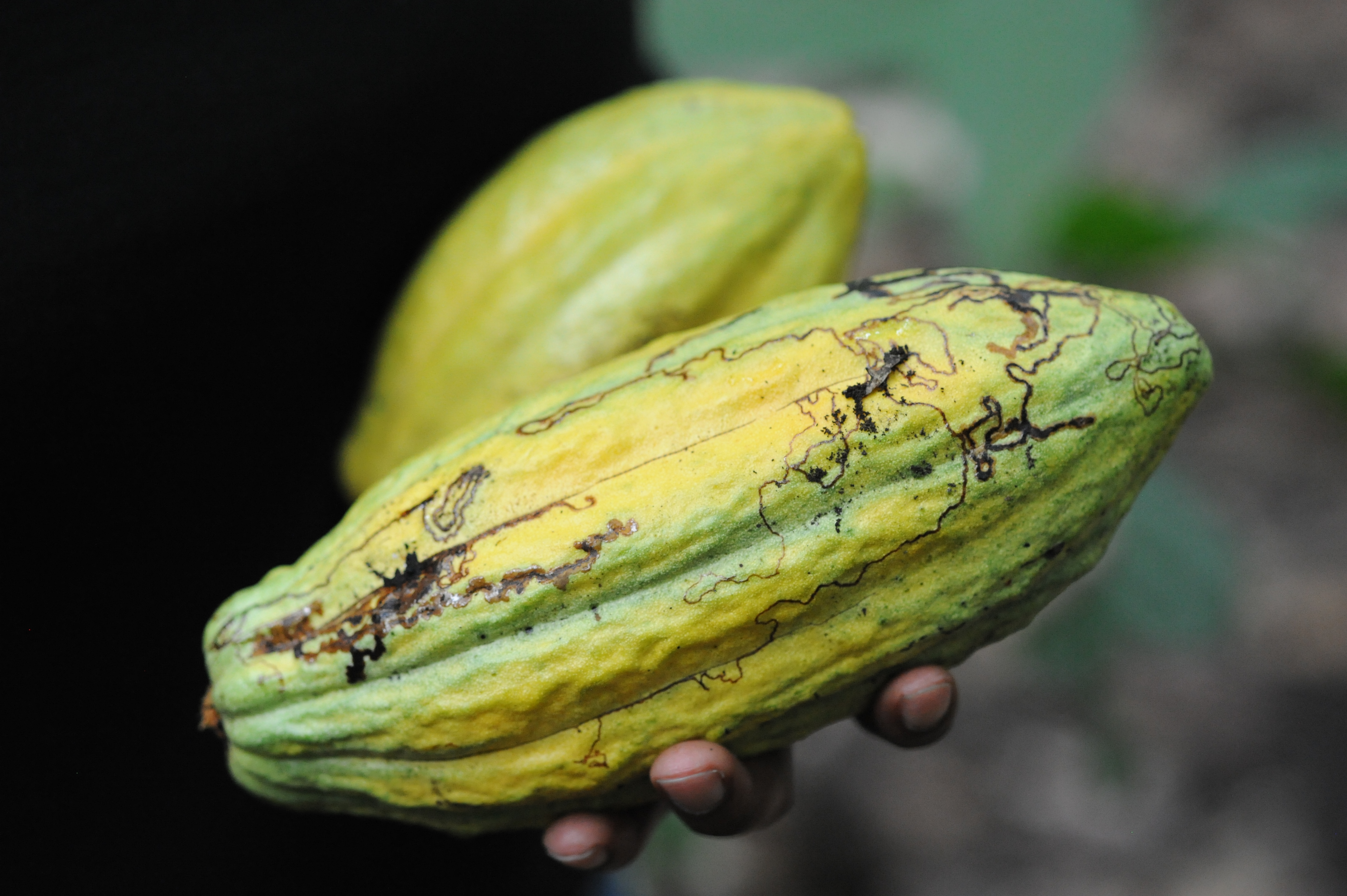
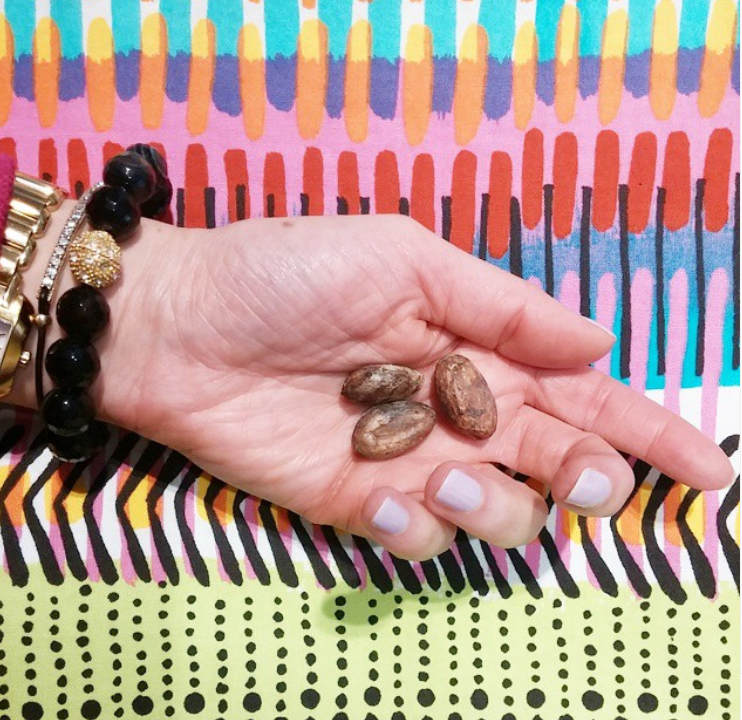
I’m all set with Sirene Chocolate from Taylor and still need to finalize Palette de Bine with Christine, plus I am bringing Potomac Chocolate from the Washington DC area, for a taste of craft chocolate in the Canadian capital from near the US capital, in a show of cross-border chocolate friendship : ) And, I’ll bring some Zorzal beans and some Venezuela or Bolivia nibs (and a dried cacao pod to show). So how about this for a title:
Exploring Chocolate from Bean to Bar: Making Conscious Chocolate Choices
And a blurb if helpful:
*****
Chocolate can be a standardized bulk ingredient in an industrial product with a tainted supply chain, or an exquisite and ethically created specialty that delivers complexity, flavor, and health, while uplifting people and planet. Enjoy a tasting trip from cocoa bean to chocolate bar, focusing on the rise of “craft” or “bean-to-bar” chocolate, and spotlighting Canadian and other chocolate makers. We’ll look at how cacao is harvested, fermented, dried, roasted, ground, and more, and at how to choose chocolate consciously, as we peer back into the history and ahead to the future of one of the most beloved foods in the world.
*****
A question for you: will internet and equipment be available to show a few video clips or slides? I’d love to show bits of a few clips from YouTube for example:
Founder Valerie Beck in the news
The Chocolate War documentary trailer
Ethical cacao farm
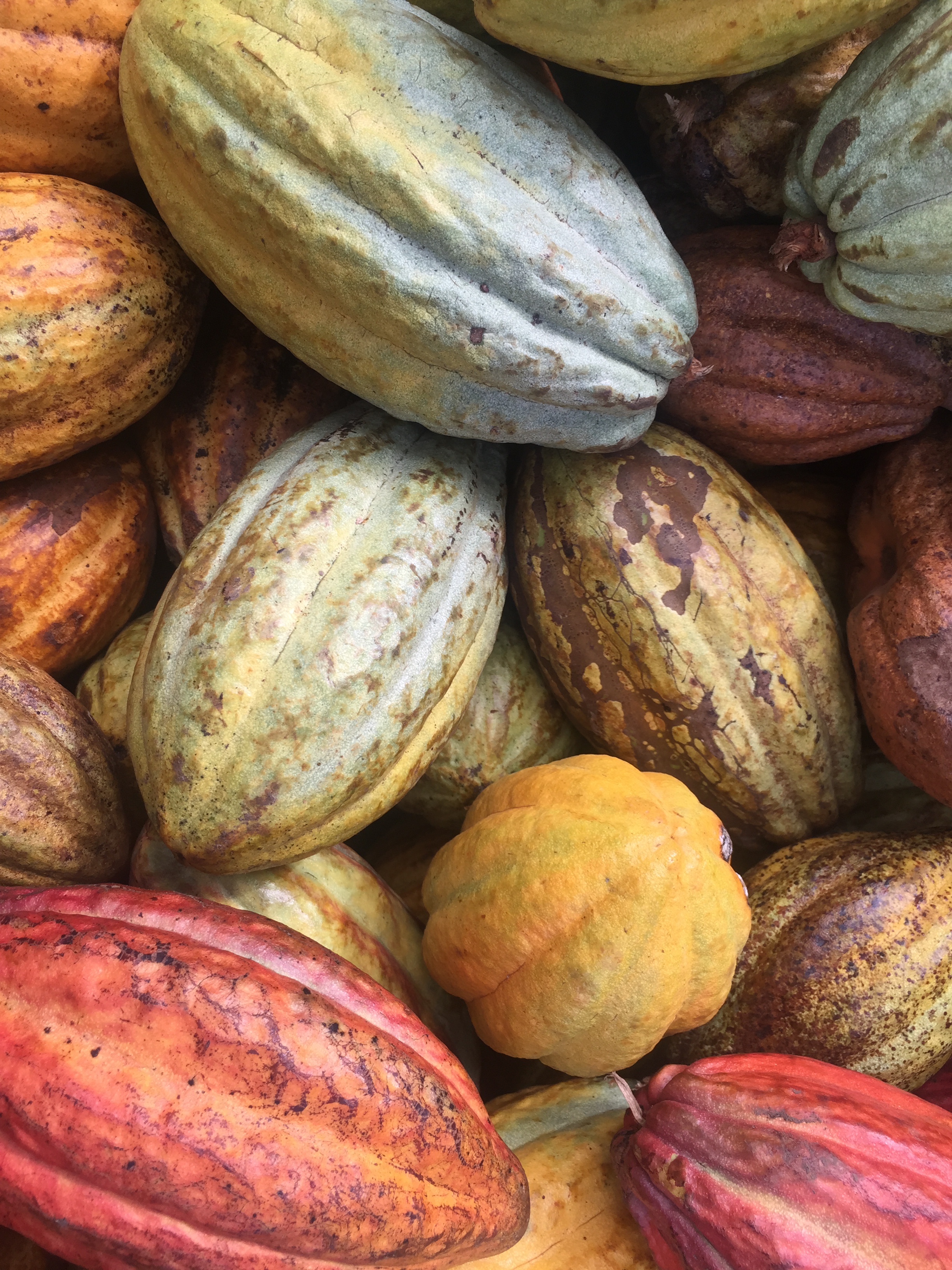
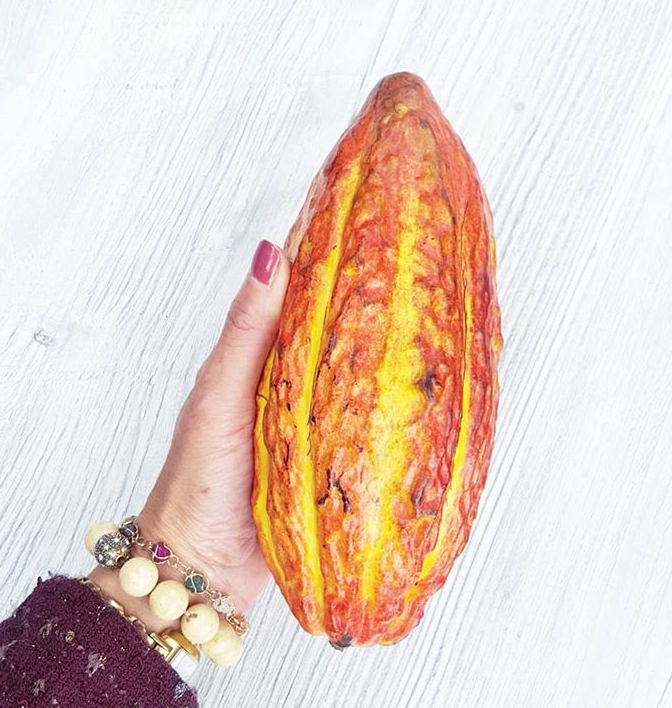
And I often have these slides on hand at talks, not to go through them all but to be able to pull up the appropriate one if someone asks about cadmium or what a ripe cacao pod looks like or if you can bake with craft chocolate; here they are in case handy to have attached to this email:
Part IV. More Photos: More Ottawa Chocolate Show, Capital City Ottawa, Art, Chocolate, More Chocolate
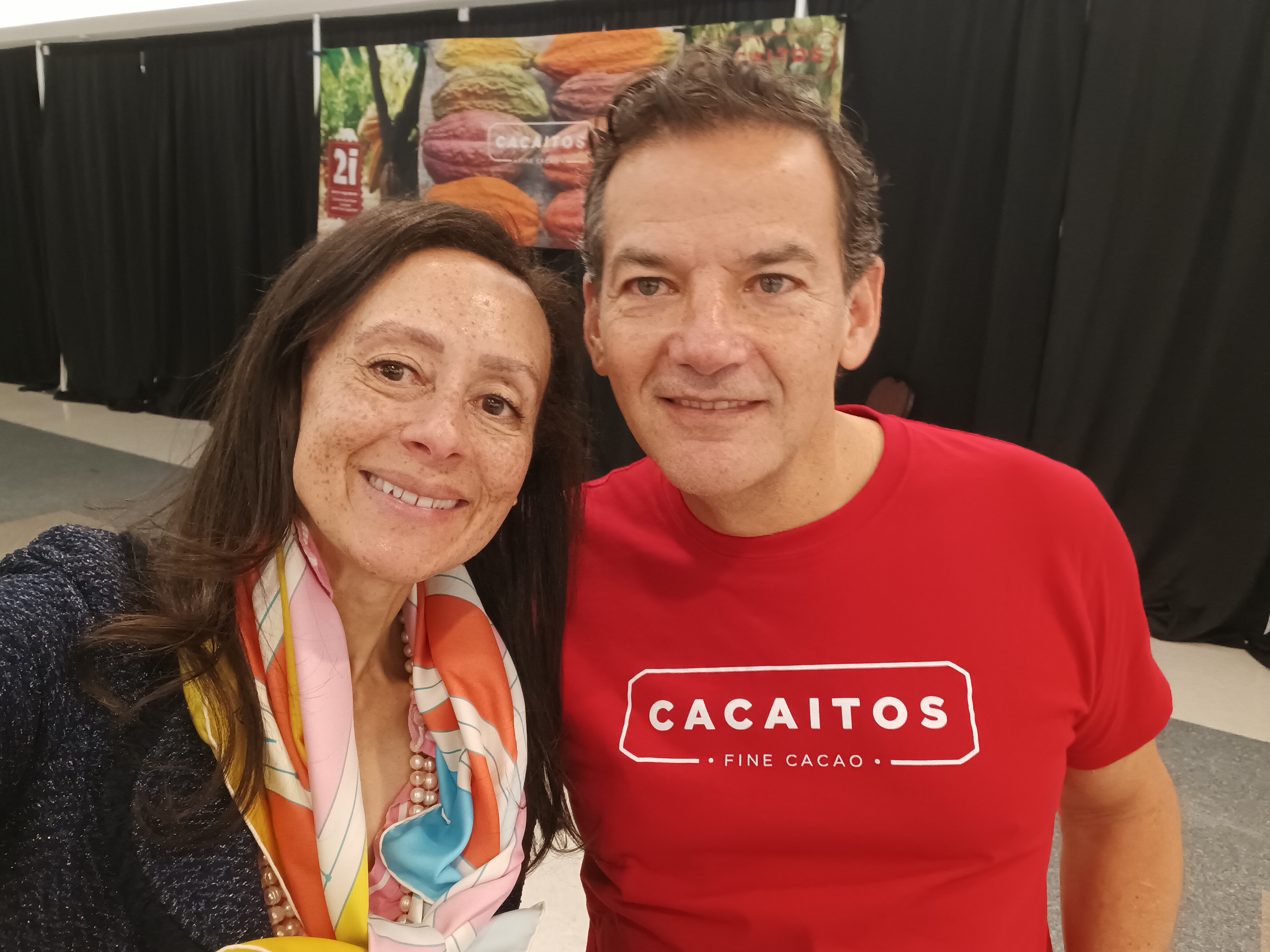
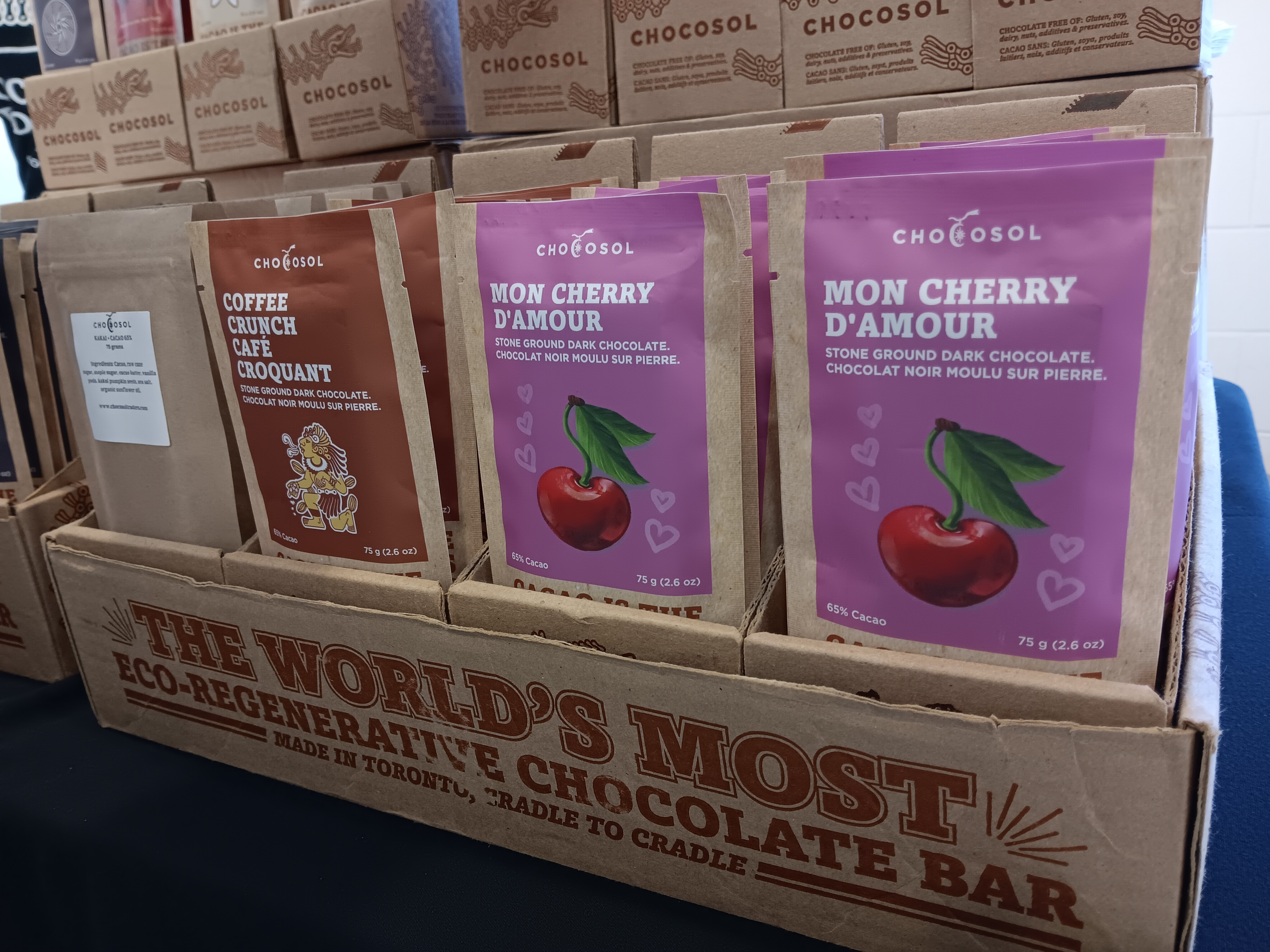
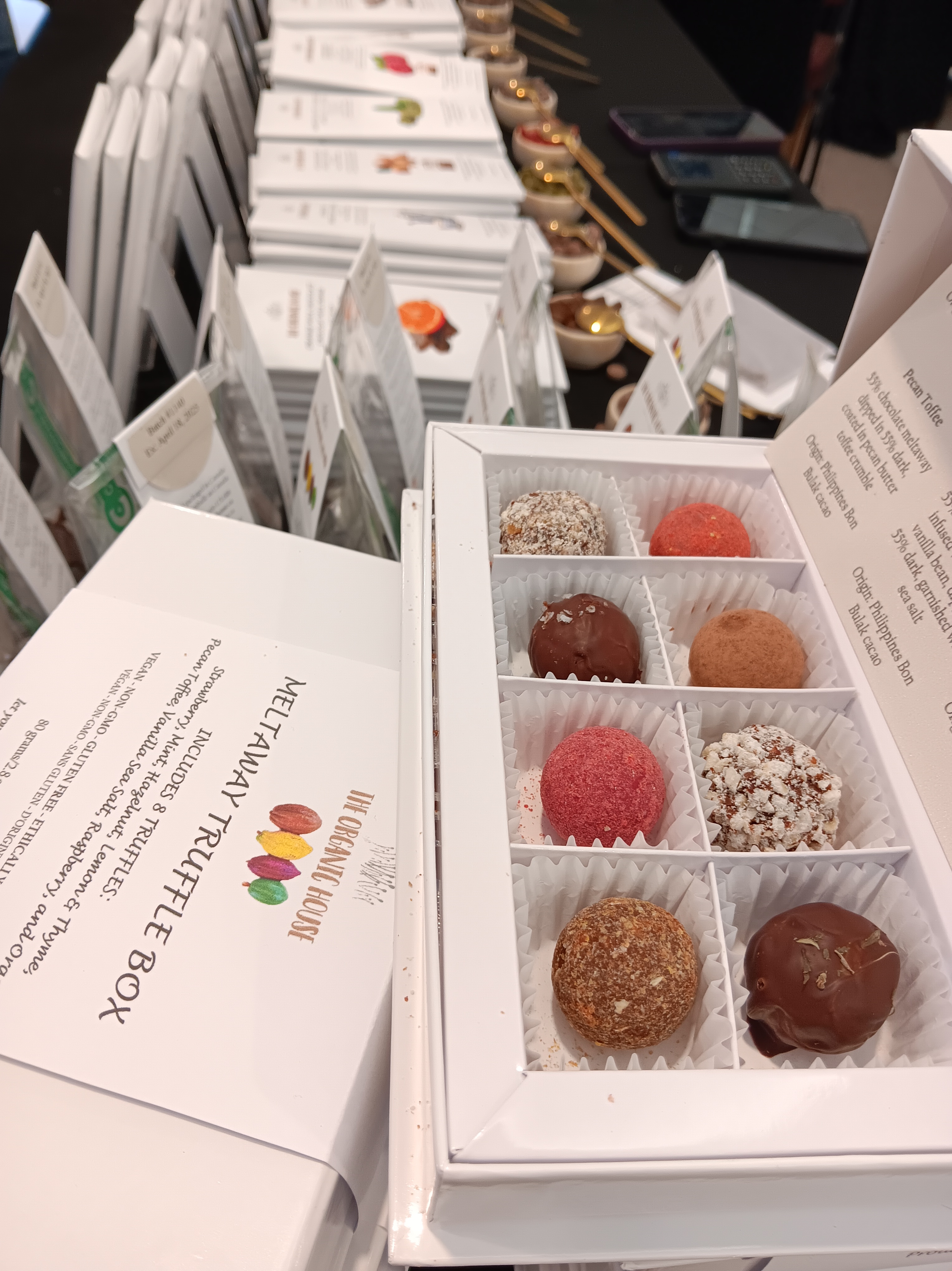
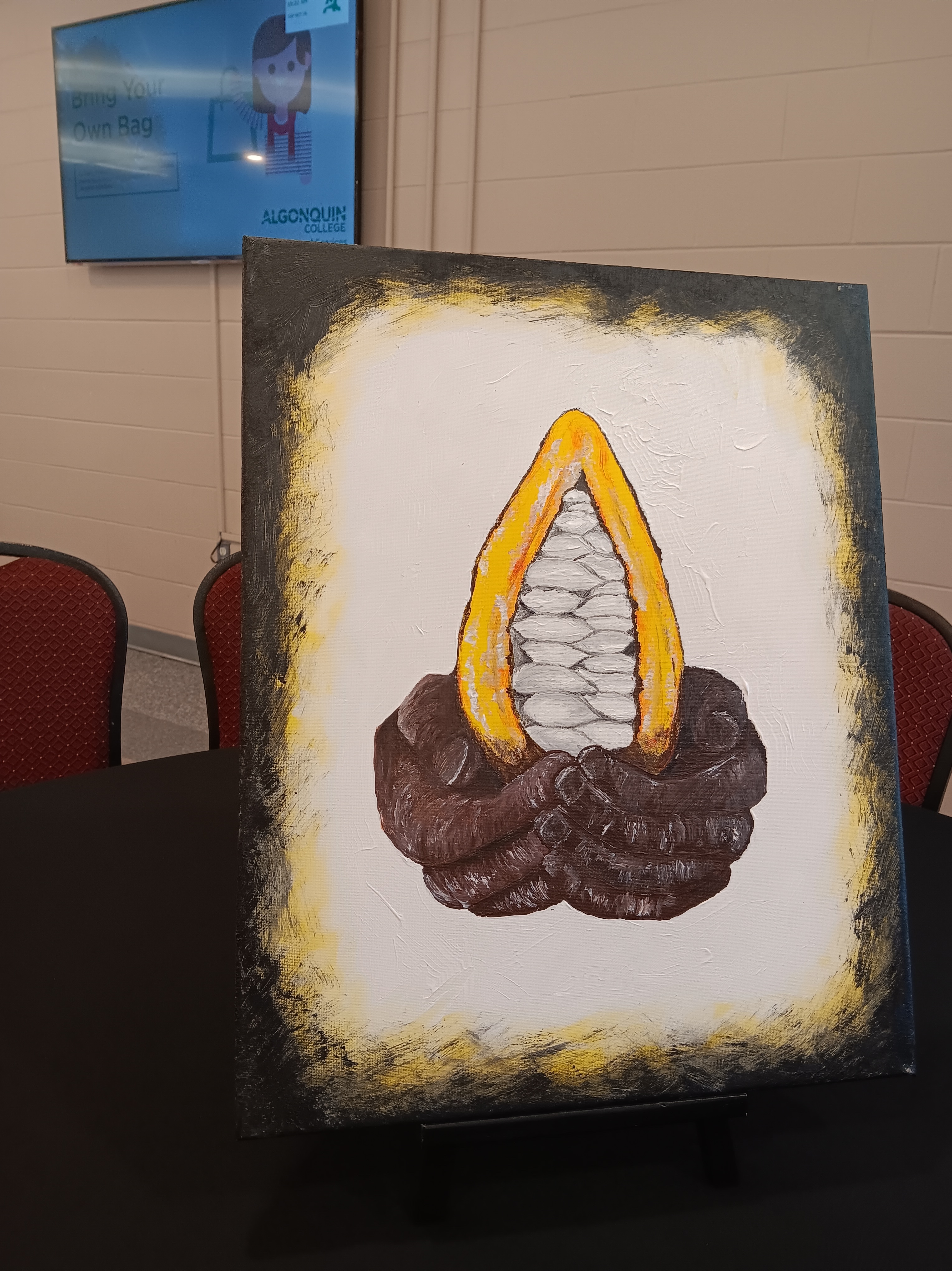
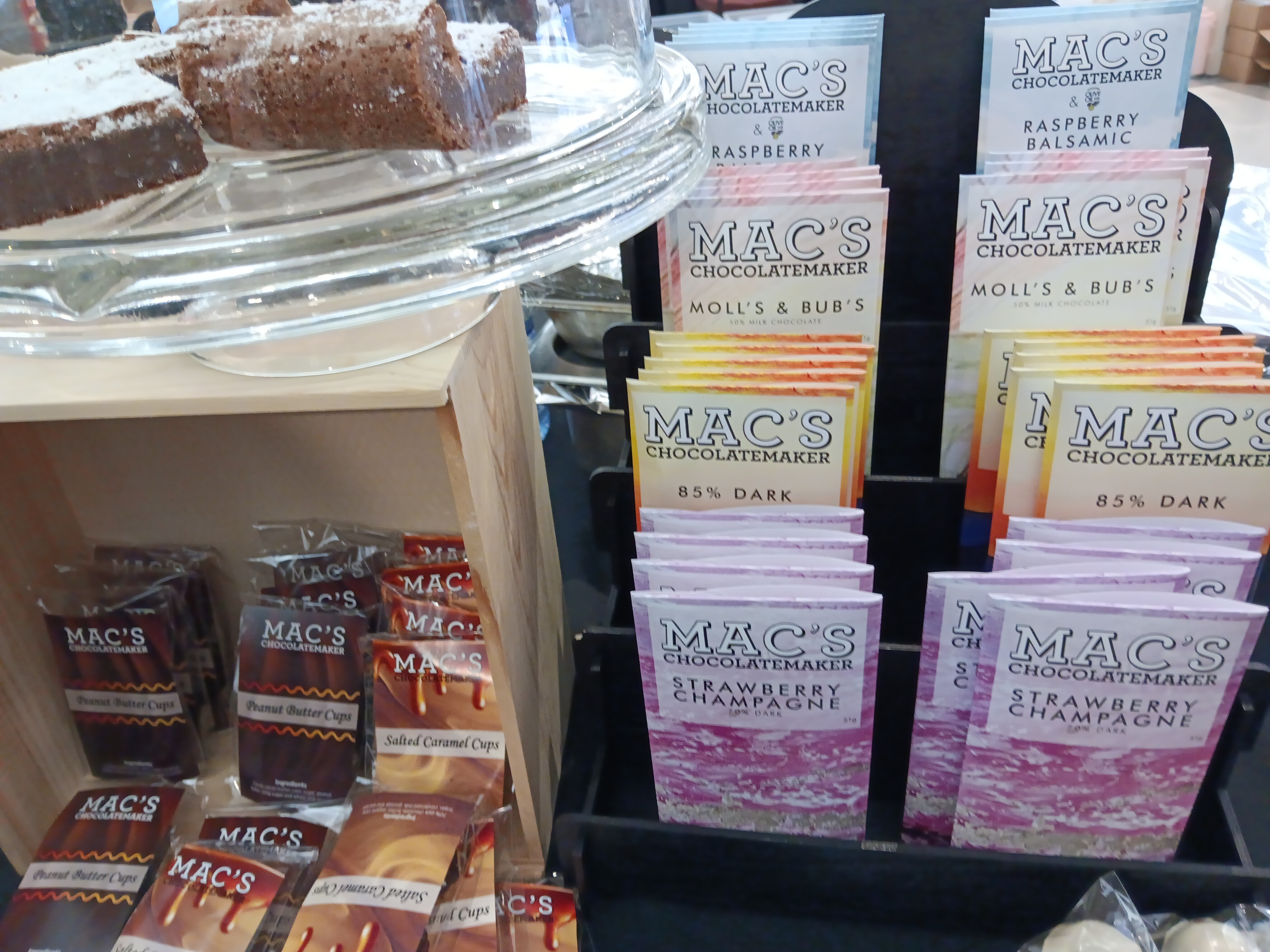
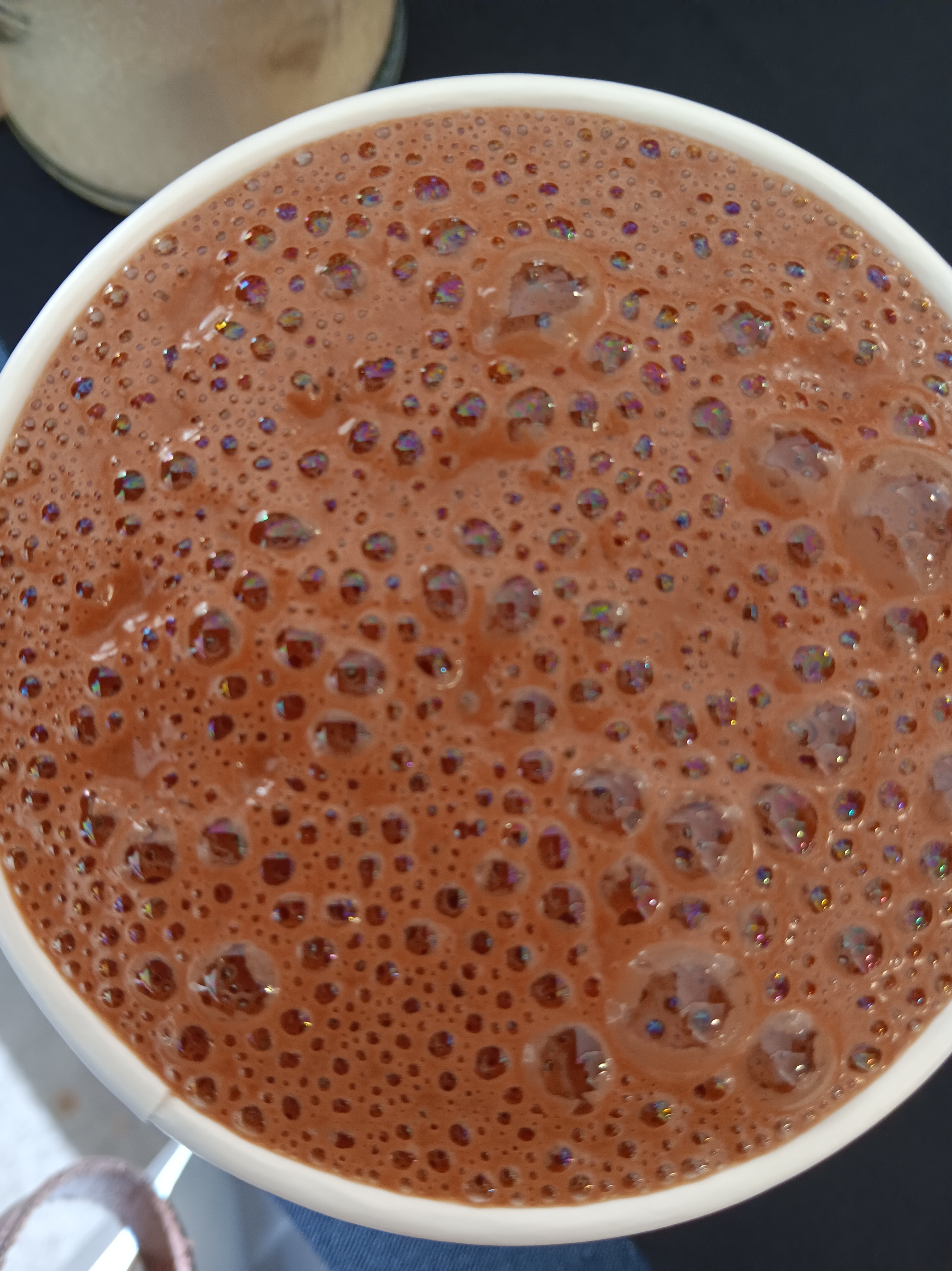
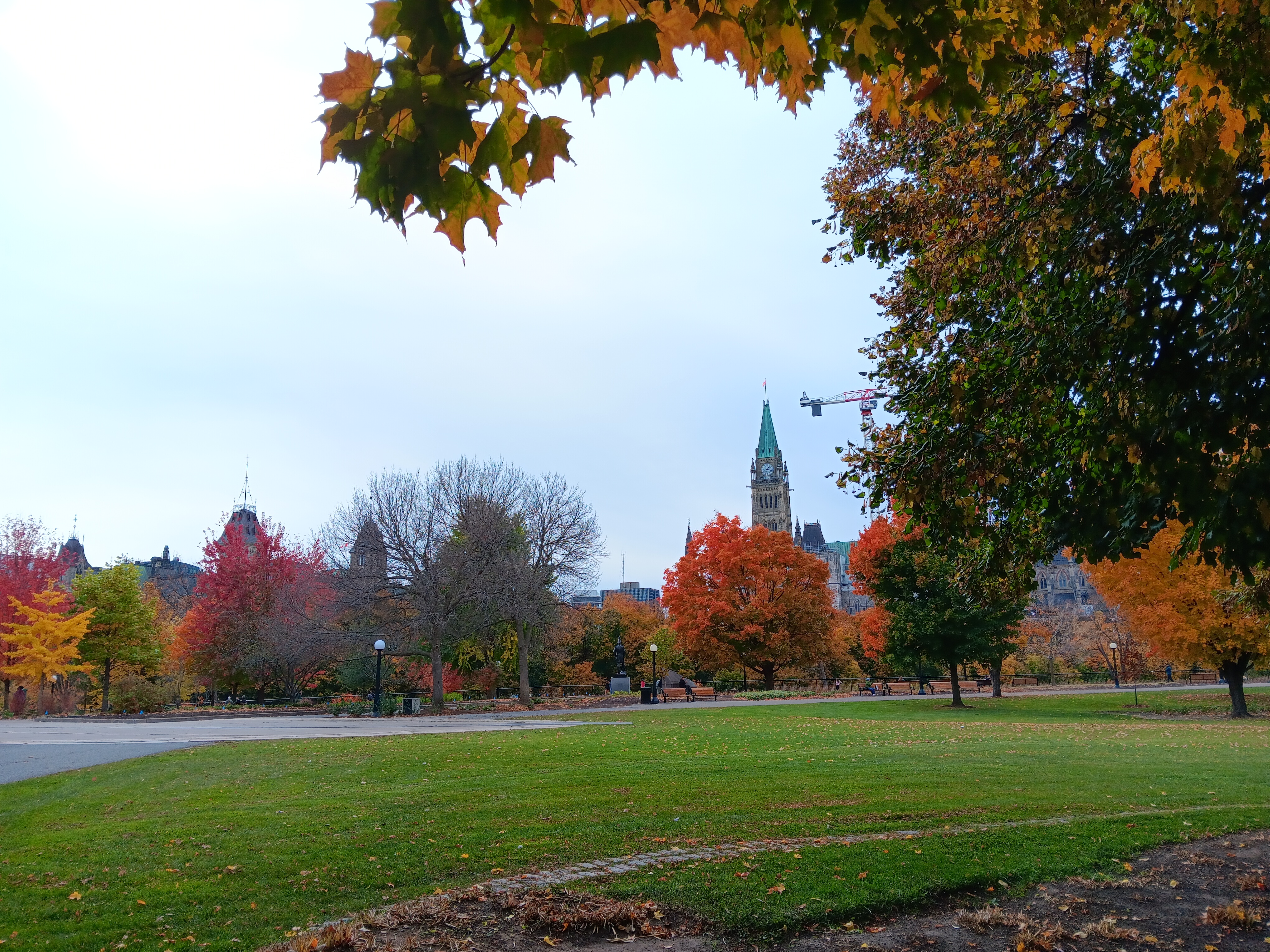
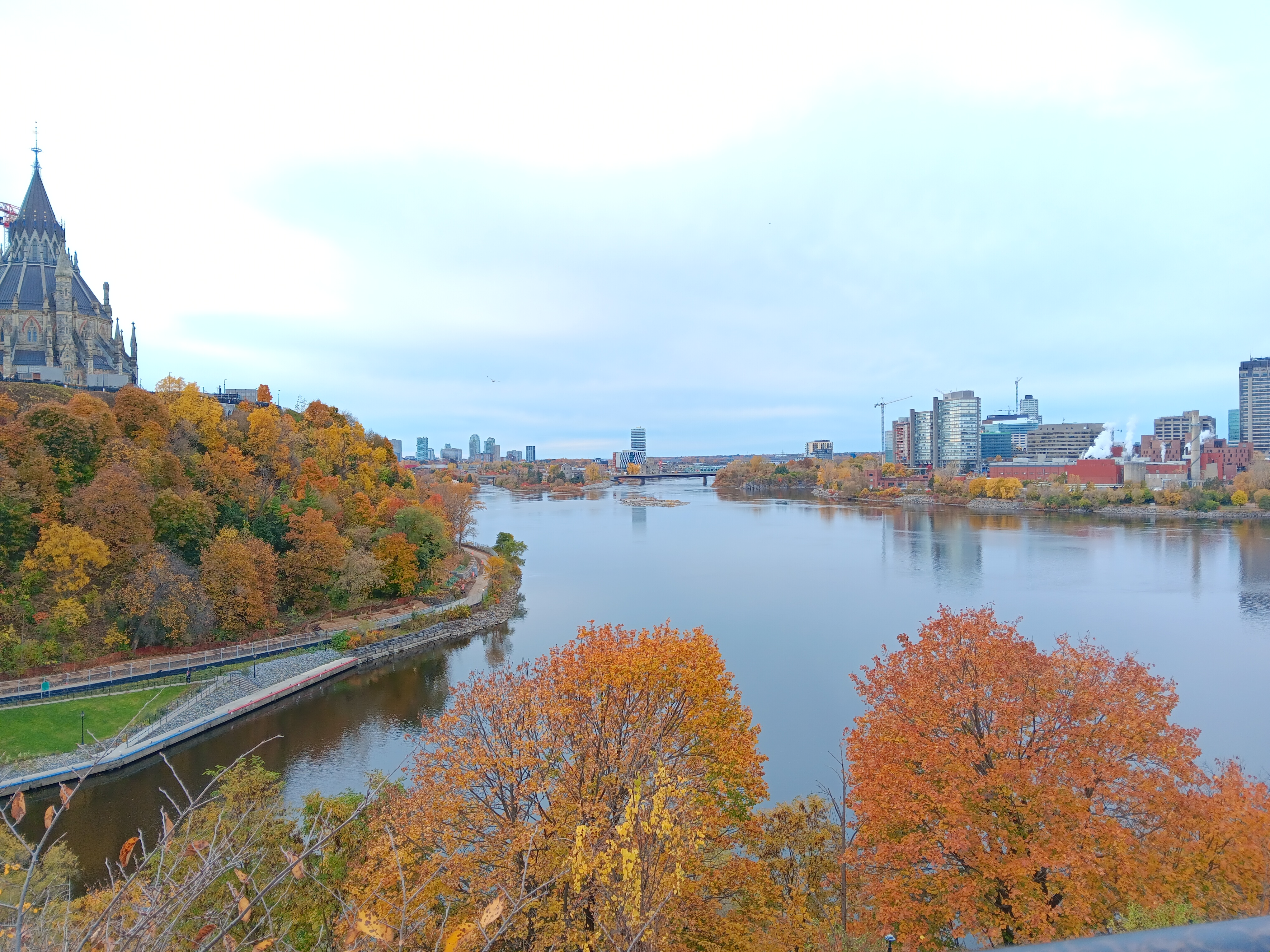
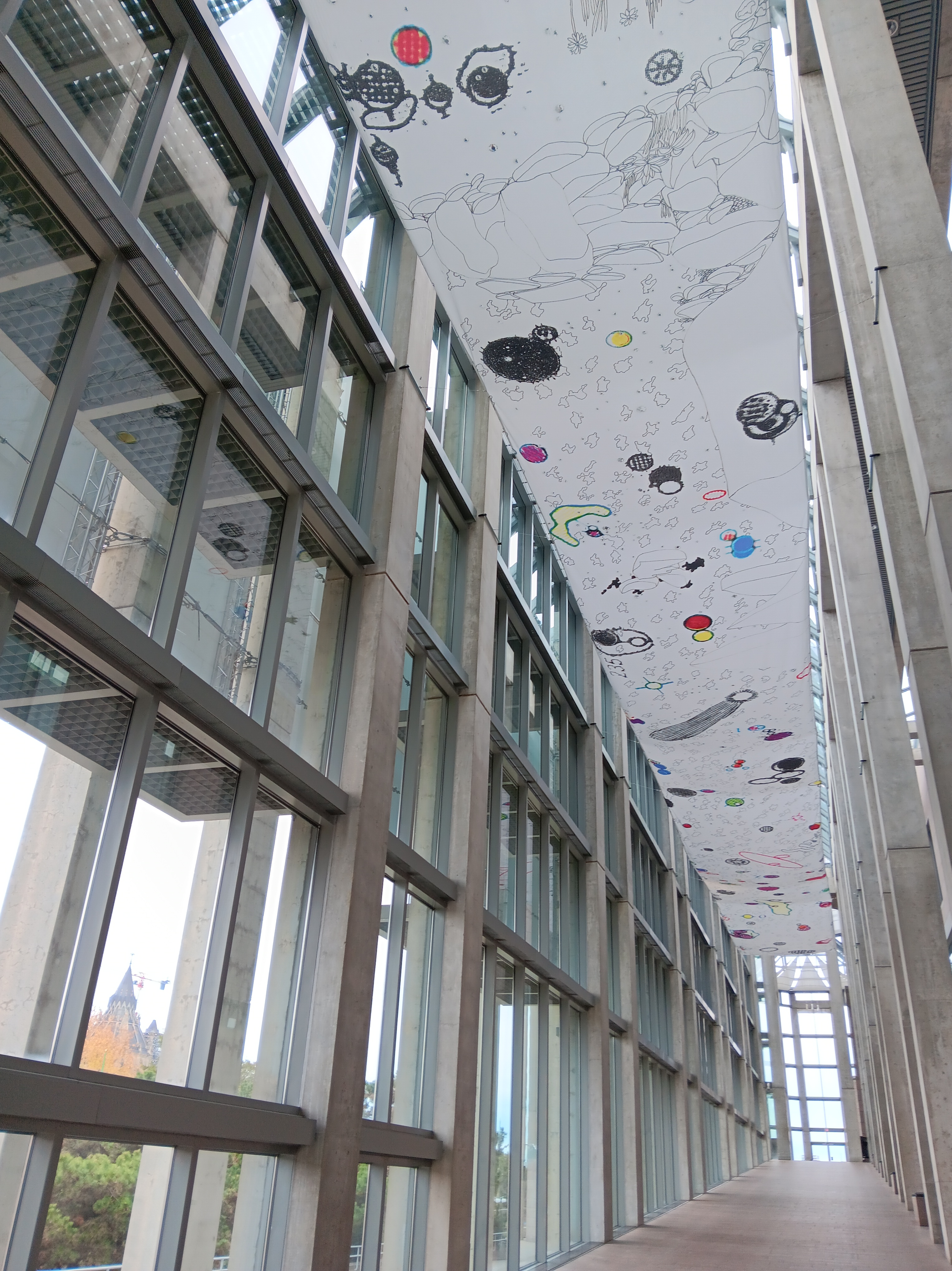
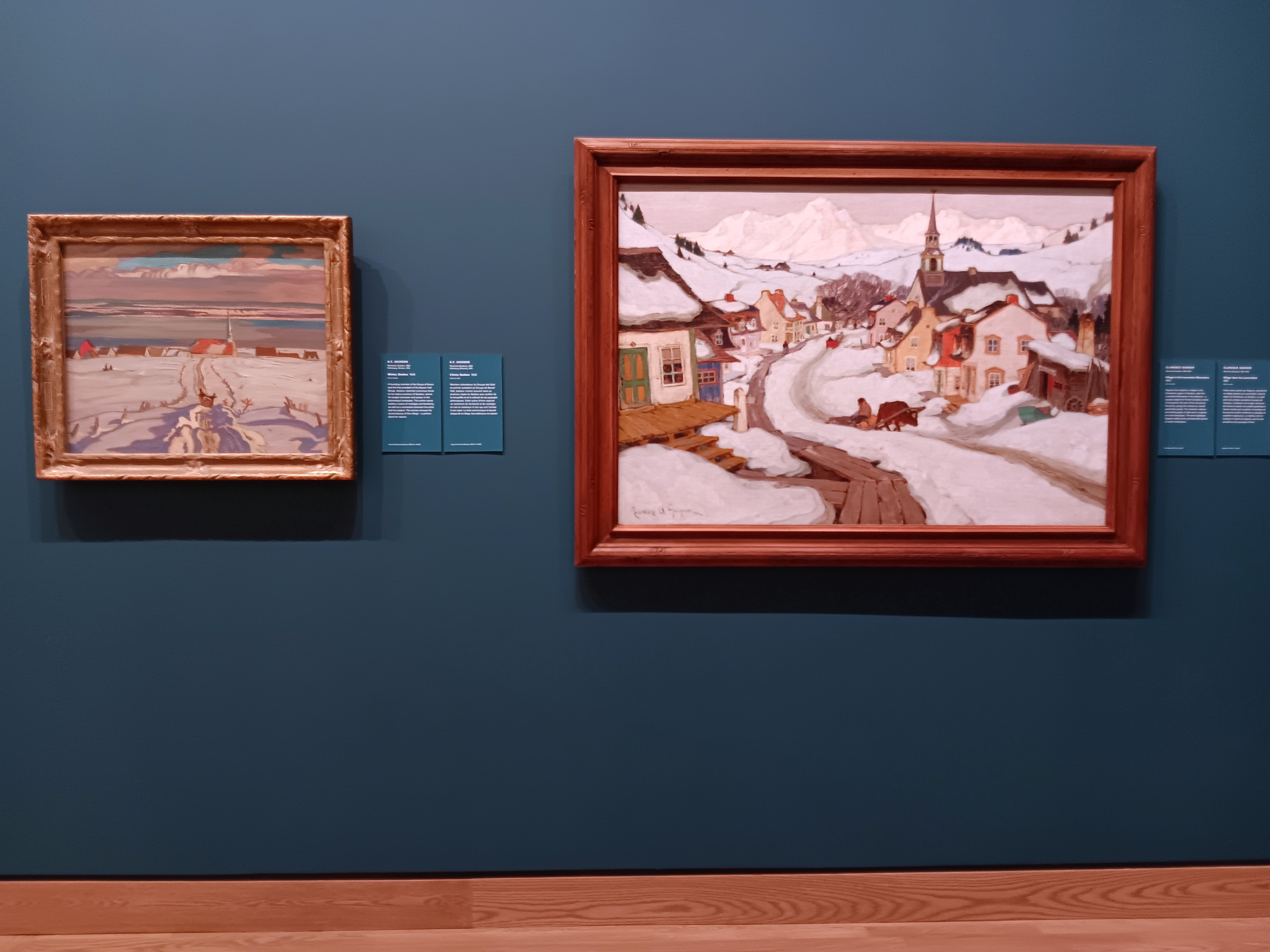
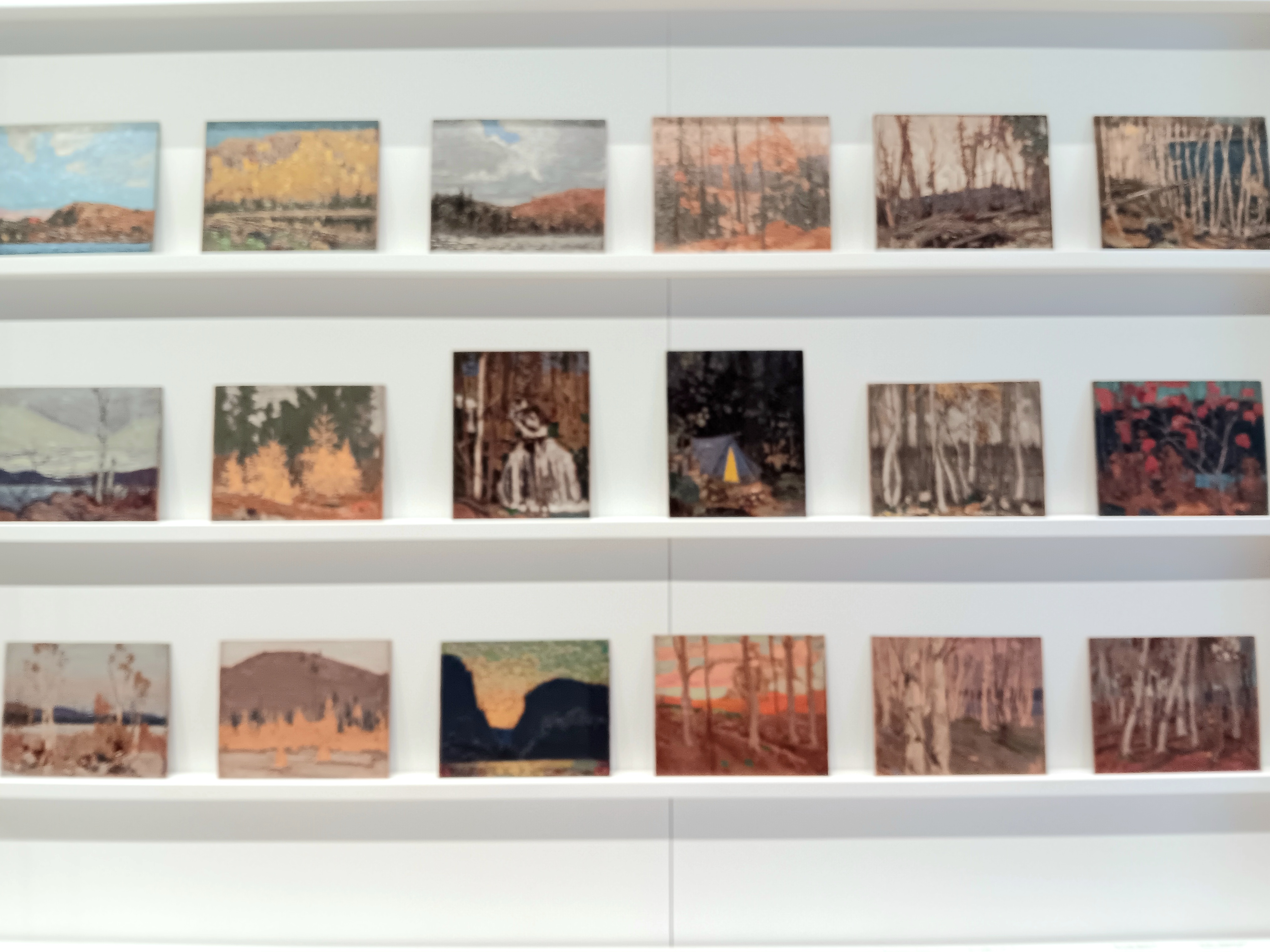
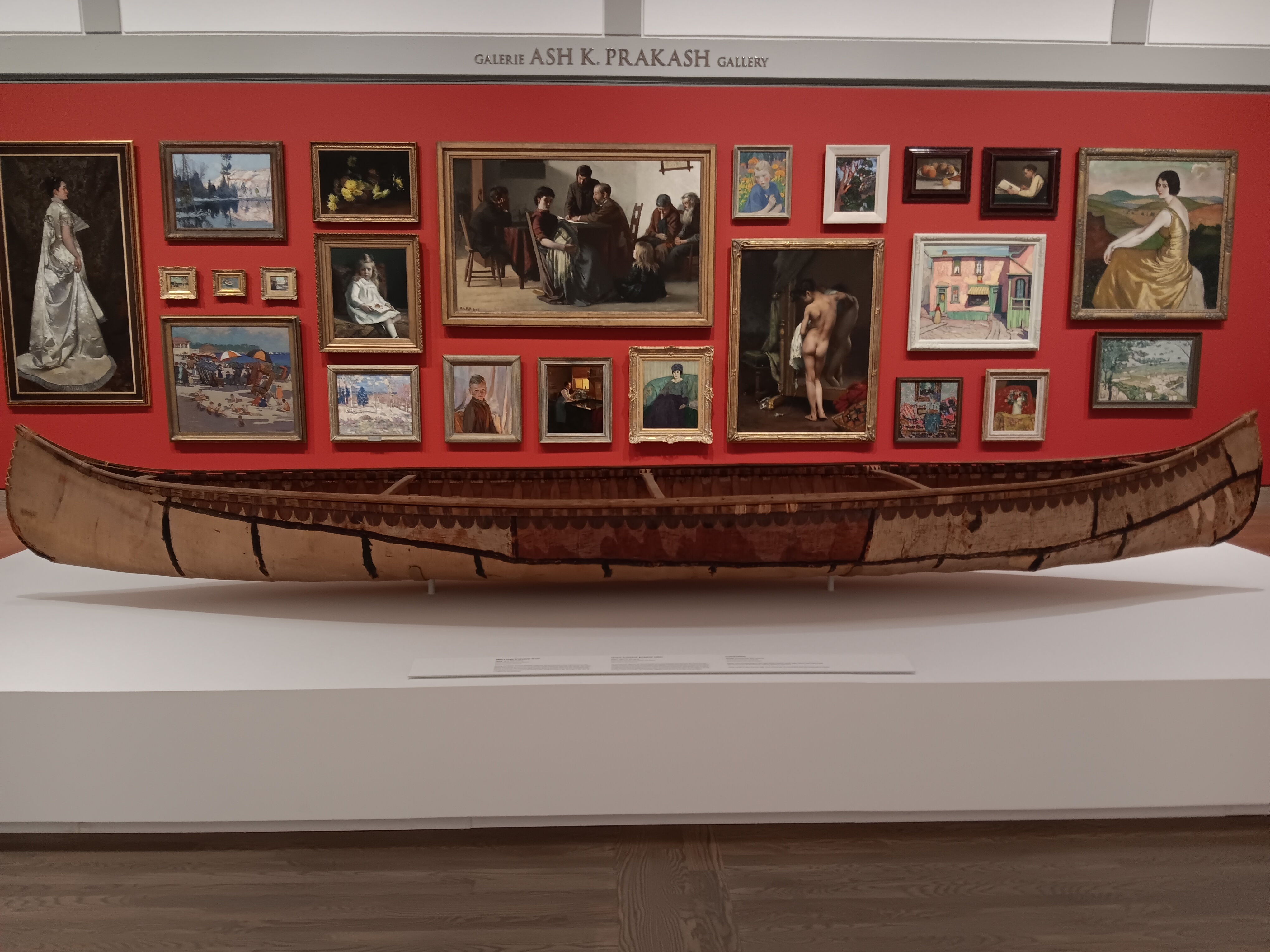
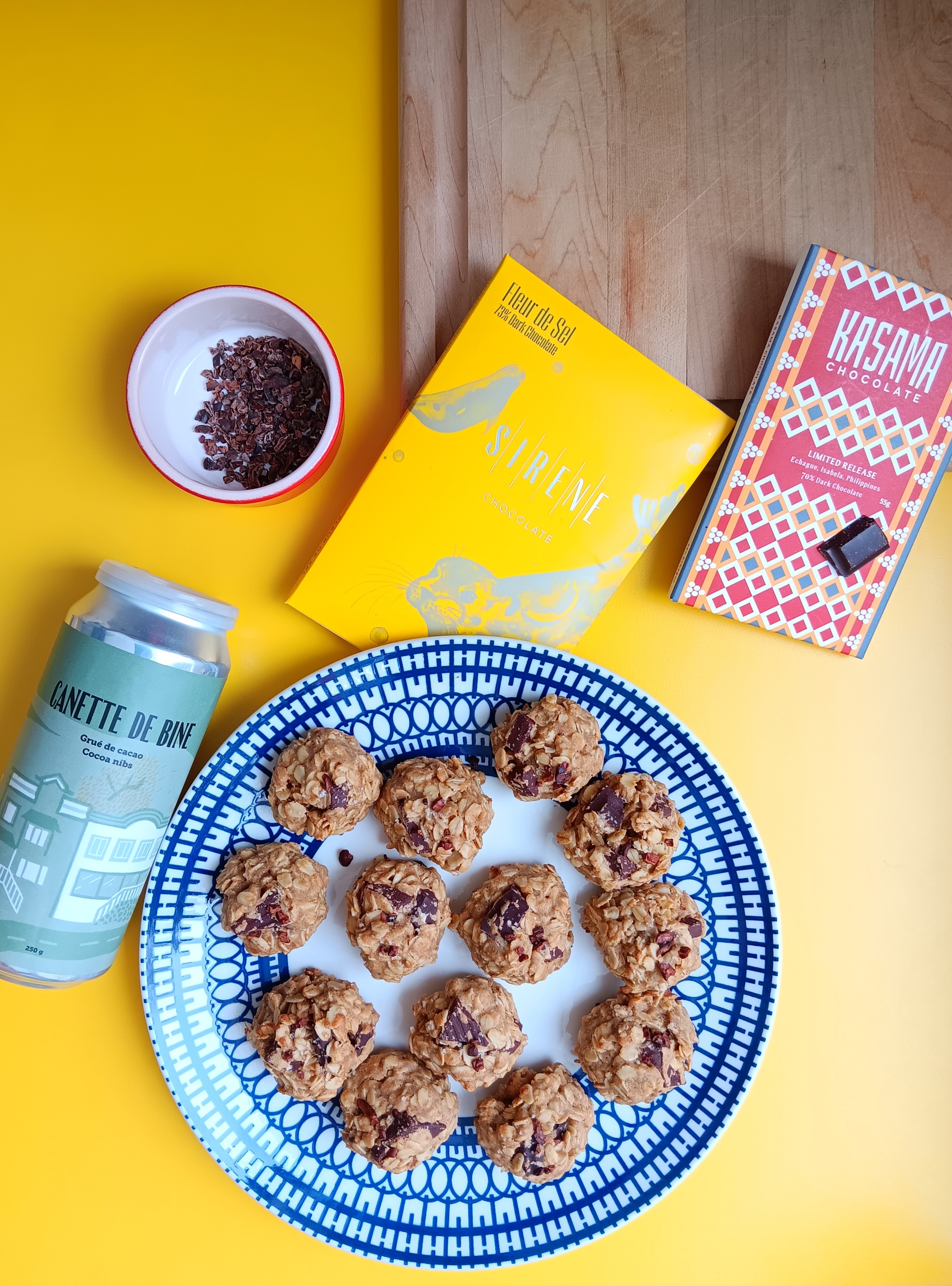
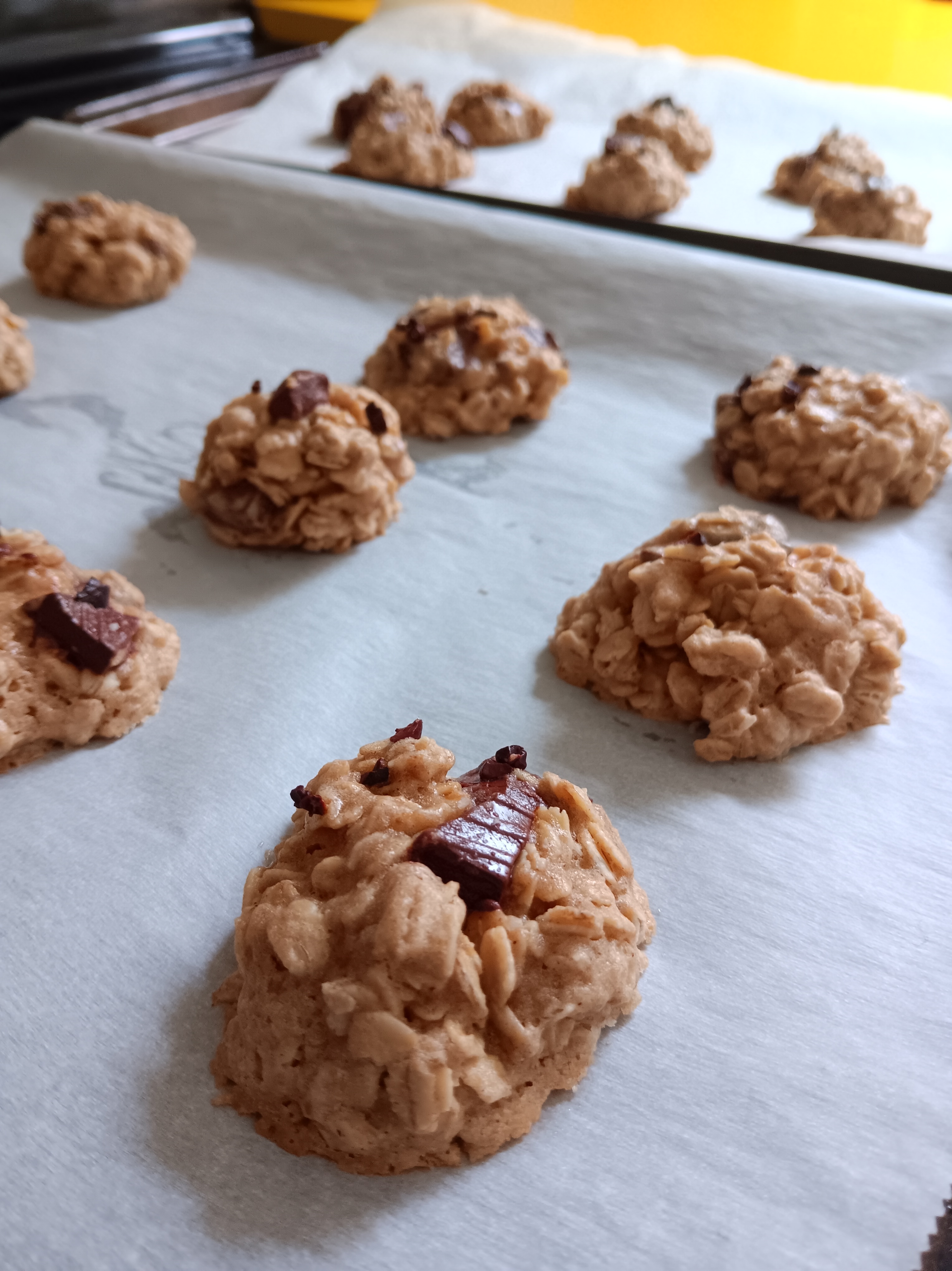
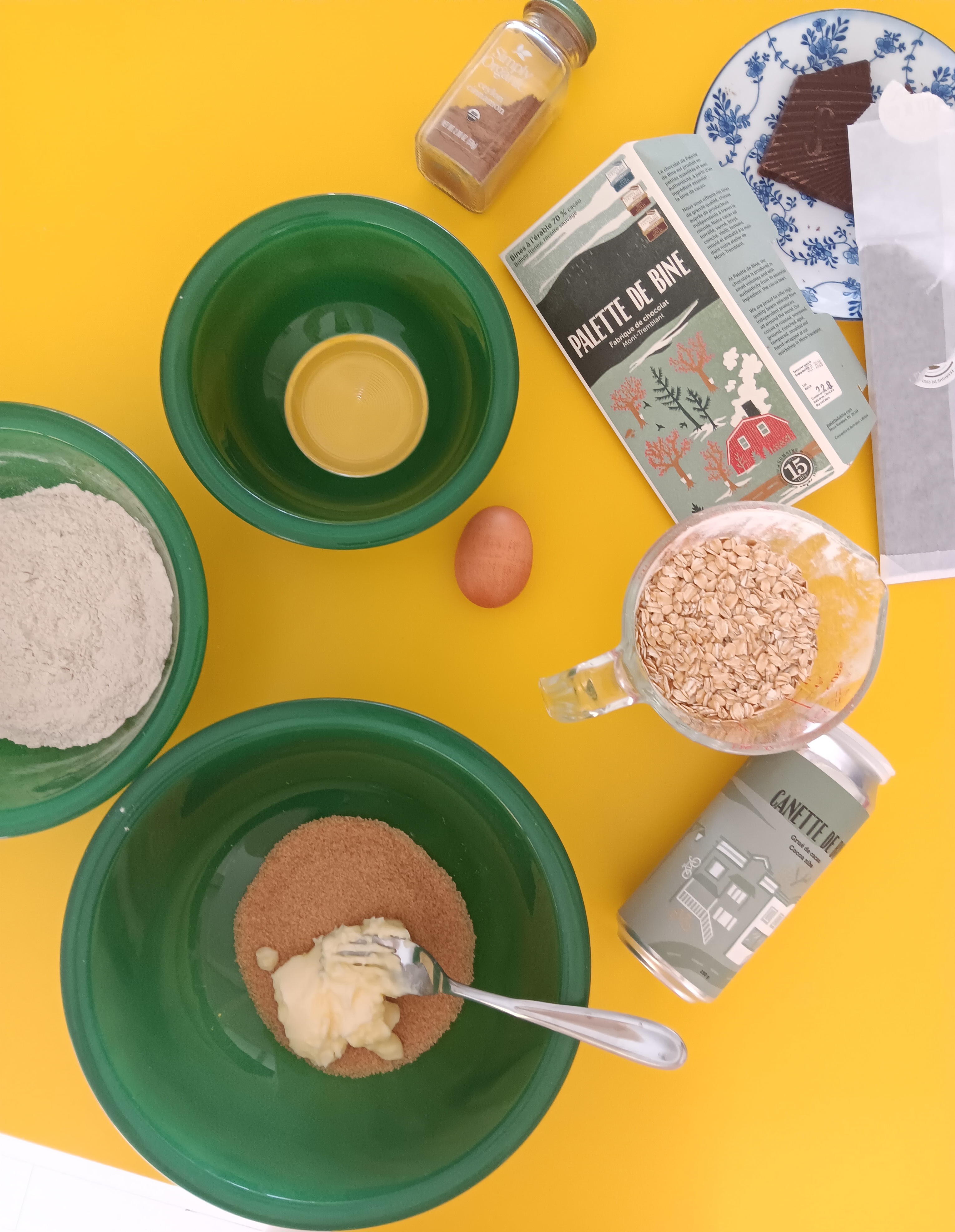
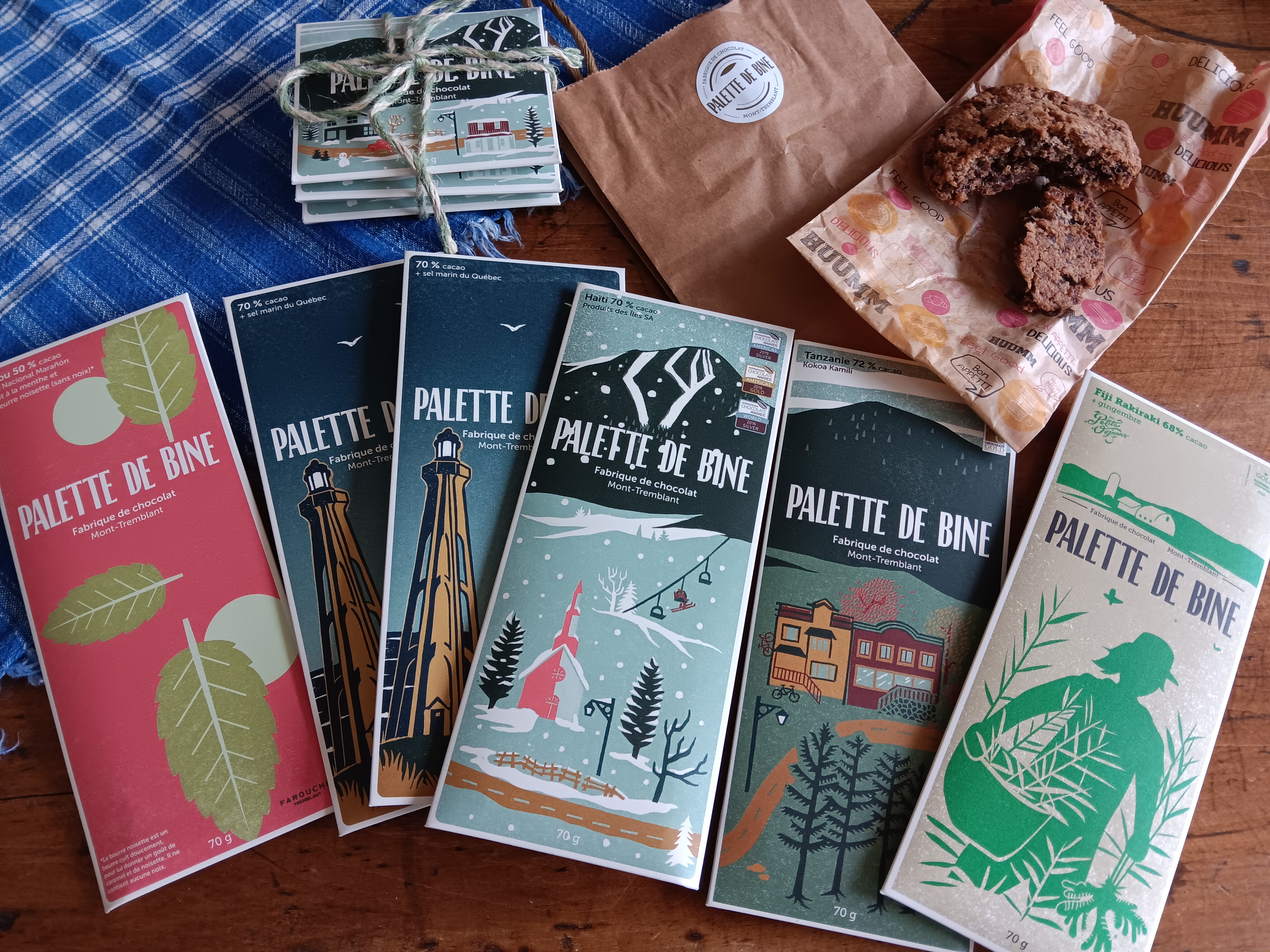
With César Aguilar of Cacaitos, of Colombia and Toronto, at the Ottawa Chocolate ShowChocosol hot chocolateCanada Parliament from Major’s Hill ParkFairmont Château LaurierCanada’s capital city, Ottawa, sits at the confluence of the Ottawa, Rideau, and Gatineau rivers. The latter two flow into the Ottawa River, which is a main tributary of the St. Lawrence River, into which the Great Lakes, an inland saltless sea, thunder and form an immense estuary, past Montreal, where dolphins and whales are among the abundant life. The word “river” does not begin to encompass the St. Lawrence, as the word “lake” does not approach expression of the enormity of this massive freshwater system, as you know if like me you live or have traveled in our glorious Great Lakes region on the US or Canada sides or both. Inside the National Gallery, Ottawa, with Earth and Sky (2008, 2012) by Shuvinai Ashoona and John Noestheden overheadA.Y. Jackson and Clarence Gagnon paintings at the National Gallery of Canada in OttawaTom Thomson tree portrait paintings at the National Gallery of CanadaEuropean and Indigenous works meet at the National Gallery of CanadaStaged after the Ottawa Chocolate Show: here is another view of some of the chocolate I shared in my talk at the Show; yes, I brought chocolate from near the US capital (Potomac Chocolate of Occoquan, Virginia, 20 minutes from Washington DC) to my talk in the Canadian capital because: international chocolate friendship!I loved baking Golden Age cookies with Canadian craft chocolate at the Canada lake house that I rented, located around 1 hour and 40 minutes north of Montreal, in the province of Quebec.
More Canadian chocolate I brought to and enjoyed at the lake house:
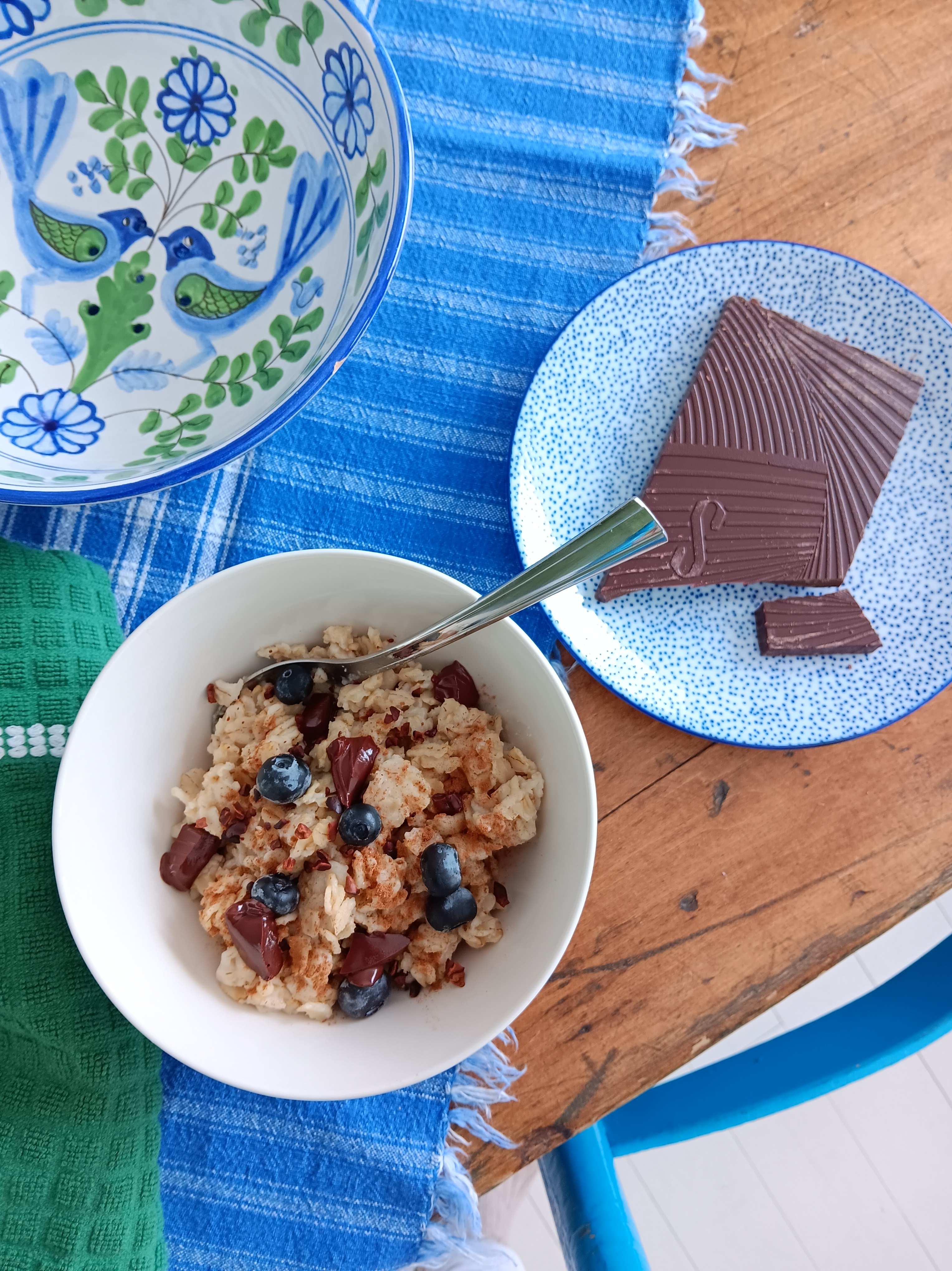
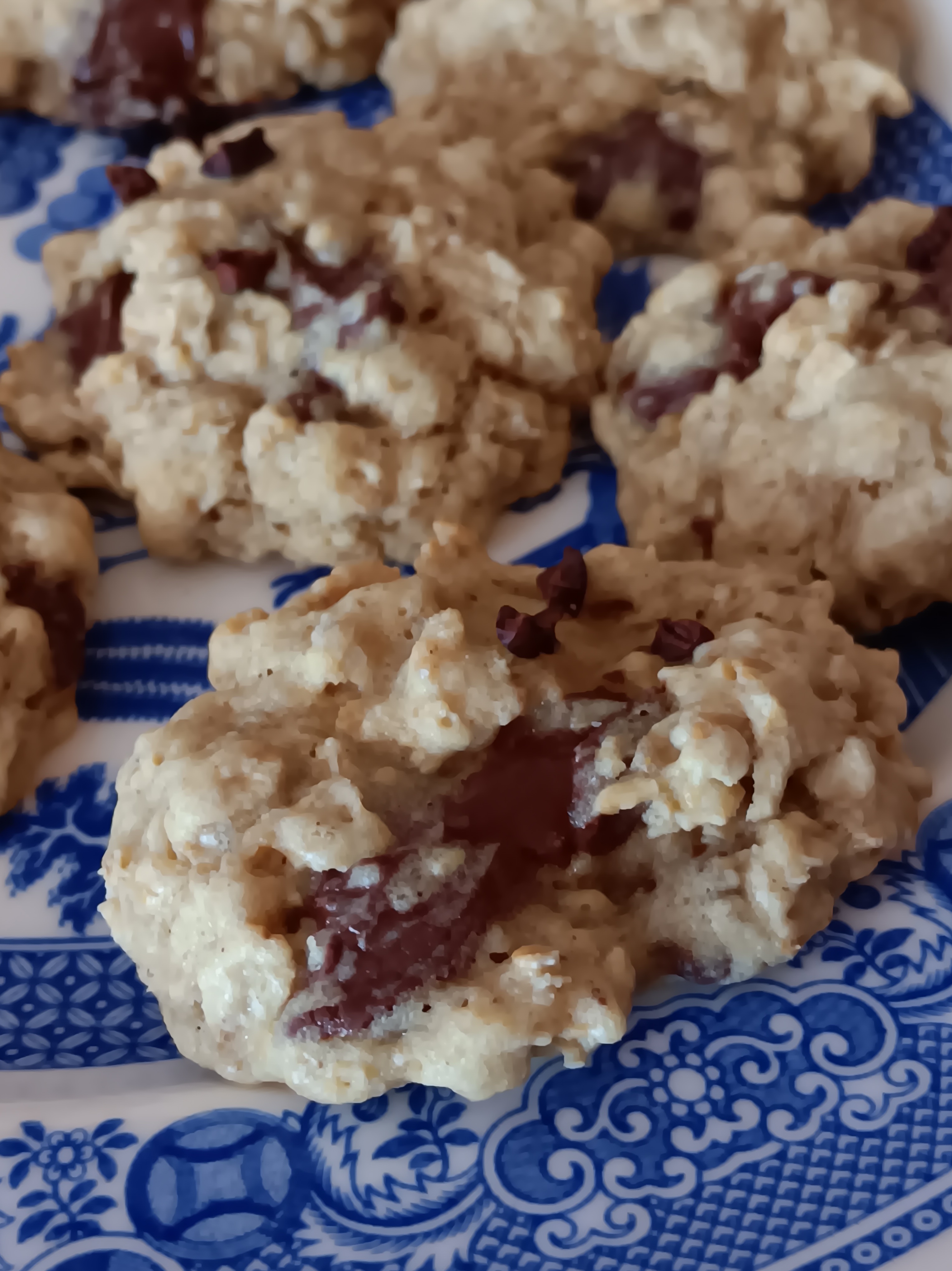
Brisk Quebec weather called for cozy Sirene Chocolate-topped oatmeal!
Part V. The House in Quebec (Montage 1)
Part VI. A Border Crossing Moment
As promised, a funny customs / border crossing moment: I flew from Chicago to Ottawa, and the Canadian customs officer looked me intently in the eye as customs officers do, and asked:
“What is the purpose of your trip?”
I looked him intently in the eye, as I do, and replied:
“Chocolate.”
“Oh!” he said. “What do you mean, chocolate?”
“I’m excited to speak at the Ottawa Chocolate Show.”
The officer asked: “Where is it being held?”
Pause.
“Oh! That’s a good question. I don’t know, a college, but I can’t remember which one!” (Sorry Algonquin, you were great, and I couldn’t have handled the videos and slides without student Kent, an A/V star!!)
The officer let me into Canada, to find the chocolate show, and voilà!
Part VII. The House in Quebec (Montage 2)
I am already looking forward to my next trip to fantastic Canada (Canada again-ida :)!
Part VIII. More Photos; Keep Eating Real Chocolate!
En route to charming Ottawa, Canada, from sweet hometown Chicago, as my latest Canadian adventure began in Fall 2024! I didn’t know until after this trip that for my first trip to Canada, when I was an infant, my mother dressed me in what she called a “fluffy pink snowsuit;” here I am now in a pink era again. Onward and upward as the spiral of life continues into the (evidently pink-tinged!) Golden Age!
When I was four years old and wouldn’t drink milk, my mother wrote a note to my kindergarten teacher asking her to give me chocolate milk. Astounded that the chocolate I loved to eat could enhance milk, I wanted to know more: Where does chocolate come from, who makes it and how, and why don’t we put it in everything? My lifelong study of chocolate began.
Globally beloved chocolate, health-rich and heart-warming, made from the seed of the fruit of the cacao tree, has always seemed to me to be one of the most valuable foods, beverages, or experiences on the planet. The Aztec, Maya, Olmec, and other peoples knew and know cacao’s health benefits, ecosystem contributions, and power to support vitality. Cacao opens the heart, focuses the mind, and enriches the earth. Today, a focus on the monetary value of commoditized cacao threatens to overshadow the human rights abuses and environmental degradation in the corporate-run cacao and chocolate industry. Over-financialization also obscures solutions that are already as close at hand as my childhood carton of chocolate milk.
Having cultivated my chocolate fascination throughout my educational career, I made sure as a young attorney at a big law firm in Chicago that my desk always held a dish of chocolates to savor and share. One day, a project for one of the largest cacao processors in the world landed next to my chocolate treasures. The client was a multinational, multi-billion-dollar food and ingredients corporation that processed and traded in cacao grown and harvested by child slaves in West Africa.
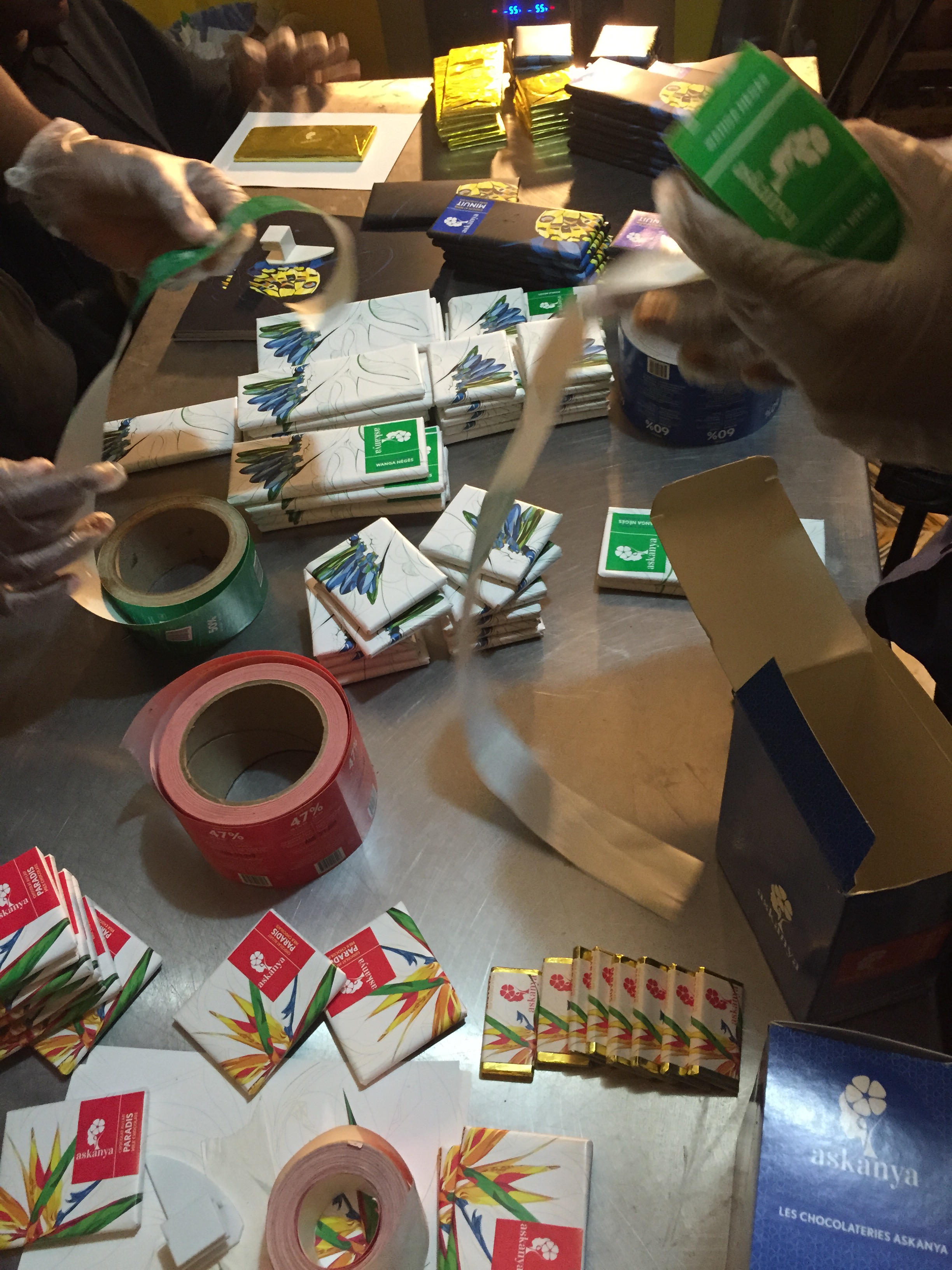
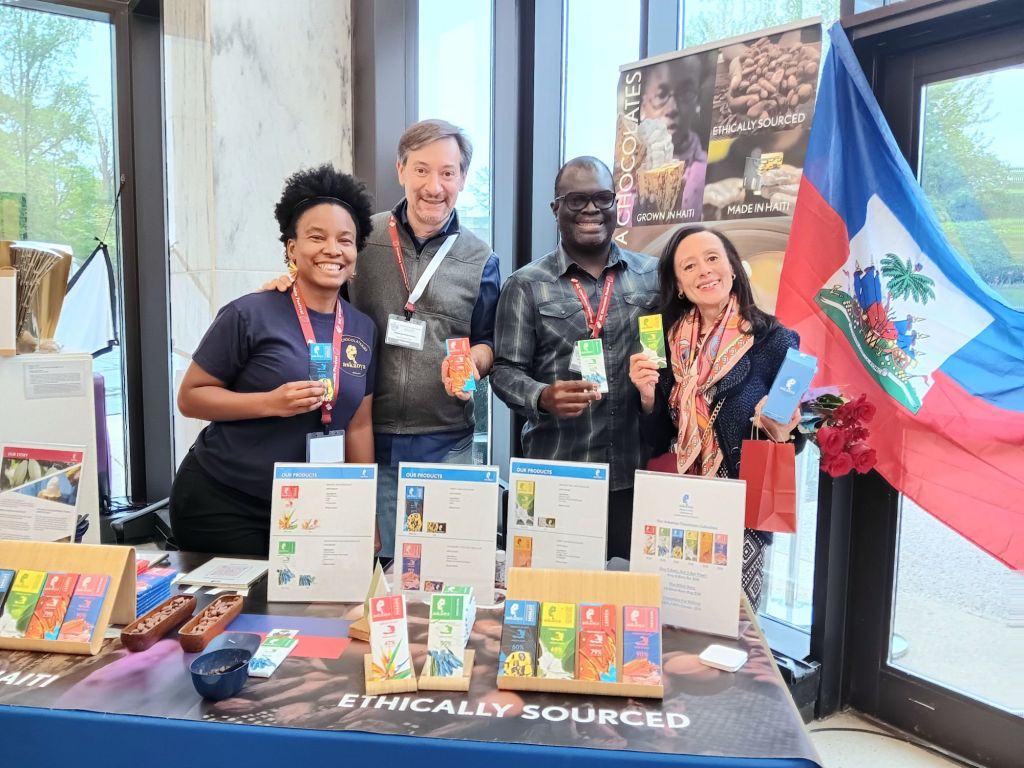
Photo: Askanya Chocolate of Haiti
The Problems
The United Nations describes much of the work done by one and a half million children on cacao farms in Cote d’Ivoire and Ghana, the countries that produce 70 percent of the world’s cacao, as the worst form of child labor. The children swing machetes to hack cacao pods, carry heavy equipment and sacks of cacao, and spray chemical herbicides that cause deforestation. Many of them have been trafficked. They neither go to school nor live with their parents. In most cases, they are not paid.1
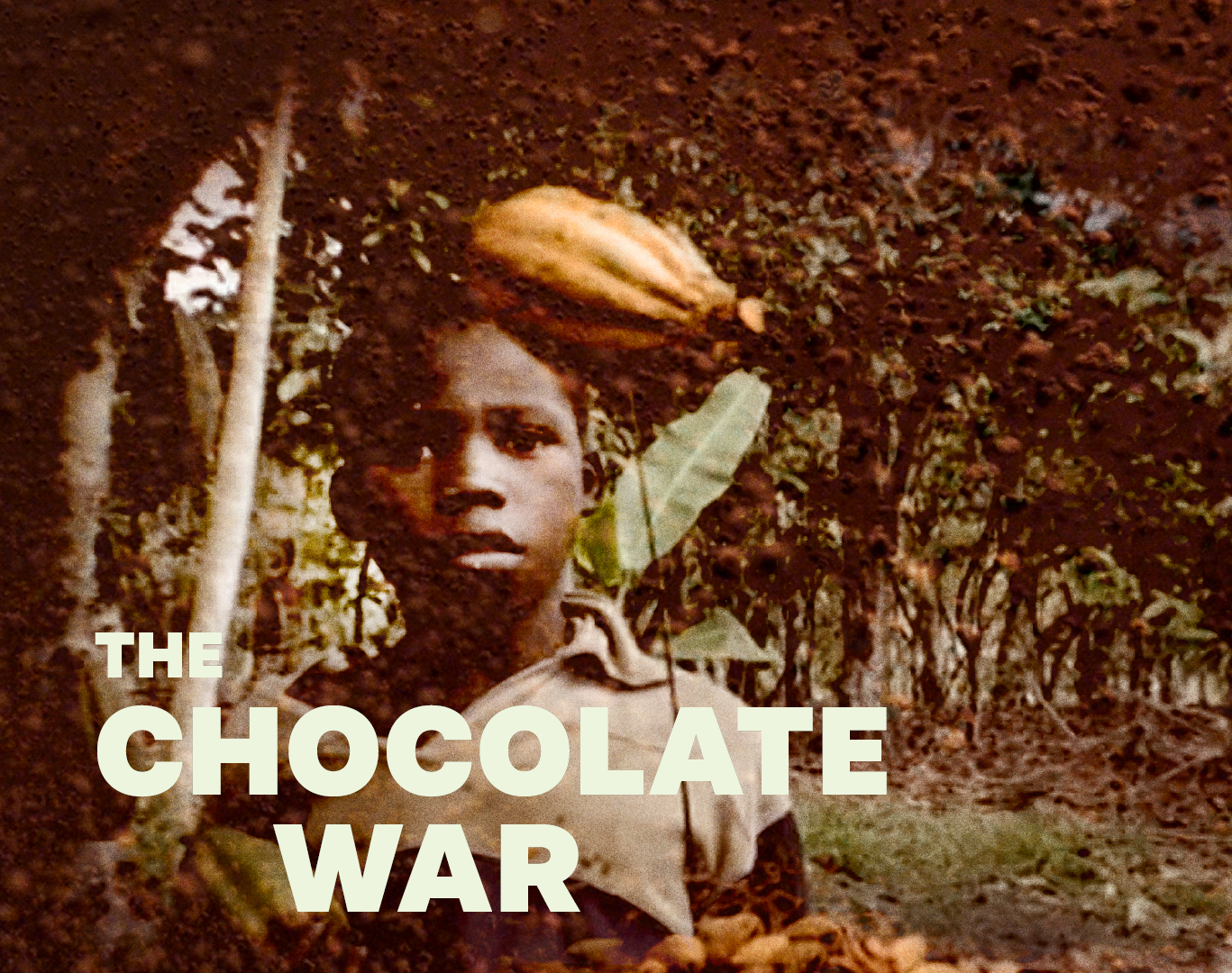
Child labor on cacao farms has been documented for years, including recently by The Washington Post,2Fortune Magazine,3 and CBS News.4 The latter aired a story in 2023 showing children as young as five years old working on a cacao farm that supplies Mars, the maker of Snickers and other chocolate brands. The documentary “The Chocolate War”5 by filmmaker Miki Mistrati follows human rights lawyer Terry Collingsworth as he gathers evidence for his lawsuit against chocolate corporations. At one point in the film, we see children working on a Cote d’Ivoire cacao farm that bears a Nestle sign, while Nestle lawyers argue in court that the company does not condone child labor, and as Terry uncovers documents confirming Nestle’s purchases of cacao from farms where children engage in heavy or hazardous work.
Photo: Askanya Chocolate of Haiti
The Money
The US Department of Labor’s Bureau of International Labor Affairs discusses the need for a global cocoa supply chain free of exploitative labor6 and coordinates millions of dollars in technical assistance to organizations such as Winrock, a Rockefeller-founded nonprofit that received a $4,000,000 grant to improve the capacity of cocoa cooperatives to monitor for child labor.7 Meanwhile, cacao farmers in West Africa earn less than one dollar a day—with female cacao farmers earning less than men—well below what the World Bank calls a living income.8
When we hear of cacao prices rising from $2,000 per ton to over $10,000 per ton, is this good news for West African cacao growers? No, because no profit reaches them. The corporations take advantage of political landscapes where the rule of law is not respected and where, instead of a free market where growers can set their own prices and sell to whomever they choose, a system exists in which farmers must sell to the cacao agencies run by the governments of Cote d’Ivoire and Ghana. The governments, mindful of what the corporations will pay, set the minimum price of cacao and the wage that farmers will receive. In other words, regardless of rising costs of inputs or rising prices of outputs, or who the farmers might wish to sell to, farmers are locked into government-regulated prices and contracts that benefit the corporations who profit from a global chocolate industry, currently valued at $120 billion.9 The farmers who make the industry possible remain in poverty, and impoverished children remain vulnerable.10
Moreover, the prices that have been increasing from government-set minimums are futures prices on commodities exchanges, which means that hedge fund managers and other traders who are not part of the chocolate industry can speculate on the prices and drive them higher. Certain traders with a position in cacao have no intention of taking delivery of physical cacao, yet have caused prices to rise and have profited.11 I invited audience members at a talk I gave at the DC Chocolate Festival, held in Washington, DC, in April 2024,12 to imagine a fleet of trucks backing up—beep, beep, beep—in front of Wall Street office buildings to deliver tens of thousands of tons of cacao. Of course, no such deliveries happen, because hedge funds and private equity firms are in the business of making money, not chocolate. Do we want a society where corporations, funds, and firms make money from child labor? The London Metals Exchange began regulating child labor in cobalt. Will we see commodities markets for cacao follow suit? Do we want human rights protections to be financialized, especially when profiteering has already overridden principles, causing and exacerbating problems in the first place?
As for the narrative that commodity cacao has become expensive: how can this be true when the price is set artificially, was and has remained depressed for decades until recent surges, and is in some cases ten times less than the price of the fine flavor or specialty cacao that my bean-to-bar chocolate maker clients purchase directly from farmers in other parts of Africa and the world?
Photo: Askanya Chocolate of Haiti
The Solutions
It may seem that large forces keep control of cacao, chocolate, and children in their hands, yet the solutions are in our hands. Corporations are a legal fiction that we can challenge. Governments are a political invention that we can rethink. Alternate supply channels already exist. There are two chocolate economies: the commoditized version based on abuse of people and planet, and a growing chocolate economy based on transparency and flavor.
When I started my first business, Chicago Chocolate Tours, in 2005, there were few chocolate makers who purchased cocoa beans to grind them into chocolate, compared with chocolatiers who purchase chocolate that has already been made—often by a large company using bulk cacao from the slave labor supply chain—before adding their own fillings or other touches. One pioneering chocolate maker was Shawn Askinosie, who is also a formerly practicing attorney and who began his business in 2006. Shawn purchases cacao directly from slavery-free and sustainability-focused cacao growers in Ecuador, the Philippines, and Tanzania, where he profit-shares with farmers and partners with them on community investment.
I spotlighted ethical, delicious Askinosie Chocolate13 on my tours. As the number of bean-to-bar brands grew, and my own team and our number of tour locations grew, I developed relationships with other chocolate makers, and my Tourguides and I began including their chocolate on tours and in tastings. Today, there are hundreds of small-batch chocolate makers in the United States and throughout the world, as more entrepreneurs, makers, chocolate lovers, and conscious shoppers discover the complex flavors and principled business dealings of the craft chocolate community.
How can you identify ethical chocolate, and how can we shift our world so that companies and governments that profit from problems in cacao will solve the problems they have helped create? To choose healthful and ethical craft chocolate made from cacao that is not traded on commodities markets but purchased directly from growers:
1) Look for the cacao country of origin or the growers’ collective on the label to know if the chocolate bar carries transparency or is of non-identifiable (and therefore likely abusive) origin;
2) Buy from small-batch brands who purchase and grind their own cacao. Read about their sourcing; for example, Xocolatl Small-Batch Chocolate14 shares details on their website of the Nicaragua, Peru, and Uganda farms where they purchase cacao, and Raaka Chocolate15 publishes excerpts of their transparency report on the inside of their wrappers; and,
3) Read the back of the bar to confirm the chocolate is made from clean ingredients with no additives, because chocolate makers who work with fine flavor cacao typically want to showcase, not mask, subtleties of flavor.
And note the taste! The San Jose del Tambo Ecuador chocolate bar by Askinosie that I am savoring while writing this article is made from direct trade cacao, organic cane sugar, cocoa butter pressed in-house—and nothing else. The bar delivers flavor notes of honey, jasmine, orange peel, and earthy-tangy black currant, with a burst of tannins on a gently creamy texture followed by a clean, dry finish. Sample it alongside a commercial bar that you might have on hand, and you will undoubtedly instantly taste the difference.
To stop corporations from profiting from child slave labor, deforestation, or chemical contamination of nature and our bodies, shouldn’t we ensure they pay farmers a fair price?16 Shouldn’t we expect further corporate accountability and the end of child labor, chemical herbicides and pesticides, and pollution during production? To accomplish these ends, we can support positive legislation, share information with our local communities,17 and choose which of the two chocolate economies to support: the extractive and industrial system where chocolate is a commodity made by corporations at the lowest cost possible while children pay with their childhoods, or the alternative and uplifting economy — already in operation, buoyed by bonds of affection — in which chocolate is a nuanced food, made by small teams, from transparently-traded cacao that nourishes humans and ecosystems.
We can make the problem disappear by creating a reality that makes it obsolete. We know where our wine and craft coffee come from; shouldn’t we know where the cacao in our chocolate comes from? The big brands cannot argue that transparency is impossible, because the craft chocolate community lives transparency as a daily reality. You can too by voting with your dollars or other currency for the chocolate economy you prefer.
Photo: Askanya Chocolate of Haiti
The Value
When my desk at the law firm presented the choice of abuse-based industrial chocolate or principle-based artisanal chocolate, I left the law firm and followed my heart into chocolate. Chocolate and cacao have introduced me to fascinating people, places, flavors, and ideas, as the value of chocolate in my life radiates beyond price tags. Chocolate invites us to re-evaluate our values and prioritize empathy and equality, courage and compassion, justice and joy, liberty and love, as we create the Golden Age we wish to experience and deliver to future generations of children and chocolate lovers.
ENDNOTES
1 Sidney Krisanda and Hannah Rojas, “Child Labor in Cocoa Supply Chains: Unveiling the Layers of Human Rights Challenges,” Sustainalytics, March 26, 2024,
Valerie Beck is a graduate of Harvard Law School and Harvard College; a chocolate services entrepreneur who founded Chicago Chocolate Tours and grew the business to 5 cities with 50 employees; a consultant through Chocolate Uplift to small-batch chocolate makers and growers in ethical cacao supply channels; and a mentor of students who seek to follow their own paths.
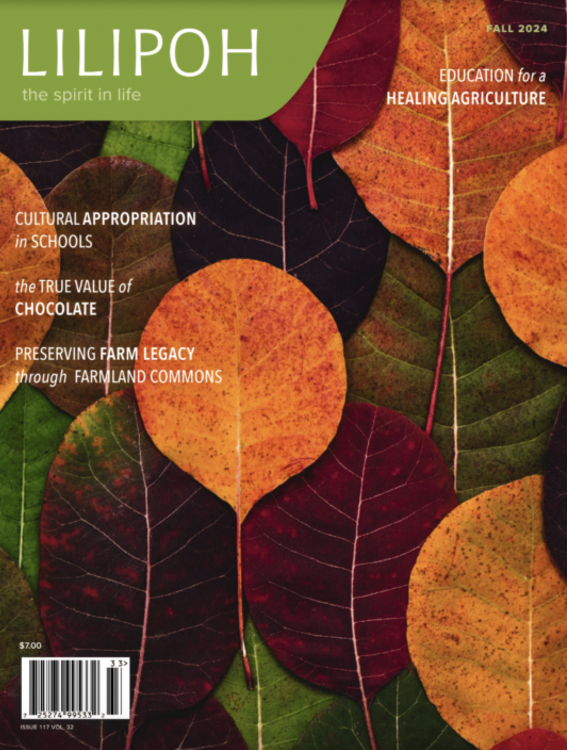
Thank you to dear Karen Davis-Brown, Contributing Editor of LILIPOH Magazine — a publication about how education and economics can support local communities, enlightened views on caring for and working with the land, and social change and human development — for suggesting, supporting, and editing the above article.
I met Karen in Wisconsin while I was staying at Kindred Farm Retreat, an organic farm and writer’s and artist’s retreat in Saint Croix Falls, and am grateful to farm founder Kathleen Melin for connecting us through the circles, lines, and spirals of community. More news to come on chocolate tastings I held in that beautiful region!
Fun fact if you made it this far: LILIPOH stands for Life, Liberty, and the Pursuit Of Happiness through Health!
Onward and upward!
Your friend in chocolate,
Valerie
Summer 2024 in Saint Croix Falls Wisconsin, where I met the people who directly facilitated this article: Kathleen Melin of Kindred Farm Retreat and Karen Davis-Brown of LILIPOH Magazine. Thank you!
[Post-event update — scroll down below my signature for these 2024 materials:
eventphotos are below my signature,
along with a Confectionery News article related to our topic, and,
by request, I’m also attaching my Golden Age Cookies recipe below; I’m thrilled attendees enjoyed the cookies!]
In the meantime: cacao and chocolate are priceless!
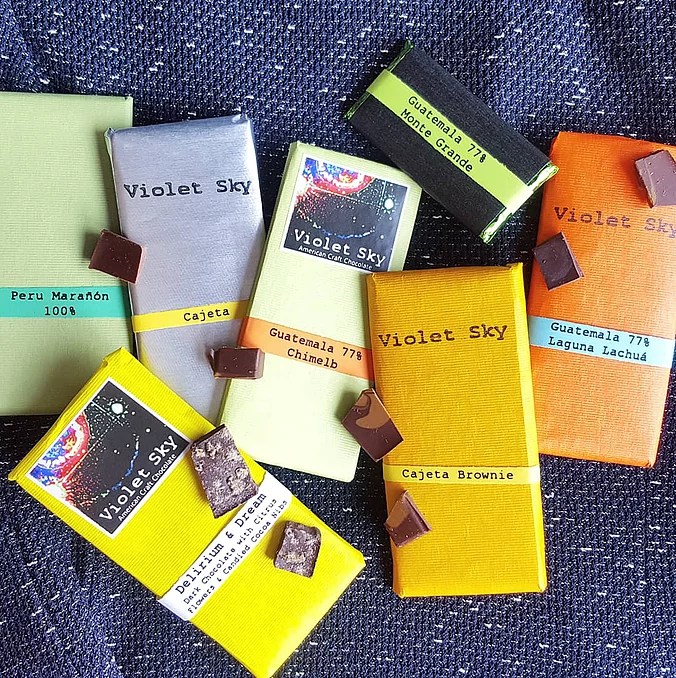
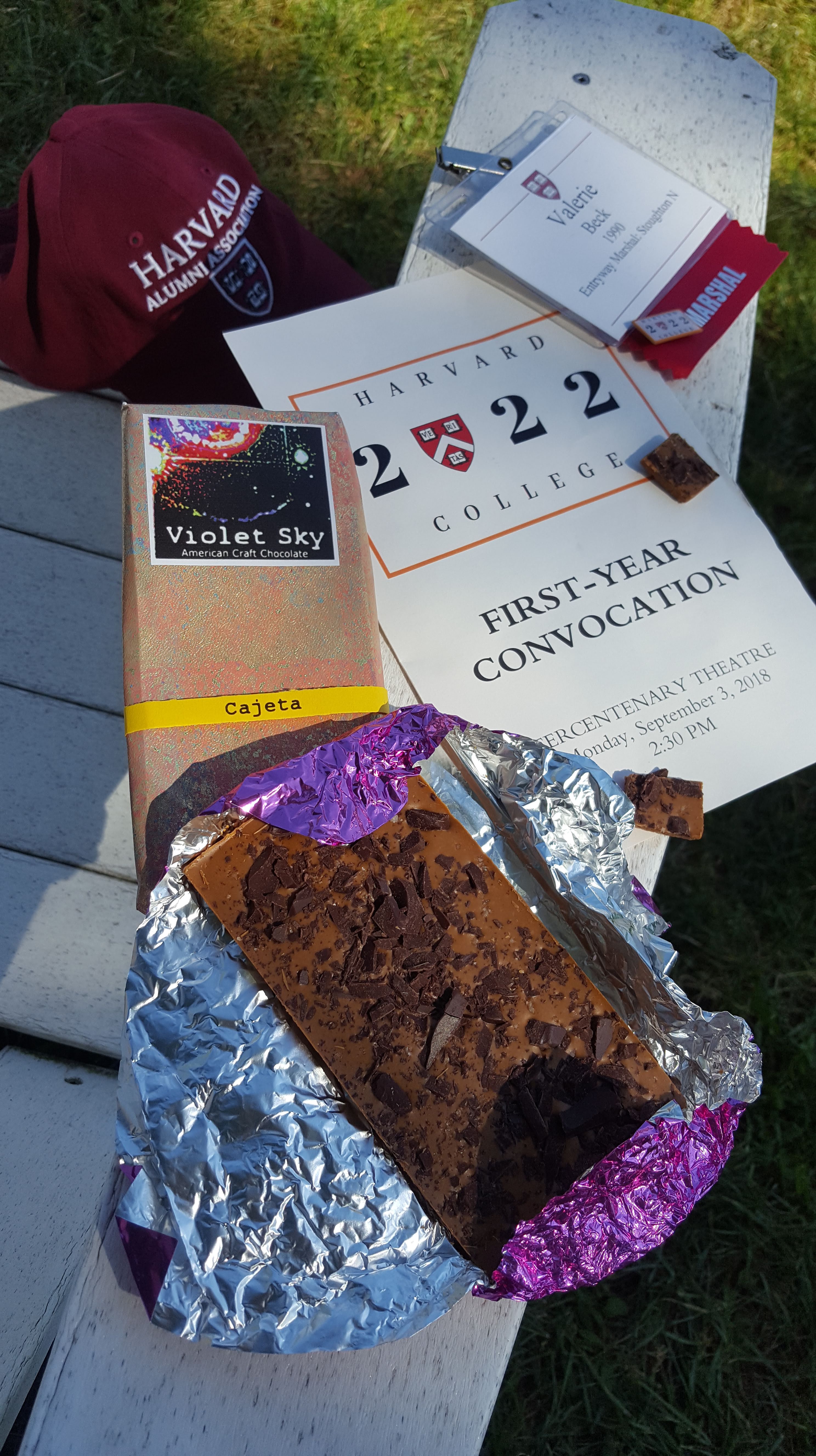
I baked Golden Age Cookies to share with my audience, using Crow & Moss Chocolate of Petoskey, Michigan — India chocolate, and Violet Sky Chocolate of South Bend, Indiana — Bolivia cacao nibs. The value of chocolate is exponential!
Against a backdrop of cocoa topping $11,000 per metric ton on the futures market for the first time last week, Oxfam says its experts will be highlighting the discrepancies in farmgate price at this week’s World Cocoa Conference (WCC) in Brussels (21-24 April).
Rotary International’s values of environmental protection and peace have always resonated, and the East Sacramento club’s anti-trafficking projects parallel anti-slavery work in cacao. Thank you to club President Jim Fritzsche for inviting me!
Quick notes from “backstage”:
For millennia, chocolate has been associated with matters of the heart, health-wise and love-wise.
The Aztecs, Maya, and other indigenous people understood cacao’s physical and emotional benefits.
Contemporary studies have identified compounds in cacao that protect the heart and elevate the mood.
Sometimes one taste is all it takes to uplift our outlook.
Slides — see the comments section for links, videos, and information.
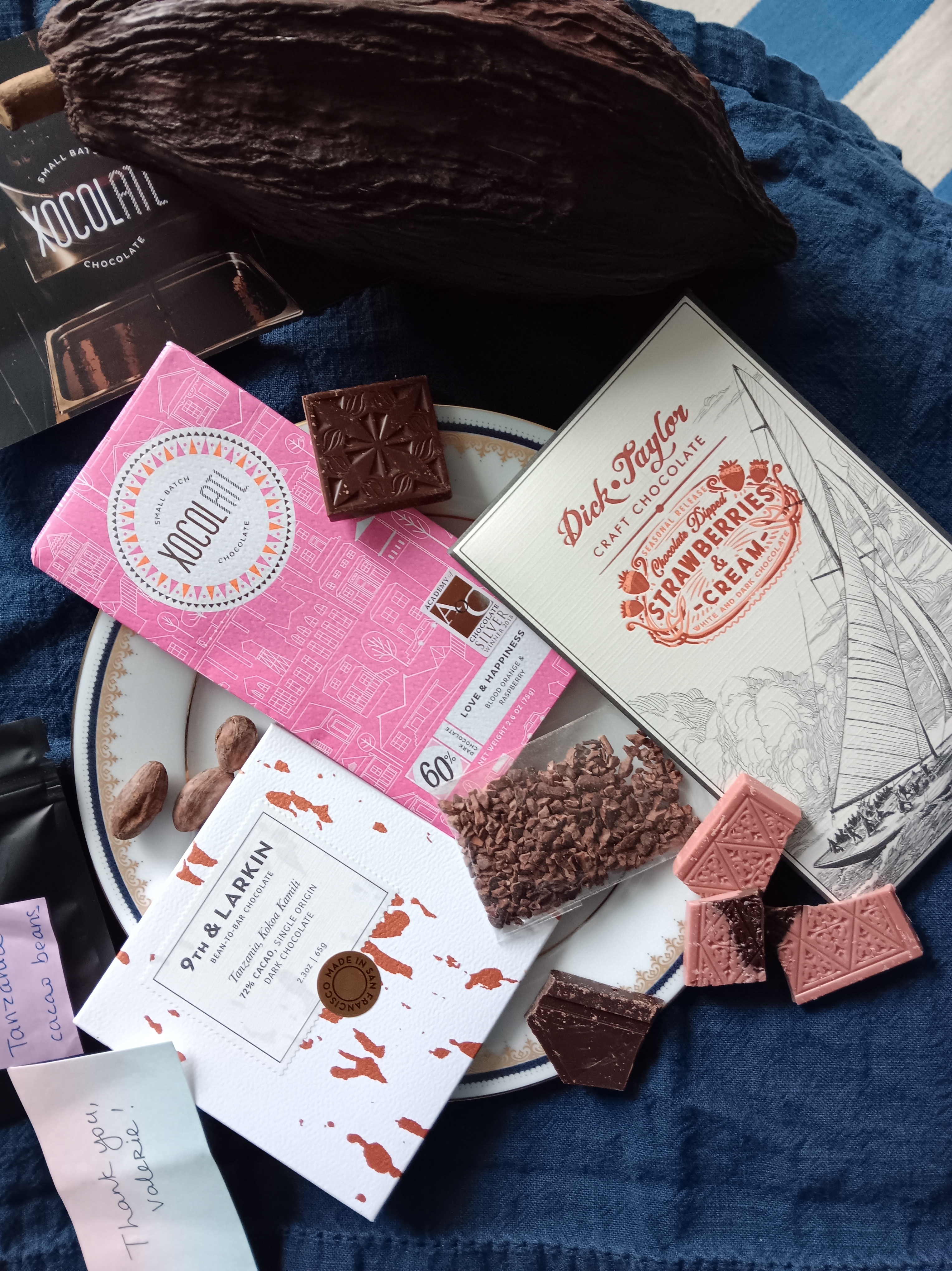
See photo above for the menu, including two made-in-California bars, and here for links to the chocolate makers —
9th & Larkin Chocolate of San Francisco, California: 72% Tanzania Kokoa Kamili and corresponding cocoa bean https://www.9thandlarkin.com/
Xocolatl Chocolate of Atlanta, Georgia: Love & Happiness 60% Peru Pangoa and corresponding cacao nibs https://xocolatlchocolate.com/
Dick Taylor Chocolate of Eureka, California: Chocolate Dipped Strawberries & Cream bar on 72% Belize https://dicktaylorchocolate.com/
— and remember to Look, Sniff, Taste to identify and enjoy craft chocolate that is: slavery-free, soy-free and synthetic additive-free, sustainable and soil-regenerative, small-batch, and scrumptious!
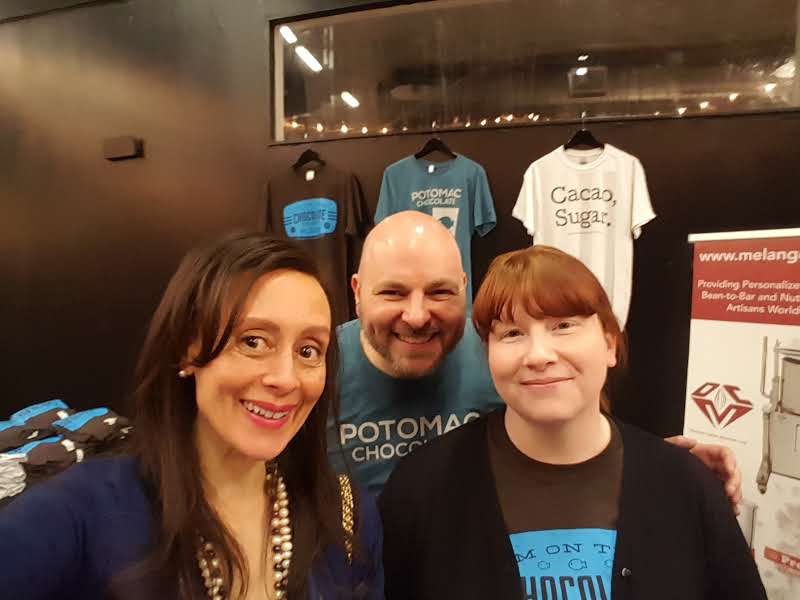
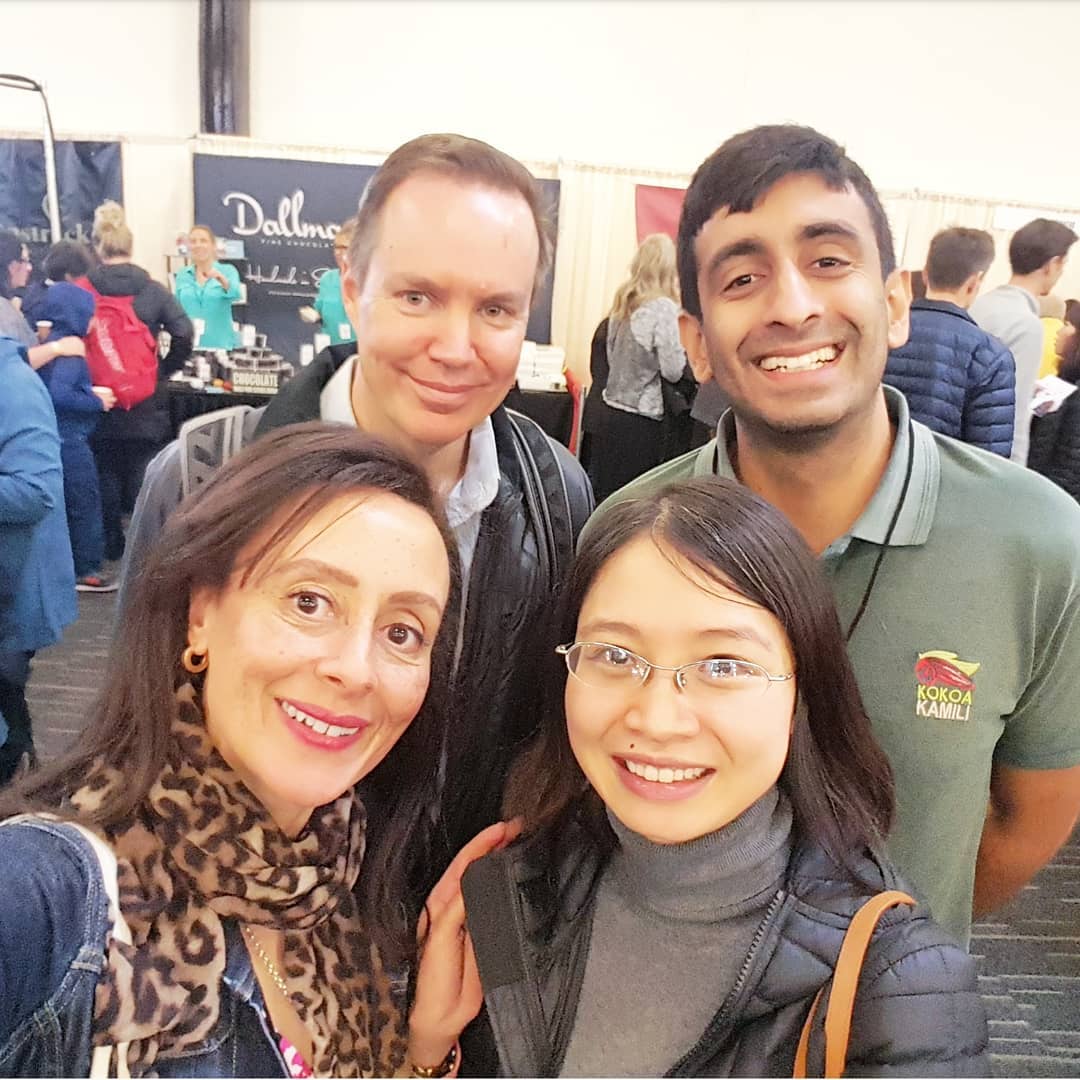
Here I am with Lan Phan of 9th & Larkin Chocolate (front), whose Kokoa Kamili bar we tasted today, plus her husband Brian and Kokoa Kamili Tanzania grower Simran (back, left to right) at the Northwest Chocolate FestivalWith Dustin Taylor, Adam Dick, and Deanna Dick of Dick Taylor Chocolate at the Northwest Chocolate Festival
Here’s to an East Sacramento Rotary Club motto: “We are serious about what we do, but not always serious while doing it.” Onward and upward!
What a blast to hold a special event for innovative Chicago attorney and dear friend Daliah Saper’s exciting Saper Law Immersion Program https://www.saperimmersion.com/, during which a bright and motivated cohort of high school and college students hear from lawyers in different specialties and work environments — including lawyers-turned-entrepreneurs like me!
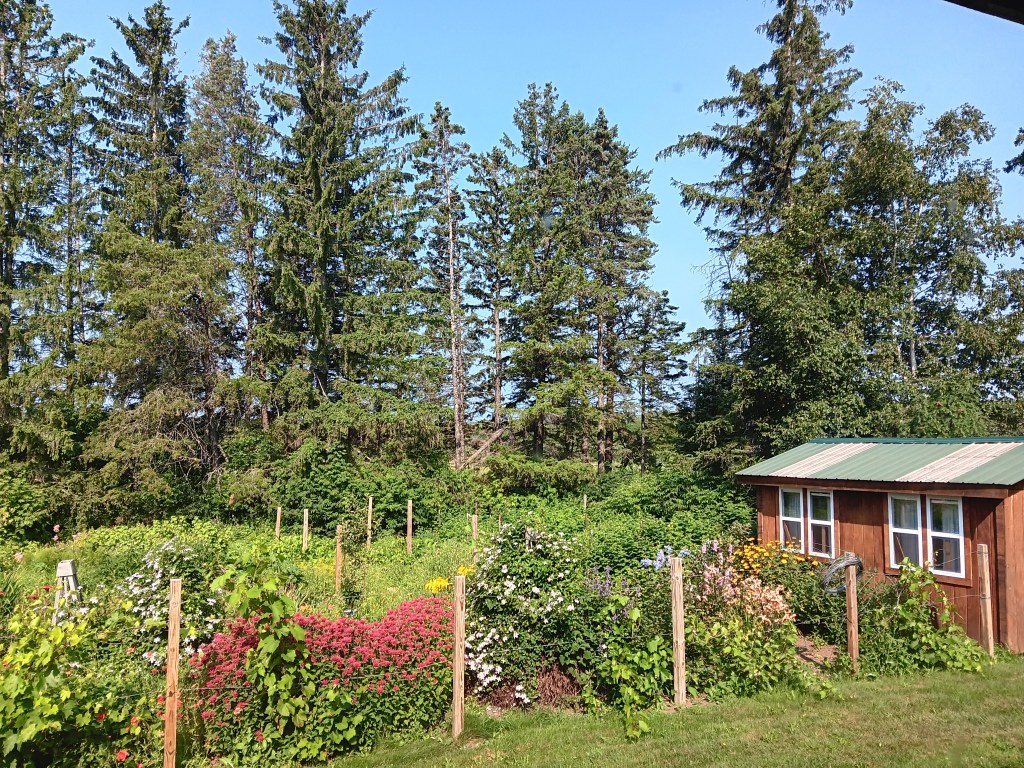
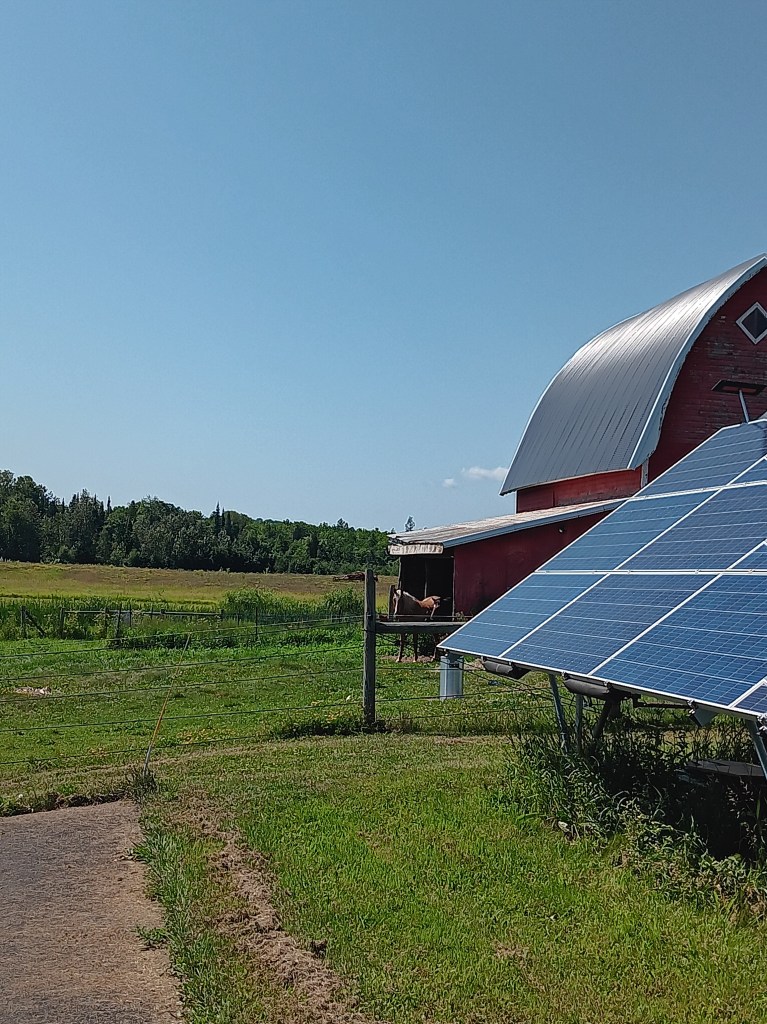
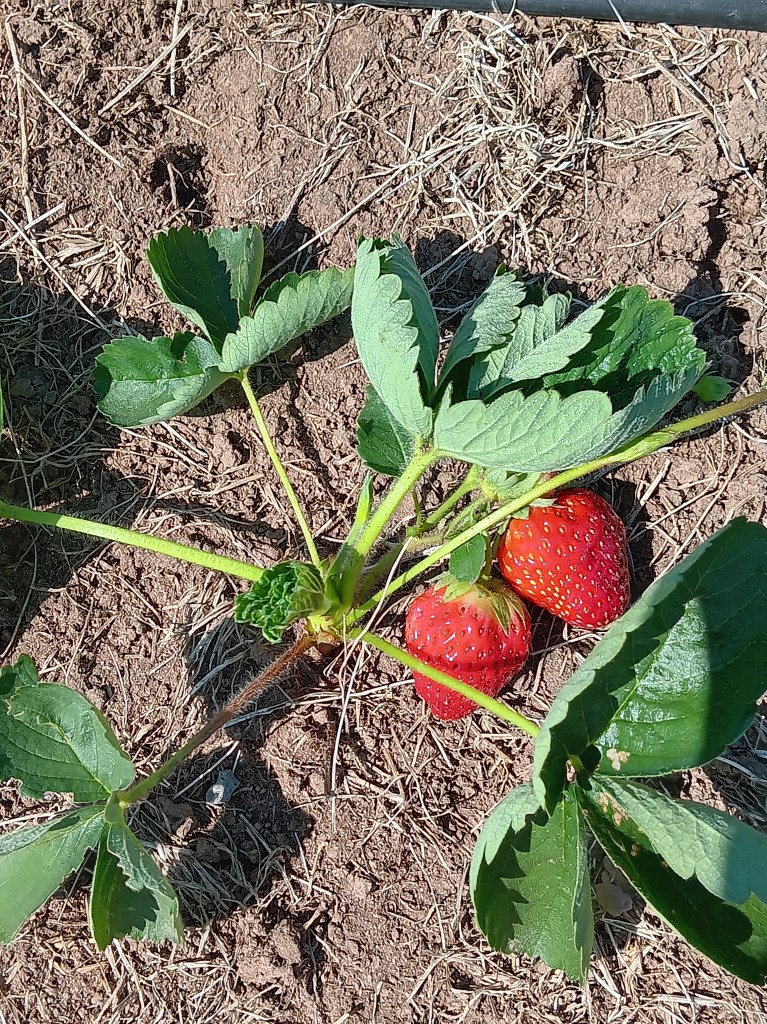
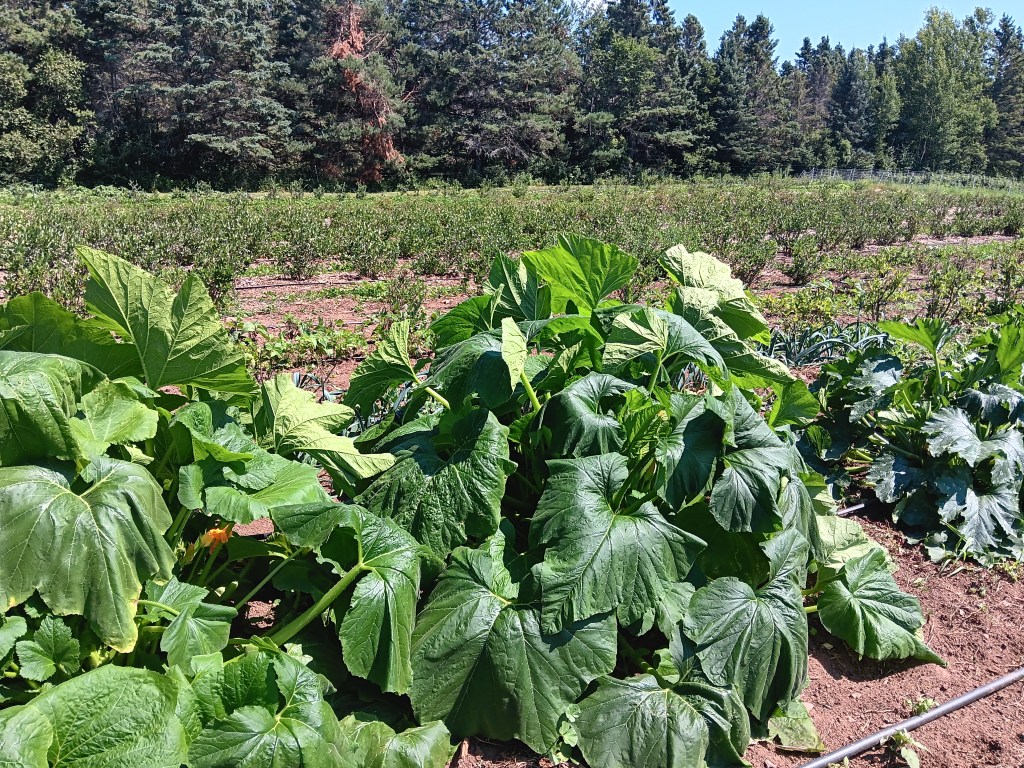
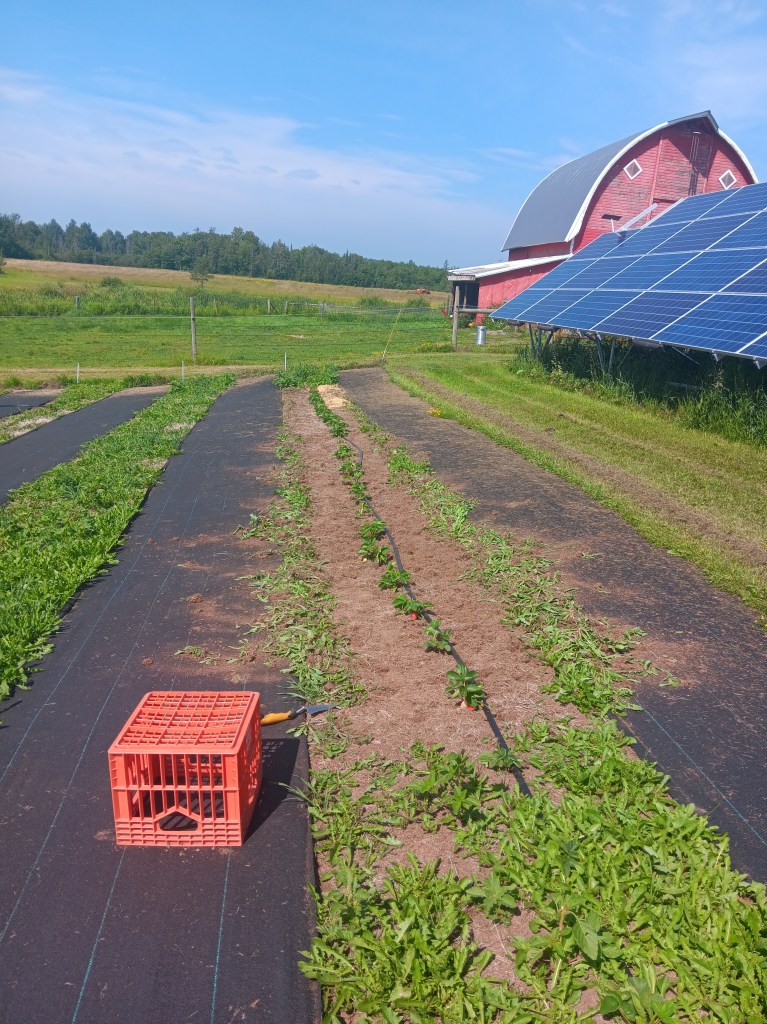
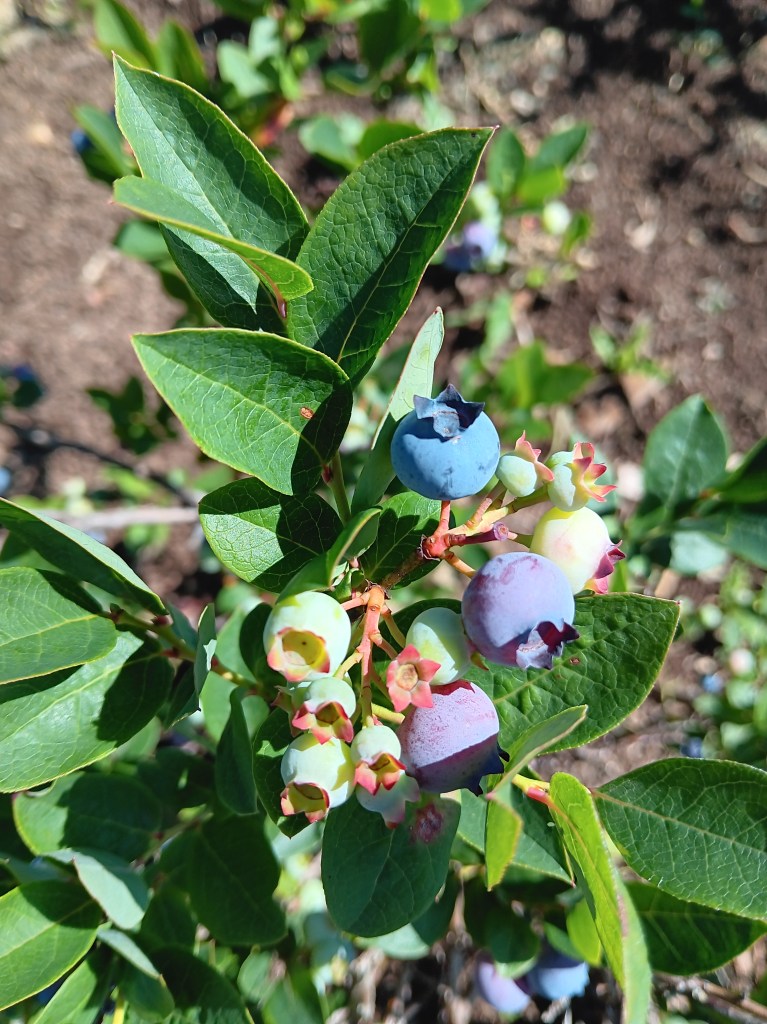
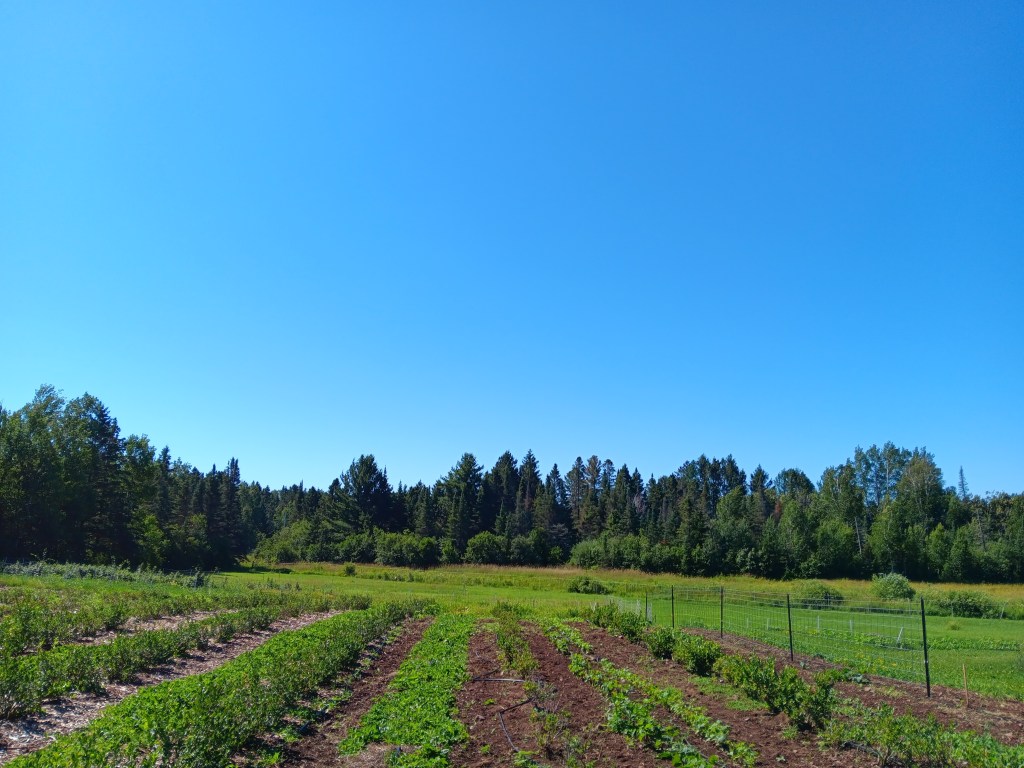
Note: I’m offsite on a small organic berry farm in Minnesota – scroll down for photos – and can’t seem to hyperlink text from the app on my phone; please forgive that the URLs in this post are spelled out, which I hope you won’t find too distracting.
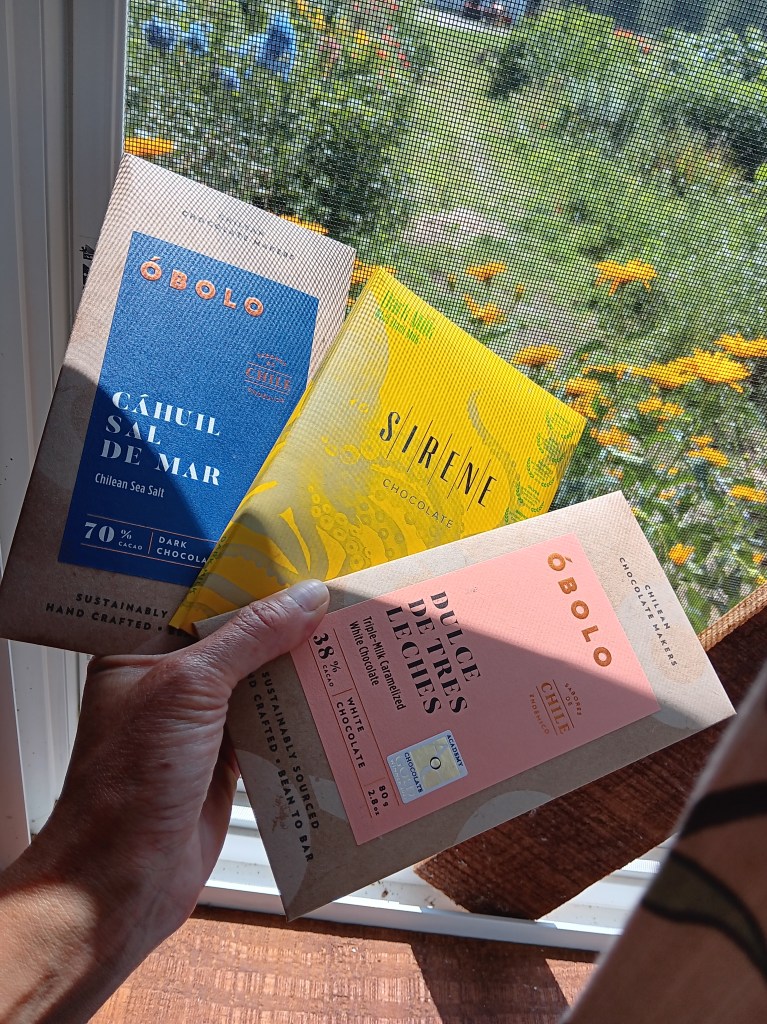
We sampled three exquisite craft chocolate bars as I shared legal experiences from three eras:
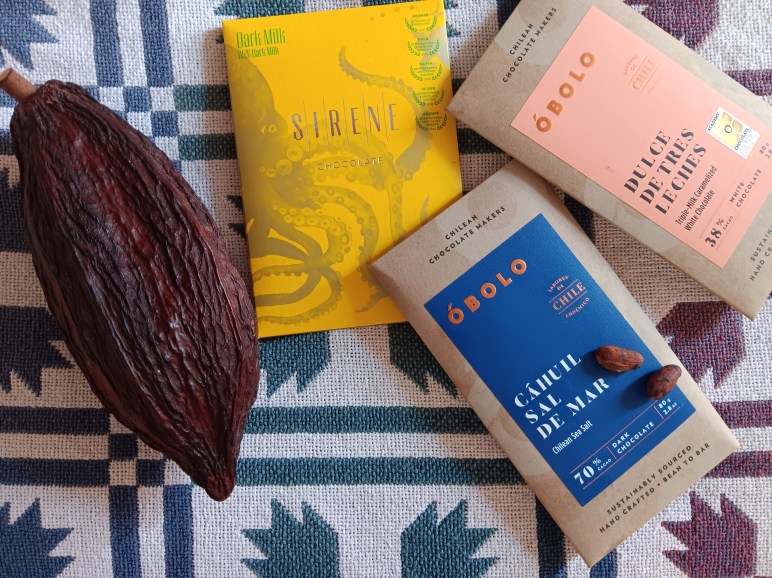
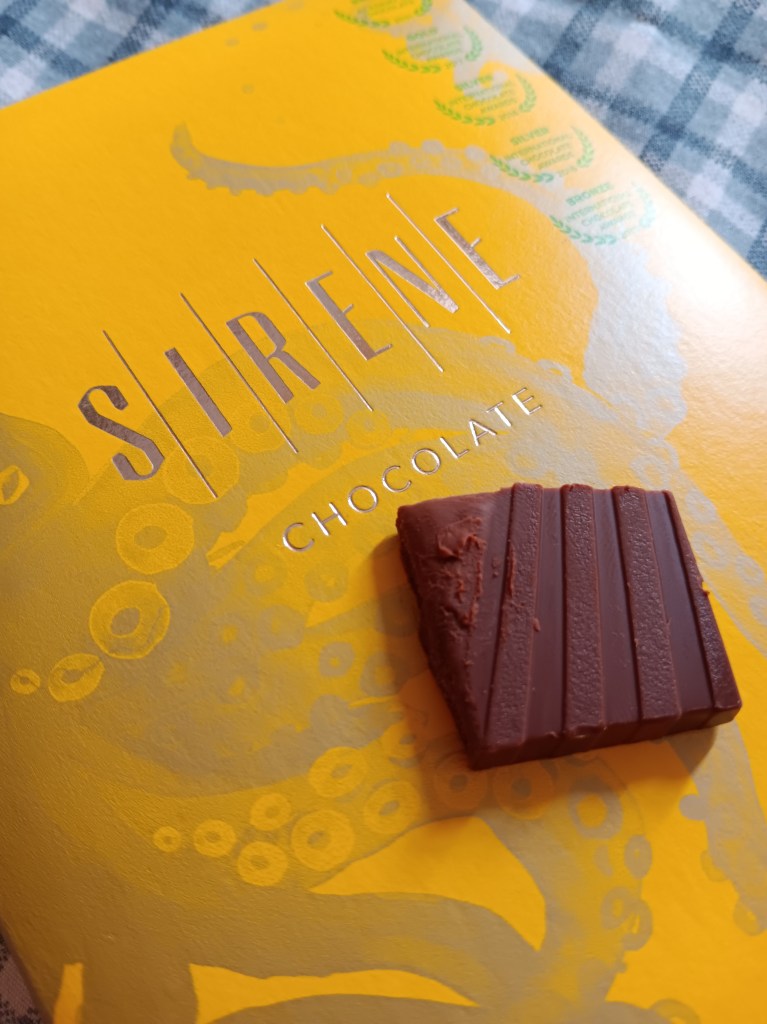
* before practicing law (while in college and law school), paired with Sirene Chocolate https://sirenechocolate.com/ of Canada Dark Milk 65% on Guatemala cacao,
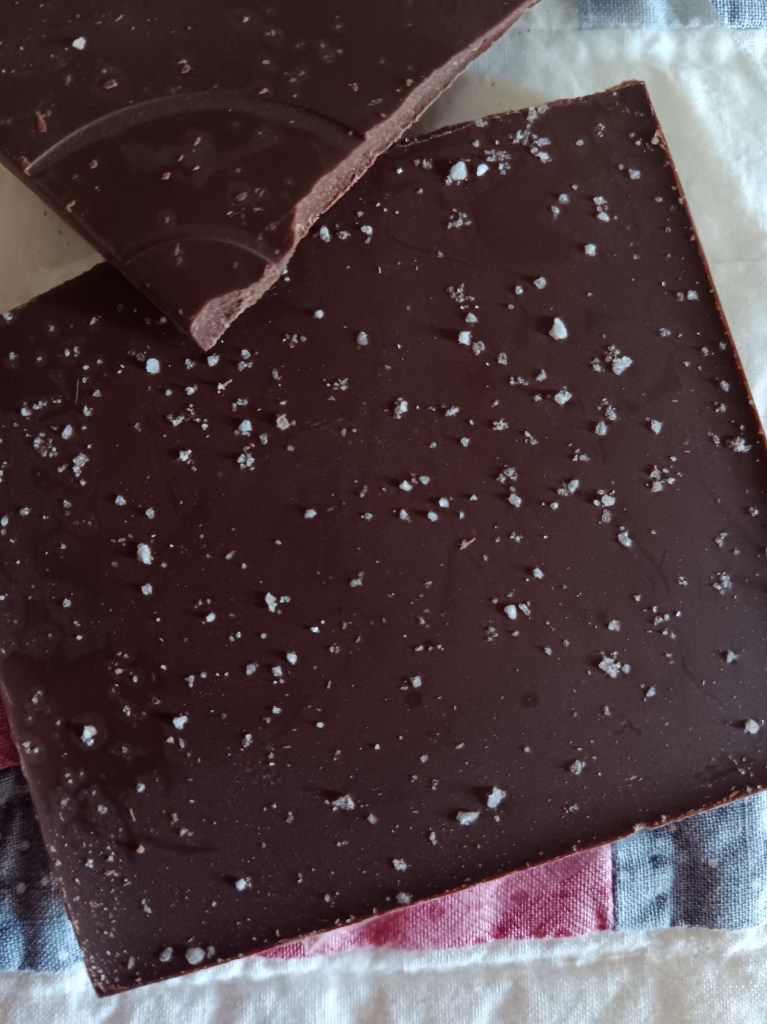
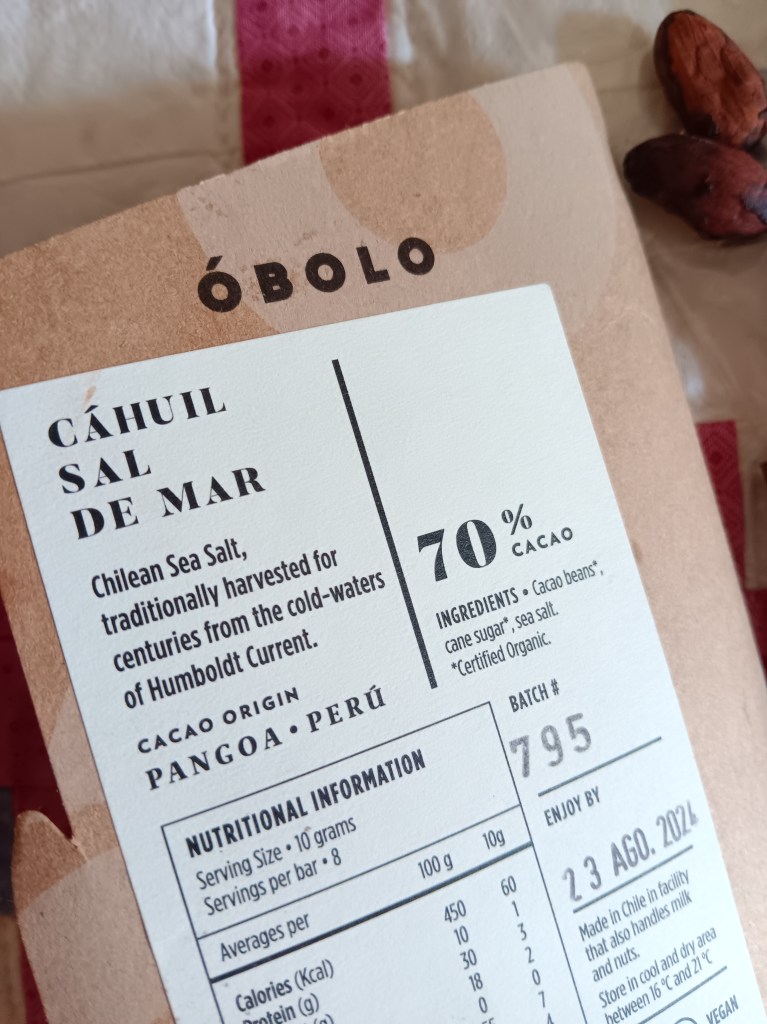
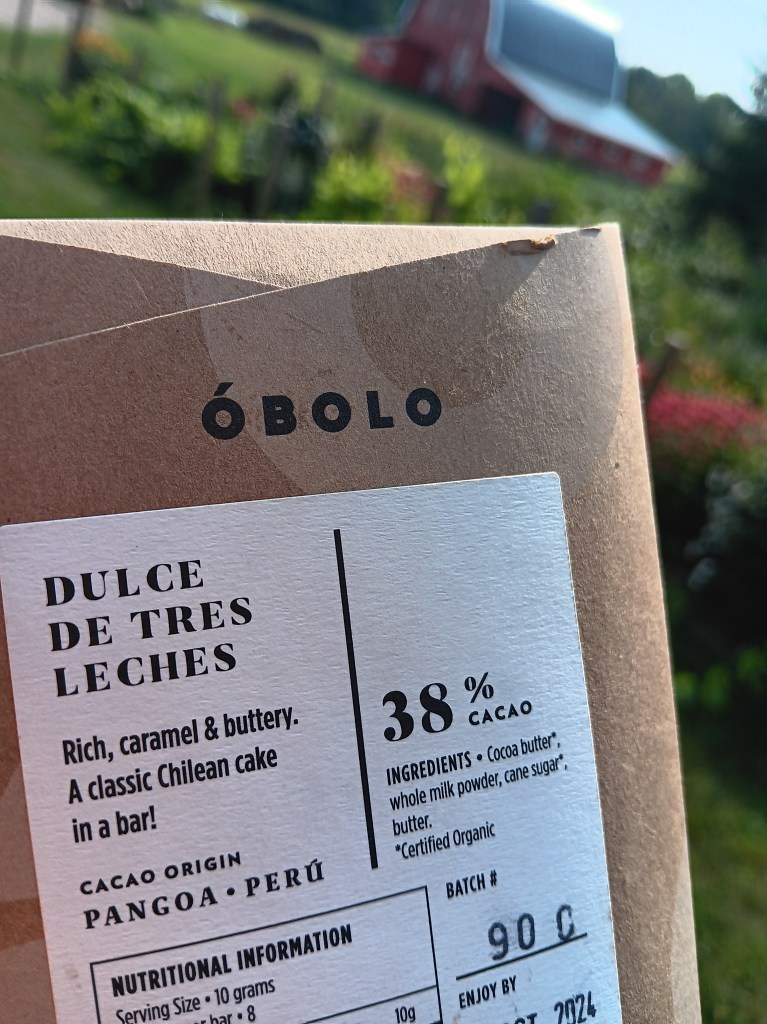
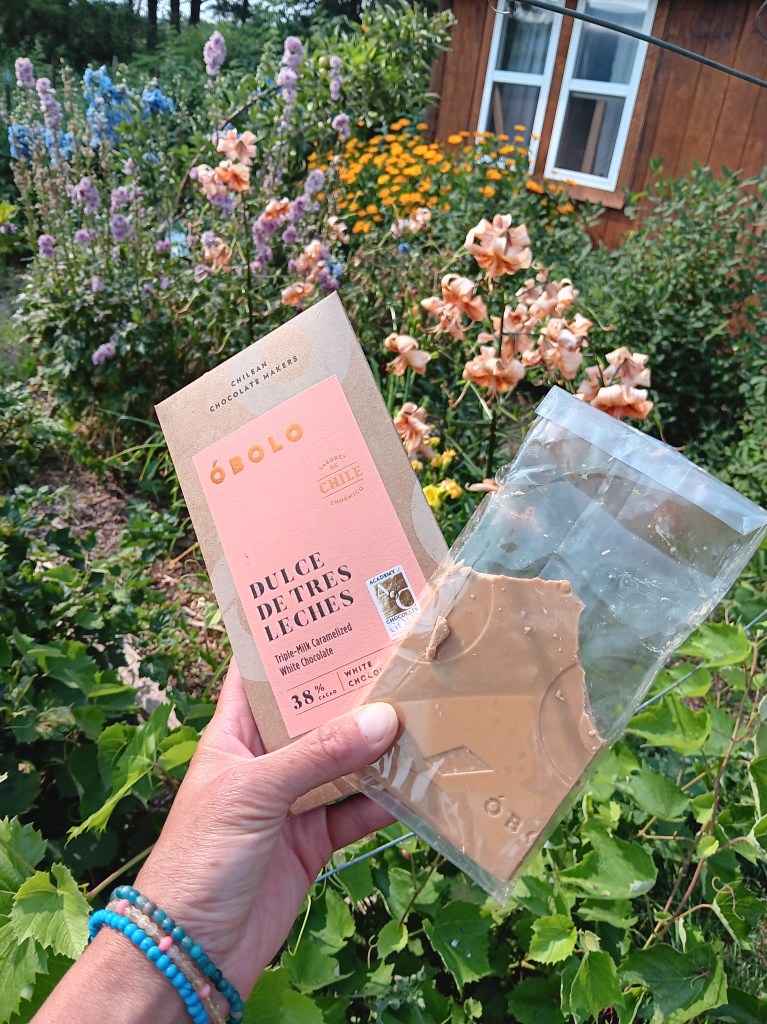
*while practicing law (at big firms and in-house), paired with OBOLO Chocolate https://obolochocolate.cl/ of Chile 70% dark chocolate with sea salt on Pangoa Peru cacao, and
We also discussed how to identify ethical chocolate, like the chocolate I chose for us, which is free of child slave labor or deforestation. Tips: in general, a) look at the label to make sure a cacao country of origin is listed, as this tends to demonstrate transparency, and b) look for small brands, as big brands are complicit in abuses.
Bonus: see new documentary The Chocolate War, in which my friend human rights lawyer Terry Collingsworth takes on Big Choc! Trailer: https://youtu.be/tzlG1WoKfao
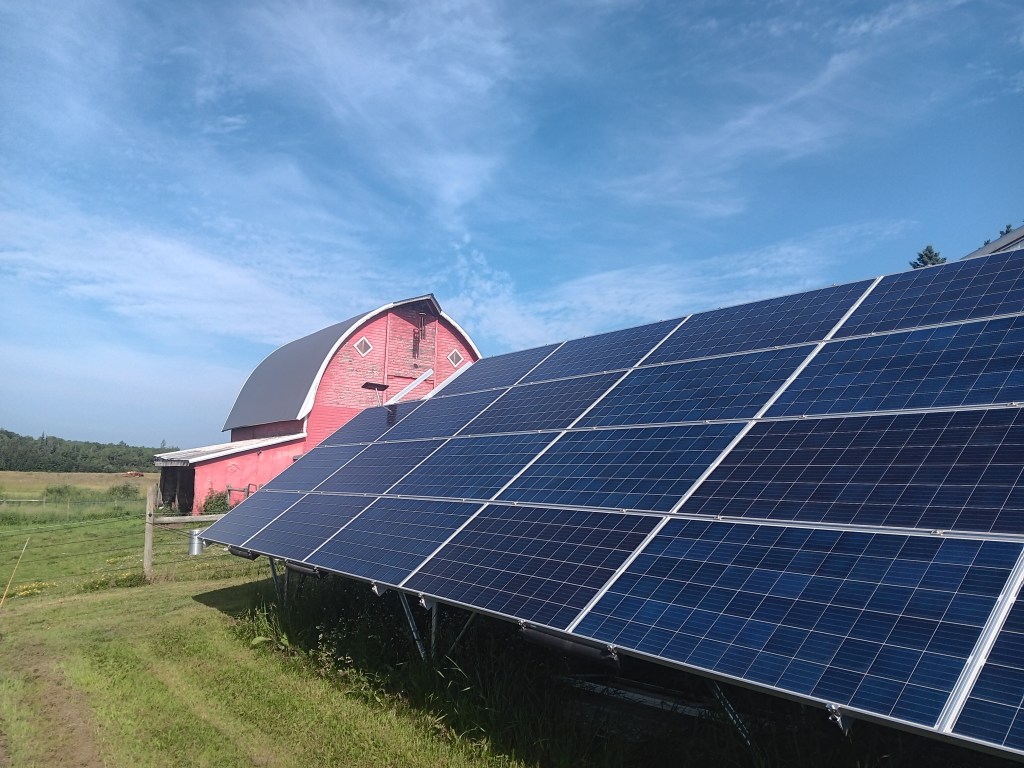
Thank you to dear Brook of Yahara Chocolate https://yaharachocolate.com/ in Wisconsin for sending my chocolate selections to Saper Law Firm in Chicago and to me 500 miles north of the city while I’m volunteering on a solar-powered organic farm near Lake Superior.
[Update: a German nuclear scientist friend and former UCLA Extension student of mine think we have discovered why I got what I call electrical poisoning on the farm – I experienced headaches, muscle cramps, nausea, hair loss, eyebrow loss, loss of appetite, more. The solar panel inverters, which convert DC electricity to AC, were all housed in one space, concentrating the electricity. The dangers of such concentration are known, which is why electrical power plants have substations, to spread out the energy. My cabin was near the utility room, and the electrical buzz was audible and palpable. I’ve learned lots; a topic for another day. For now, I am happy to report that immediately after leaving the location, I felt better, and my hair and eyebrows are growing back!]
Thank you to dear Taylor of Sirene and dear Mark of OBOLO for crafting delicious and ethical chocolate.
And thank you again to Daliah for including me even though I couldn’t be there in person this time, and to the very impressive students for participating!
By the way, here are the videos and blog post I designated as backup just in case internet went out at my beautiful and remote Northwoods location:
Latham & Watkins Summer Tasting Event July 20, 2023
What a pleasure to hold a special chocolate tasting for a wonderful Women Lawyers Group, plus amazing summer associates, at esteemed Chicago law firm Latham & Watkins, especially as I am a former lawyer myself!
Click for my slides, and be sure to see the notes section under each slide for info, videos, and other links and resources.
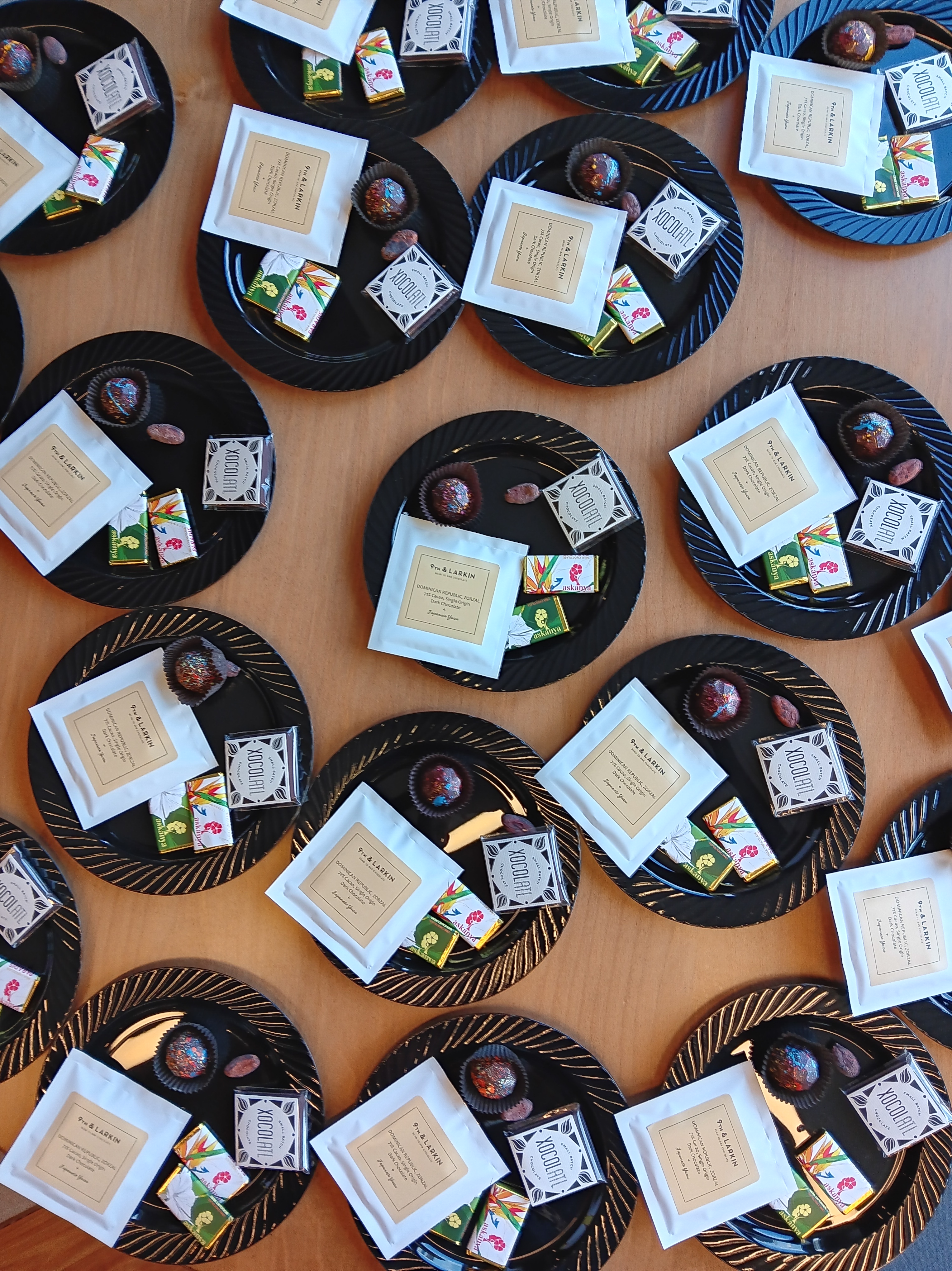
Menu:
Xocolatl Small-Batch Chocolate of Atlanta, wife-husband owned: Peru Pangoa 70% squares and accompanying cocoa bean from the same origin
Askanya Chocolate of Haiti, woman-owned: Paradis 47% Dark Milk mini bars
Askanya Chocolate of Haiti, woman-owned: Bouquet Vert 65% Dark with Lime mini bars
9th & Larkin Chocolate of San Francisco, woman-owned: Dominican Republic Dark Chocolate 72% disks with Candied Yuzu
Cocoa & Co. of Chicago, woman-owned: Dark Salted Caramel bonbons in Valrhona 72% Araguani Venezuela
My “Women in Chocolate” presentation covered the history and health benefits of chocolate by tracing women’s participation and leadership in the global story and process of cacao and chocolate:
Ancient cacao:
Women were the chocolate makers in the ancient world of the Maya and other cultures because they knew about plant pharmacology and how to create medicinal beverages.
European colonizers wanting to bury indigenous cultures called these native Central American experts “cacao witches,” but today the women’s knowledge of the health benefits of chocolate is coming back.
We’ll talk about some of these health benefits and how to make sure your chocolate contains them, and we’ll taste some delicious chocolate that does!
Cacao today:
Women are cacao growers on many farms today, and are paid less in some parts of the world while in other places they are paid fairly and run cacao cooperatives like the Pangoa Peru collective.
We’ll talk about how chocolate is made and what roles women play as it goes from cocoa bean to chocolate bar.
We’ll also discuss how to know what kind of cacao is in your chocolate and whether it has an ethical provenance. (Hint: make sure you see a cacao country of origin on your chocolate.)
We’ll taste Pangoa Peru cocoa beans and award-winning chocolate made with their cocoa beans by wife-husband owned Xocolatl Small Batch Chocolate of Atlanta.
Chocolate forever:
Who buys most of the chocolate sold? Women! Why?
Some of it is science: chocolate reacts with a woman’s and a man’s brain chemistry differently, and we’ll discuss the chemistry of chocolate and why we love it, while we taste more of it, such as from woman-owned brands Askanya of Haiti or 9th & Larkin of San Francisco, plus bonbons made by Chef Meg Galus for woman-owned Cocoa & Co. chocolate shop in sweet home Chicago!
What chocolate do we choose: we can vote with our dollars for the kind of chocolate we want to see more of.
Ultimately, chocolate is about uplift!
Thank you to Latham attorneys and team for making the event possible. I am thrilled we had a fun, fascinating, and delicious time!
Thank you also to dear Laine DeLeo of Fast Lane to Health superfood snacks for helping at the event!
I hope you are well and eating great craft chocolate!
An excellent new documentary about child slave labor in cacao is out. It’s called The Chocolate War, and it features my friend Terry Collingsworth, the human rights lawyer fighting Nestle and Cargill in court on behalf of children who were trafficked and enslaved on cocoa farms that provide cocoa beans to those corporations.
I watched this well-made film last night, created by our filmmaker friend Miki Mistrati; as a formerly practicing lawyer, I love seeing law in action for fairness! Watch for yourself and see the appalling, heartbreaking, and solvable situation some of us have been talking about for years.
Big brands say what happens on cacao farms in Cote d’Ivoire is out of their control; we say it’s completely within their control: pay farmers a fair price and kids won’t be vulnerable to trafficking and enslavement and can go to school instead of the fields.
So, almost all of the brands in the grocery store and other mass outlets are tainted. That’s why the bars cost $5, $2, or $1: child slaves earned no money for harvesting the cacao in those chocolate bars.
Do you think grocery stores and other sellers like Walmart and Amazon should also be held accountable for selling products made with child slave labor? I do.
2. Cacao country of origin listed = things are looking up!
If you saw a bottle of wine with no origin listed, no picture of an estate in France, or no reference to a vineyard in California or the like, you might have some questions about that wine.
Yet chocolate brands get away with not telling us where their cacao was grown. Have you ever seen an origin indication on industrial chocolate? After all, cacao is not grown in Belgium, Switzerland, Hershey Pennsylvania, or a Snickers factory! What are the corporate brands hiding? Child kidnapping and slavery; see 1. above.
So, if you see a small craft chocolate brand with the cacao country of origin listed on the label —
such as Ecuador, Madagascar, Tanzania, or other countries —
or if you see the cacao collective listed —
such as our friends at Zorzal of the Dominican Republic, Pangoa of Peru, Semuliki Forest of Uganda, or other origins —
this origin information generally indicates that the chocolate maker bought through one of our direct trade transparent supply chains, so that you know where the cacao came from and can trace it back to the specific source to see that farmers earned proper money and kids were not exploited.
A statement of origin generally means the chocolate makers bought traceable cacao and did not buy cacao through the non-transparent bulk supply chain, where cacao from thousands of farms is mixed together and at least some of the cacao is certainly tainted with child labor as is standard in bulk cacao.
In other words: traceability is a good sign!
3. Clean ingredients list = another sign of quality and care!
If you are buying quality cacao, you wouldn’t want to diminish it with non-quality additives.
What do you need to make chocolate? As my students have heard me say so many times: cacao and sugar, all you need!
If you see a chocolate bar ingredients list with lecithin, natural or artificial flavors (and we know that natural flavors are really artificial flavors), or any other synthetics or lab-processed chemicals that harm people and planet, this is a sign that the cacao might also be from a non-clean source, especially if no cacao country of origin is listed.
If you see a chocolate bar ingredients list with just traceable cacao and organic cane sugar, plus any real ingredients, this is a good sign, as cacao country of origin + clean ingredients = a traceable clean bar!
Examples of chocolate bars made from traceable cacao and clean ingredients only:
Crackle & Crunch quinoa and almond milk chocolate bar from Xocolatl Small Batch Chocolate of Atlanta, made with Nicaragua cacao; I gifted this and other Xocolatl bars recently to a dear family who loved everything! (The link in this bullet point also shows a bar made by VAICACAO with Nicaragua chocolate plus organic sugar; all you need! : )
Bouquet Vert Lime chocolate bar by Askanya Chocolate of Haiti, made with Haiti cacao, Haiti artisanal sugar, and Haiti limes; this bar and other treats from Askanya were a hit at a Valentine’s Day party I held for my mom’s neighbors last month!
~ People and process behind specialty cacao and craft chocolate — including some amazing women around the world
Cacao growing, harvesting, and post-harvest steps, by the women and men of COAGRISCAL in Honduras, who prepare the products for woman-owned Good King Cacao [farm to snack]
Cacao collaboration, buying, and transport by woman-owned Askanya Chocolate of Haiti, and chocolate making in Haiti by the women of Askanya [video]
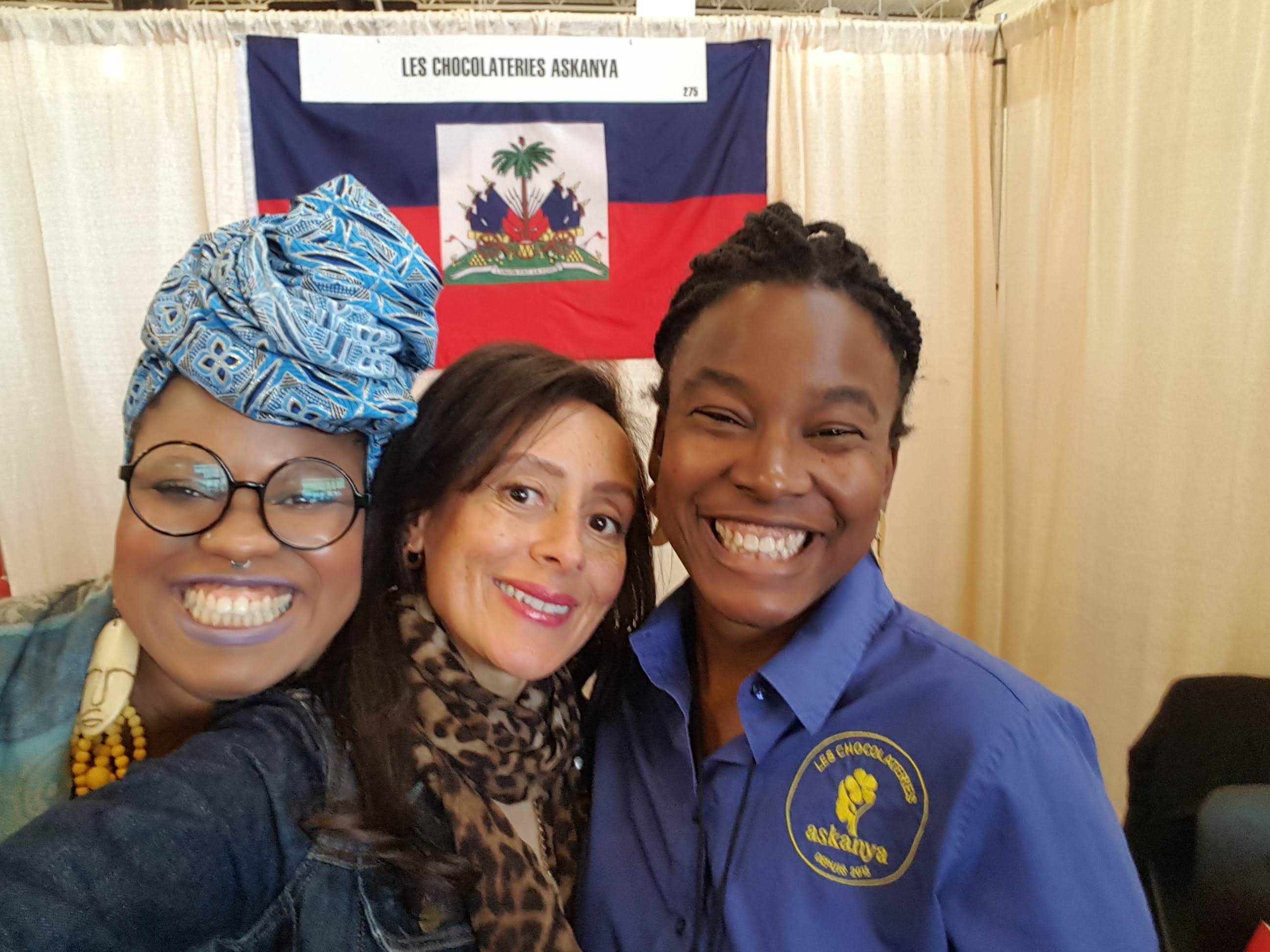
with Kim Wilson of Good King Cacao of Seattle; the products are made with Honduras cacaowith Corinne Joachim Sanon Symietz (right) of Askanya Chocolate of Haitiwith Lan Phan of 9th & Larkin Chocolate of San Francisco (front), her husband Brian (left), and Simran Bindra of Kokoa Kamili cacao of Tanzania[photo from dieline] craft……chocolatewith Kate McAleer of Bixby Chocolate, who is both a chocolate maker and a chocolatier[Photo from Mark Gerrits of OBOLO Chocolate]bean to barbean to cup
~ Purpose-driven businesses — from Chicago Chocolate Tours to Chocolate Uplift, consulting to and distributing other purpose-driven brands
from ancient tradition to…
…contemporary social impact
chocolate chooses us!
cacao and chocolate as portals forward to a Golden Age of empathy and equality, nourishing people and planet
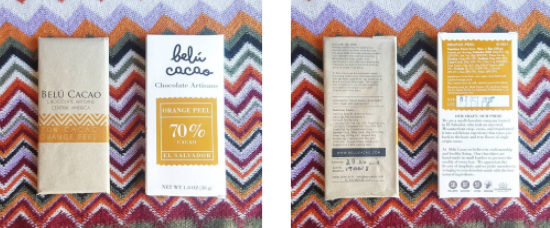
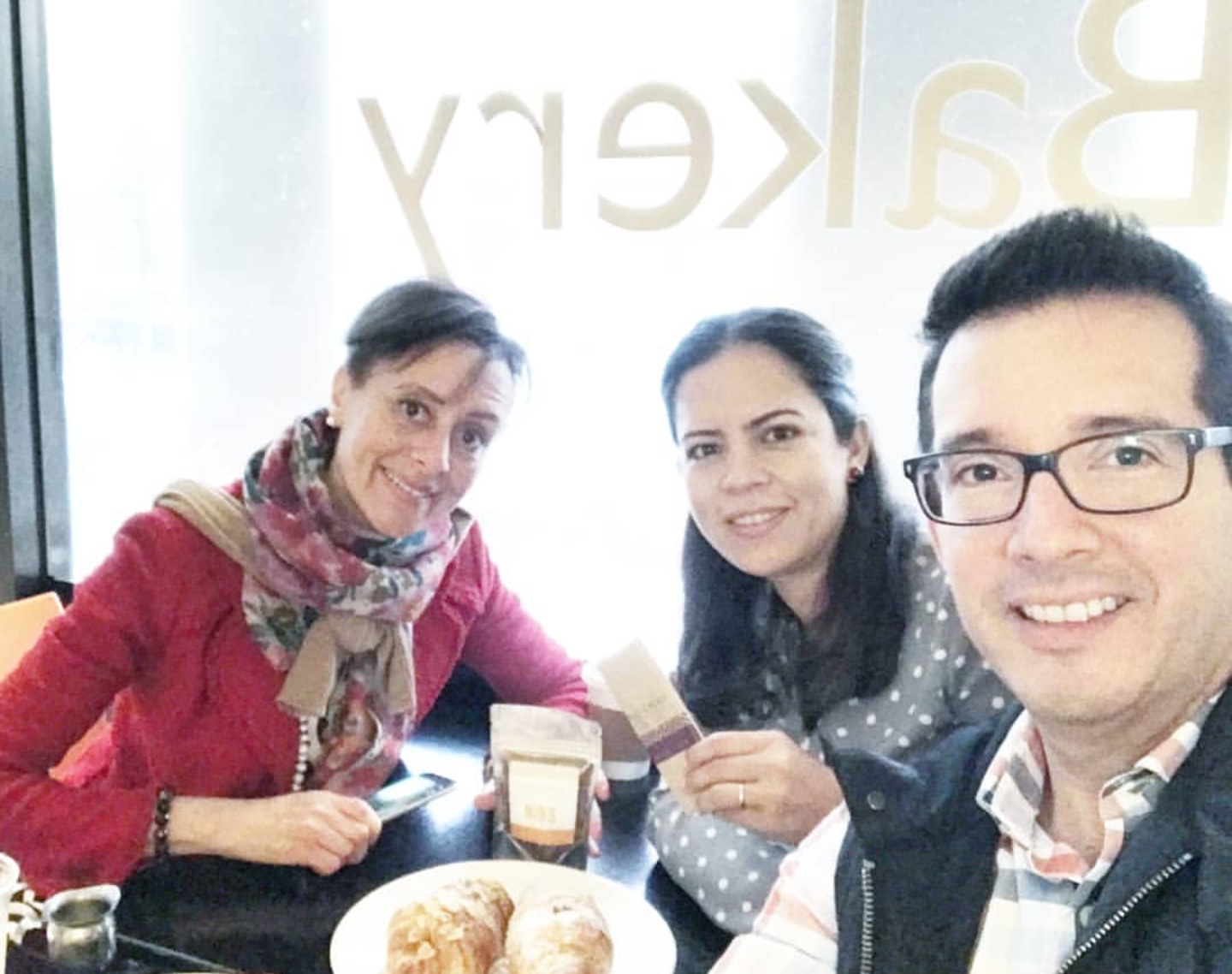
Belu Cacao before and after, and Belu from tree to bar [video]Developed 3 sizes of Belu, each with 2 ingredients: cacao and sugar — all you need!with Emily of Belu Cacao and her husbandCarlos
~ Purity of craft chocolate — tasting techniques to perceive and enjoy nuance
mindfulness: look, sniff, taste
also: listen, touch, think
breathe
repeat!
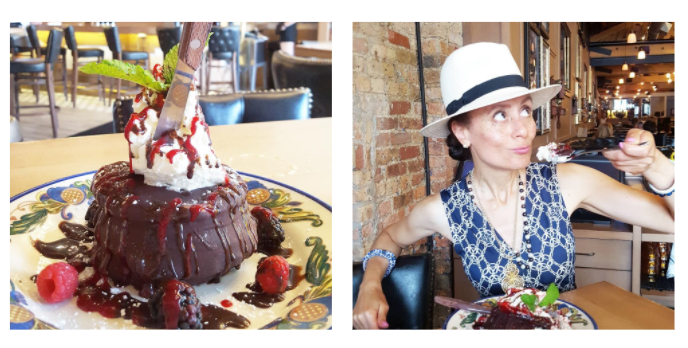
Yes: I ate the whole thing. In 2 sittings, but I did it!And it was made with Askanya Chocolate of Haiti, at The Vig Chicago. What’s in your restaurant’s dessert?
~ Power of people and planet — recognizing ethical chocolate, which means it is free of human rights abuses and environmental harm
Tip: all of the big brands are complicit in human rights abuses and environmental harm; they don’t deny it
Tip: look for small brands, then look on the label for the cacao country of origin, and a clean ingredients list
Tip: the best chocolate (wine, coffee, diamonds, silk scarves) is not usually found at a standard grocery store, but use the 2 points above to discover any exceptions
More on classmate David Coale’s podcast where I talk about ethical chocolate and our power of choice
Chocolate is love. Taste is memory. What is your earliest memory of tasting and loving chocolate?
~ And, after all those Ps, my 5 Ss of first-class craft chocolate:
slavery-free
soy-free / industrial additive-free
sustainable / soil-regenerative
small-batch
scrumptious!
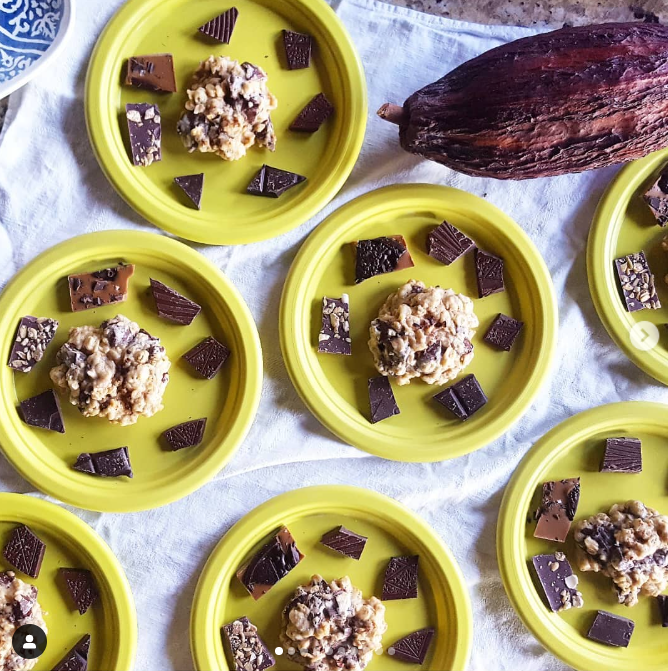
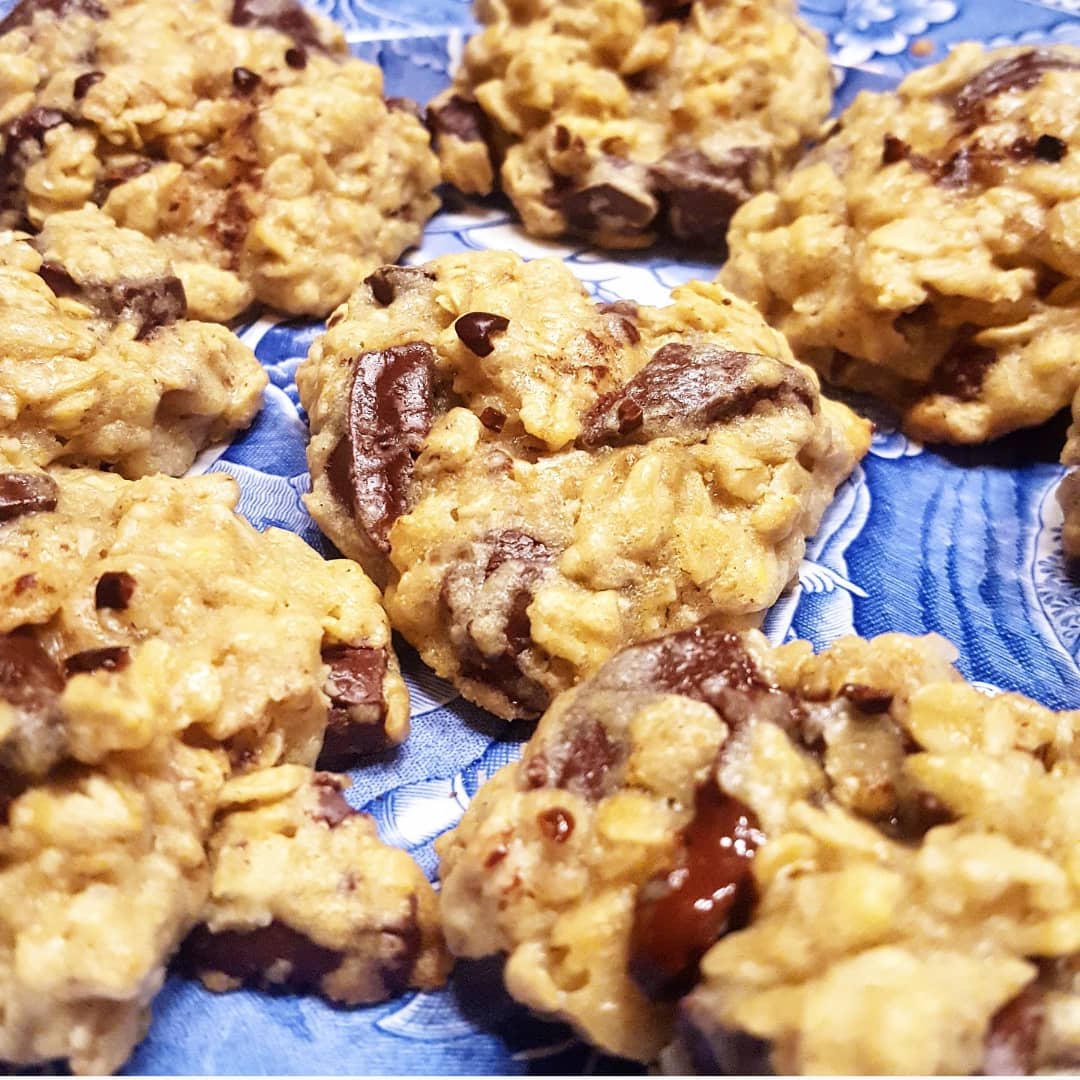
Golden Age Cookies: organic oatmeal salted craft chocolate chunk cookies topped with cacao nibs; I created them because I wanted to eat them


































 Chocolate Uplift