Washington Post: “much of the chocolate you buy still starts with child labor”

Cocoa’s child
laborers

Mars, Nestlé and Hershey pledged nearly two decades ago to stop using cocoa harvested by children. Yet much of the chocolate you buy still starts with child labor.


June 5, 2019
Thank you to the journalists and the Washington Post for publishing this article, on a topic our circle has long discussed through the #chocolatefreedomproject I started! Read the article at this link:

https://www.washingtonpost.com/graphics/2019/business/hershey-nestle-mars-chocolate-child-labor-west-africa/

Or scroll down below my photo to read the full article right here.

Your friend in slavery-free chocolate,

Valerie

Valerie Beck

Founder, Chocolate Uplift

*****

Cocoa’s child laborers

Mars, Nestlé and Hershey pledged nearly two decades ago to stop using cocoa harvested by children. Yet much of the chocolate you buy still starts with child labor.

Behind much of the world’s chocolate is the work of thousands of impoverished children on West African cocoa farms.

GUIGLO, Ivory Coast — Five boys are swinging machetes on a cocoa farm, slowly advancing against a wall of brush. Their expressions are deadpan, almost vacant, and they rarely talk. The only sounds in the still air are the whoosh of blades slicing through tall grass and metallic pings when they hit something harder.

Each of the boys crossed the border months or years ago from the impoverished West African nation of Burkina Faso, taking a bus away from home and parents to Ivory Coast, where hundreds of thousands of small farms have been carved out of the forest.

These farms form the world’s most important source of cocoa and are the setting for an epidemic of child labor that the world’s largest chocolate companies promised to eradicate nearly 20 years ago.

500 MILES

e

r

g

i

N

Detail

SENEGAL

MALI

NIGER

BURKINA

GUINEA

FASO

S. LEONE

NIGERIA

BENIN

IVORY

CHAD

TOGO

COAST

Guiglo

L

GHANA

I

B

E

R

Yamoussoukro

I

A

Lagos

Abidjan

CAMEROON

“How old are you?” a Washington Post reporter asks one of the older-looking boys.

“Nineteen,” Abou Traore says in a hushed voice. Under Ivory Coast’s labor laws, that would make him legal. But as he talks, he casts nervous glances at the farmer who is overseeing his work from several steps away. When the farmer is distracted, Abou crouches and with his finger, writes a different answer in the gray sand: 15.

Then, to make sure he is understood, he also flashes 15 with his hands. He says, eventually, that he’s been working the cocoa farms in Ivory Coast since he was 10. The other four boys say they are young, too — one says he is 15, two are 14 and another, 13.

Abou says his back hurts, and he’s hungry.

“I came here to go to school,” Abou says. “I haven’t been to school for five years now.”

Children from impoverished Burkina Faso take a break from work on a cocoa farm near Bonon, Ivory Coast.

A worker cuts a cocoa pod to collect the beans.

A steady stream of buses from Burkina Faso carry passengers and trafficked children as young as 12 to work in cocoa fields in Ivory Coast.

‘Too little, too late’

The world’s chocolate companies have missed deadlines to uproot child labor from their cocoa supply chains in 2005, 2008 and 2010. Next year, they face another target date and, industry officials indicate, they probably will miss that, too.

As a result, the odds are substantial that a chocolate bar bought in the United States is the product of child labor.

About two-thirds of the world’s cocoa supply comes from West Africa where, according to a 2015 U.S. Labor Department report, more than 2 million children were engaged in dangerous labor in cocoa-growing regions.

When asked this spring, representatives of some of the biggest and best-known brands — Hershey, Mars and Nestlé — could not guarantee that any of their chocolates were produced without child labor.

“I’m not going to make those claims,” an executive at one of the large chocolate companies said.

One reason is that nearly 20 years after pledging to eradicate child labor, chocolate companies still cannot identify the farms where all their cocoa comes from, let alone whether child labor was used in producing it. Mars, maker of M&M’s and Milky Way, can trace only 24 percent of its cocoa back to farms; Hershey, the maker of Kisses and Reese’s, less than half; Nestlé can trace 49 percent of its global cocoa supply to farms.

A worker stands on dried cocoa beans outside an Ivory Coast cooperative facility. About two-thirds of the world’s cocoa supply comes from West Africa.

Workers gather dried cocoa beans outside an Ivory Coast cooperative facility.

Men unload bags of cocoa near the office of Cargill, one of the leading cocoa suppliers for the chocolate industry.

With the growth of the global economy, Americans have become accustomed to reports of worker and environmental exploitation in faraway places. But in few industries, experts say, is the evidence of objectionable practices so clear, the industry’s pledges to reform so ambitious and the breaching of those promises so obvious.

Industry promises began in 2001 when, under pressure from the U.S. Congress, chiefs of some of the biggest chocolate companies signed a pledge to eradicate “the worst forms of child labor” from their West African cocoa suppliers. It was a project companies agreed to complete in four years.

To succeed, the companies would have to overcome the powerful economic forces that draw children into hard labor in one of the world’s poorest places. And they would have to develop a certification system to assure consumers that a bag of M&M’s or a Reese’s Peanut Butter Cup did not originate with the swinging of a machete by a boy like Abou.

“I admit that it is a kind of slavery. … But they bring them here to work, and it’s the boss who takes the money.”

Ivory Coast farmer

Since then, however, the chocolate industry also has scaled back its ambitions. While the original promise called for the eradication of child labor in West African cocoa fields and set a deadline for 2005, next year’s goal calls only for its reduction by 70 percent.

Timothy S. McCoy, a vice president of the World Cocoa Foundation, a Washington-based trade group, said that when the industry signed onto the 2001 agreement, “the real magnitude of child labor in the cocoa supply chain and how to address the phenomenon were poorly understood.”

Industry officials emphasized that, according to the pledge made to lawmakers, West African governments and labor organizations also bear some responsibility for the eradication of child labor.

Today, McCoy said, the companies “have made major strides,” including building schools, supporting agricultural cooperatives and advising farmers on better production methods.

In statements, some of the world’s biggest chocolate companies that signed the agreement — Hershey, Mars and Nestlé — said they had taken steps to reduce their reliance on child labor.

Other companies that were not signatories, such as Mondelez and Godiva, also have taken such steps, but likewise would not guarantee that any of their products were free of child labor.

Godiva’s efforts to eradicate child labor

Popular products: Godiva chocolate

Child labor program: Godiva supports its supplier’s Forever Chocolate initiative, which aims to “make sustainable chocolate the norm by 2025.” More here.

Percent of cocoa “certified”: Company would not disclose.

Percent traceable cocoa: Company would not disclose.

Statement: “GODIVA condemns forced labor or any practice that exploits, endangers or harms people, especially children. We purchase our cocoa through third parties and ensure ethical sourcing through agreements to comply with our GODIVA Code of Conduct, which explicitly prohibits the use of forced and child labor.”

Mars’s efforts to eradicate child labor

Popular products: M&M’s, Snickers, Twix, Skittles, Dove

Child labor program: Mars’s Cocoa for Generations plan aims to ensure 100 percent of the company’s cocoa is responsibly sourced and traceable to the farm level by 2025. More here.

Percent of cocoa “certified”: Around 50 percent of its cocoa is certified by Fairtrade and Rainforest Alliance.

Percent traceable cocoa: As of December 2018, 24 percent is traceable to the farmer level and 40 percent is traceable to a farmer group.

Statement: “Protecting children and ensuring they have safe alternatives to work — including access to quality education — is a priority for Mars.”

Hershey’s efforts to eradicate child labor

Popular products: Hershey’s, Reese’s, Mr. Goodbar

Child labor program: Hershey’s Cocoa For Good program invests a half-billion dollars by 2030 to eliminate child labor, economically empower women, and tackle poverty and climate change. More here.

Percent of cocoa “certified”: 80 percent certified at the end of 2018.

Percent traceable cocoa: Less than half.

Statement: “Hershey does not see certification as the ‘key’ solution, but one of many tools and strategies that need to be deployed together and aligned with the work of all the other stakeholders in the supply chain. . . . Without the support of the local governments, these various efforts won’t work.”

Nestlé’s efforts to eradicate child labor

Popular products: Toll House and Kit Kat (outside the United States)

Child labor program: Helped develop the Child Labour Monitoring and Remediation System, which is being adopted by other companies. More here.

Percent of cocoa “certified”: In Ivory Coast, more than 80 percent; globally 46 percent.

Percent traceable cocoa: In Ivory Coast, more than 80 percent; globally 49 percent.

Statement: “Child labor has no place in our supply chain and we are opposed to all forms of child exploitation. We’re tackling this through a pioneering Child Labour Monitoring and Remediation System in Côte d’Ivoire and Ghana. . . . However, we realise that as long as child labour still exists on cocoa farms, there is more to be done.”

Mondelez International’s efforts to eradicate child labor

Popular products: Cadbury, Toblerone

Child labor program: About 45 percent of the cocoa in Mondelez chocolate is sourced through its Cocoa Life program, which the company says tackles child labor. The adherence to its ethical standards is monitored by a third-party inspection company. More here.

Percent of cocoa “certified”: Unreported. The company says this is “not applicable.”

Percent traceable cocoa: About 45 percent.

Statement: “We condemn child labor and firmly believe that the ‘work’ of children is education and play only. Through Cocoa Life, our signature cocoa program, we work with partners to tackle the root causes of child labor with a holistic, community-centric approach.”

Godiva’s efforts to eradicate child labor

Popular products: Godiva chocolate

Child labor program: Godiva supports its supplier’s Forever Chocolate initiative, which aims to “make sustainable chocolate the norm by 2025.” More here.

Percent of cocoa “certified”: Company would not disclose.

Percent traceable cocoa: Company would not disclose.

Statement: “GODIVA condemns forced labor or any practice that exploits, endangers or harms people, especially children. We purchase our cocoa through third parties and ensure ethical sourcing through agreements to comply with our GODIVA Code of Conduct, which explicitly prohibits the use of forced and child labor.”

Mars’s efforts to eradicate child labor

Popular products: M&M’s, Snickers, Twix, Skittles, Dove

Child labor program: Mars’s Cocoa for Generations plan aims to ensure 100 percent of the company’s cocoa is responsibly sourced and traceable to the farm level by 2025. More here.

Percent of cocoa “certified”: Around 50 percent of its cocoa is certified by Fairtrade and Rainforest Alliance.

Percent traceable cocoa: As of December 2018, 24 percent is traceable to the farmer level and 40 percent is traceable to a farmer group.

Statement: “Protecting children and ensuring they have safe alternatives to work — including access to quality education — is a priority for Mars.”

In all, the industry, which collects an estimated $103 billion in sales annually, has spent more than $150 million over 18 years to address the issue.

But when the businesses initially made the promise to eradicate child labor, according to industry insiders and documents, the companies had little idea of how to do so. Their subsequent efforts have been stalled by indecision and insufficient financial commitment, according to industry critics.

Their most prominent effort — buying cocoa that has been “certified” for ethical business practices by third-party groups such as Fairtrade and Rainforest Alliance, has been weakened by a lack of rigorous enforcement of child labor rules. Typically, the third-party inspectors are required to visit fewer than 10 percent of cocoa farms.

“The companies have always done just enough so that if there were any media attention, they could say, ‘Hey guys, this is what we’re doing,’ ” said Antonie Fountain, managing director of the Voice Network, an umbrella group seeking to end child labor in the cocoa industry. “It’s always been too little, too late. It still is.”

“We haven’t eradicated child labor because no one has been forced to,” Fountain added. “What has been the consequence . . . for not meeting the goals? How many fines did they face? How many prison sentences? None. There has been zero consequence.”

According to the U.S. Labor Department, a majority of the 2 million child laborers in the cocoa industry are living on their parents’ farms, doing the type of dangerous work — swinging machetes, carrying heavy loads, spraying pesticides — that international authorities consider the “worst forms of child labor.”

A smaller number, those trafficked from nearby countries, find themselves in the most dire situations.

During a March trip through Ivory Coast’s cocoa-growing areas, journalists from The Washington Post spoke with 12 children who said they had come, unaccompanied by parents, from Burkina Faso to work on cocoa farms.

While the ages they gave were consistent with their appearance, The Post could not verify their birth dates. In much of Burkina Faso, as many as 40 percent of births go unrecorded in official records, and many children lack identification documents.

The farms were easily visited because they typically lack fences, but people were often reluctant to talk about child labor, which is known to be illegal and is officially discouraged.

Asked about the extent of child migrants working on Ivorian cocoa farms, the farmer overseeing Abou and the other boys noted the steady stream of buses carrying people from Burkina Faso into the area. The Post’s reporters also observed those buses during the March visit.

There’s “a lot of them coming,” said the farmer, who asked that his name not be used because he didn’t want to attract attention from the authorities. “It’s them who do the work.”

The farmer said he was paying the boy’s “gran patron,” the “big boss” who manages the boys, a little less than $9 per child for a week of work and who would, in turn, pay each of the boys about half of that.

The farmer said he considers the boys’ treatment unfair but hired them because he needed the help. The low price for cocoa makes life difficult for everyone, he said.

“I admit that it is a kind of slavery,” the farmer said. “They are still kids and they have the right to be educated today. But they bring them here to work, and it’s the boss who takes the money.”

A young boy from Burkina Faso follows other children as they leave the cocoa farm where they work.

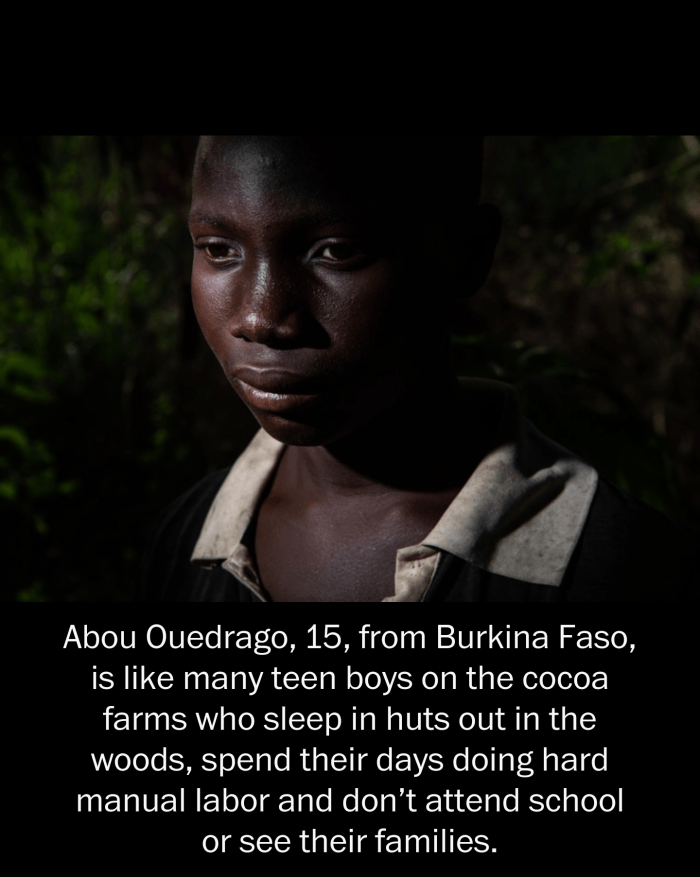
Abou Ouedrago, 15, from Burkina Faso, is like many teen boys on the cocoa farms who sleep in huts out in the woods, spend their days doing hard manual labor and don’t attend school or see their families.

Abou Ouedrago uses a machete to chop down a tree on a cocoa farm.

Children on a break from work at a cocoa farm share white-colored water that was scooped into a bucket from a nearby pond.

A young boy from Burkina Faso rests on the ground during a break from work on a cocoa farm.

‘It happens on a large scale’

What makes the eradication of child labor such a daunting task is that, by most accounts, its roots lie in poverty.

The typical Ivorian cocoa farm is small — less than 10 acres — and the farmer’s annual household income stands at about $1,900, according to research for Fairtrade, one of the groups that issues a label that is supposed to ensure ethical business methods. That amount is well below levels the World Bank defines as poverty for a typical family. About 60 percent of the country’s rural population lacks access to electricity, and, according to UNESCO, the literacy rate of the Ivory Coast reaches about 44 percent.

With such low wages, Ivorian parents often can’t afford the costs of sending their children to school — and they use them on the farm instead.

Other laborers come from the steady stream of child migrants who are brought to Ivory Coast by people other than their parents. At least 16,000 children, and perhaps many more, are forced to work on West African cocoa farms by people other than their parents, according to estimates from a 2018 survey led by a Tulane University researcher.

An aerial view of Duakoua, a city in the heart of Ivory Coast’s cocoa region.

“There is evidence that it happens, and it happens on a large scale,” said Elke de Buhr, an assistant professor and principal investigator on the study, done in collaboration with the Walk Free Foundation, a group working to end forced labor, and funded by the Stichting de Chocolonely Foundation.

The child migrants arrive amid a vast wave of people entering from Burkina Faso and Mali. Ivory Coast is home to 1.3 million migrants from Burkina Faso and another 360,000 from Mali, according to the United Nations. Mali, Burkina Faso and Ivory Coast share an agreement on open borders.

Upon arriving in Ivory Coast’s cocoa-growing areas, child migrants are used to meet the demand on cocoa farms for arduous manual labor and stay year-round. There is land to be cleared, typically with machetes; sprayings of pesticide; and more machete work to gather and split open the cocoa pods. Finally, the work involves carrying sacks of cocoa that may weigh 100 pounds or more.

“Côte d’Ivoire has long been seen as a land of better opportunity in this part of the world,” McCoy, the industry spokesman, said. “That particular sort of form of trafficking speaks to a broader phenomenon that is not specific to cocoa, is not specific to Côte d’Ivoire but speaks of people seeking opportunity and that happens all over the world.”

“I came here to go to school,” says Abou Traore, 15, who arrived from Burkina Faso five years ago. “I haven’t been to school for five years now.”

Children leave the cocoa farm at the end of the workday.

Pisteurs, like this one here, are the middle men who collect bags of cocoa and deliver them to large commodities traders that supply the chocolate industry, such as Cargill.

‘We are hungry’

From the Ivorian economic capital of Abidjan, the village of Bonon is a five-hour drive along two-lane roads pocked with pond-sized potholes. From the outskirts of the village, footpaths lead into the surrounding forests, where farmers have created groves of cocoa trees.

In a patch of woods one day in March, another group of boys was at work with machetes. Each said he had come from Burkina Faso to work on Ivory Coast’s cocoa farms.

Like teen boys elsewhere, the boys near Bonon — Abou Ouedrago, 15; Karim Bakary, 16; and Aboudnamune Ouedrago, 13 — wore colorful branded sportswear. But they sleep in huts out in the woods, spend their days doing hard manual labor and don’t attend school or see their families. Karim’s yellow Adidas shirt was smeared with dirt. When one of the boys falls ill, they said they pool their money to go to the pharmacy.

“There is no money in Burkina. … We came here to be able to have some money to eat.”

Karim Bakary, child laborer

During a break in the typical March day — where the temperature ran into the 90s — the boys shared water scooped into a bucket from a nearby pond. It was milky white.

They said they came in search of a better life and are paid about 85 cents a day.

“There is no money in Burkina,” said Karim, who said he arrived here four years ago when he was 12. “We suffer a lot to get some money there. We came here to be able to have some money to eat.”

One time, he said proudly, he was able to send some money back home: $34. He said he would like to stay in Ivory Coast to make more money.

The most somber of the three was Aboudnamune. He wore a Spider-Man ball cap and rarely smiled. He said he arrived two years ago when he was 11. He answered questions haltingly, sometimes staring into the distance, and said he’d like to see his parents because “it’s been a while.”

“Yes, it’s a little bit hard,” he said of his life on the cocoa farms. “We are hungry, and we make just a small amount of money.”

A 2009 Tulane survey, based on interviews with 600 former migrant cocoa workers, offered a grim look at the economics that lead to child trafficking. Traffickers typically offer the children, who could be as young as 10, money or more specific incentives, such as bicycles, to take the bus to Ivory Coast. About half of those interviewed said they were not free to return home, and more than two-thirds said they experienced physical violence or threats. Most had been looking for work, and some said the money they were promised was never paid.

The man who was managing the boys for the owner of the farm, who declined to give his name, offered his perspective.

“Their parents abandoned them,” he said. “They come here to make a living.”

Then, apparently concerned about the attention the interview was drawing from passersby, he asked The Post’s journalists to leave the farm.

A boy holds his machete as he heads along a road to a cocoa farm.

‘A moral responsibility’

The most prominent, sustained public attention to the issue arose 18 years ago with reports from news organizations and the U.S. State Department that linked American chocolate to child slavery in West Africa.

“There is a moral responsibility . . . for us not to allow slavery, child slavery, in the 21st century,” Rep. Eliot L. Engel (D-N.Y.) said at the time.

Engel introduced legislation that would have created a federal labeling system to indicate whether child slaves had been used in growing and harvesting cocoa. It allotted $250,000 to the Food and Drug Administration to develop the labels.

The measure passed the House, but the industry was adamant that no government regulation was necessary.

“We don’t need legislation to deal with the problem,” Susan Smith, then a spokeswoman for the Chocolate Manufacturers Association, told a reporter at the time. “We are already acting.”

“Was there any chance of child labor being eradicated by 2005? No, never.”

Peter McAllister, who led the International Cocoa Initiative from 2003 to 2010

Engel, along with then-Sen. Tom Harkin (D-Iowa), opted to negotiate an agreement with the chocolate companies.

Now known as the Harkin-Engel Protocol, the deal kept federal regulators from policing the chocolate supply.

But the deal committed the chocolate companies to eradicate child labor from their supply chains and to develop and implement “standards of public certification,” which would indicate that cocoa products had been produced “without any of the worst forms of child labor.”

The top officials of Hershey, Mars, Nestlé USA and five other chocolate companies signed onto the deal. The signing companies had “primary responsibility” for eradicating child labor, lawmakers said, but the Ivorian government, labor organizations and a consumer group also pledged support.

The protocol also specified a deadline: July 2005.

Trucks loaded with cocoa bags are seen outside the Cargill facility in Abidjan.

Fishermen watch as a cargo ship carrying containers passes near Port Autonome d’Abidjan.

A chart showing Ivory Coast as producing the most cocoa in the world is displayed at the Choco-Story, Museum of Cocoa and Chocolate in Brussels.

Over the next few years, the industry approached the challenge with working groups, pilot programs and attempts to redefine its promise.

The industry created the International Cocoa Initiative, which was supposed to coordinate company efforts. The companies also formed a short-lived panel called the Verification Working Group. In West Africa, the industry supported pilot projects for monitoring child labor.

Even some insiders say the early efforts were destined to fall short.

Peter McAllister, who led the International Cocoa Initiative from 2003 to 2010, said the companies were “desperate” to avoid the legislation and promised more than they could deliver.

“Was there any chance of child labor being eradicated by 2005? No, never,” McAllister said. “They set themselves up for a bit of a disaster because of this magic date.”

“One executive told me at that point, ‘We would have signed a nuclear non-proliferation treaty,’ ” McAllister said.

Still, the industry gave the impression it was making progress. In February 2005, Smith, of the Chocolate Manufacturers Association, told an NPR interviewer that the deadline would be met.

“We have met every deadline established in the protocol agreement, and we’ll continue to do so,” she said. “We have large-scale tests of the monitoring system and the independent verification system in place. Those are going on now.”

But as Engel and others pointed out at the time, the companies were not close to meeting the deadline four months away. There were no consumer labels in the works; there was no clear verification system; the worst forms of child labor had not been eradicated.

Shortly after the deadline passed, the industry sought to reconstrue the meaning of a key clause in the agreement.

In 2007, industry officials argued that the promised “standards of public certification” did not mean, as some negotiators had thought, the creation of consumer labels indicating that a chocolate bar was free of child labor.

“Everyone in that room negotiating understood we were there to create a labeling requirement,” J. William Goold, Harkin’s lead negotiator on the deal, said in an interview for this story. “We were talking about consumer labels on chocolate. Anybody who thinks the language in Harkin-Engel means anything other than labeling for consumers is engaged in cynical self-delusion.”

Instead, the industry said, the agreement meant that the companies would produce statistics on West African “labor conditions” and “the levels” of child labor in West Africa.

In 2011, a decade after signing the deal, industry officials also suggested that it had committed the companies to an impossible task.

“The industry in fact does not know of any [certification] system that currently, or in the near term, can guarantee the absence of child labor, including trafficked labor, in the production of cocoa in West Africa,” according to a 2011 letter from an industry group representing Hershey, Mars, Nestlé and other companies, to researchers working on a study funded by the U.S. Labor Department.

“There was — and is — no roadmap to implement the Protocol,” the letter said. The “industry has in good faith carried out that agreement, while acknowledging several setbacks.”

A Rainforest Alliance certification logo and paintings that warn against child labor are displayed on a wall outside a cocoa cooperative facility near the city of Duakoua.

‘Certification isn’t enough’

As the industry struggled to come up with its own system for monitoring child labor, it increasingly turned to third parties to tackle the problem.

Three nonprofit groups — Fairtrade, Utz and Rainforest Alliance — provide labels to products that have been produced according to their ethical standards, which include a prohibition on child labor.

Over the past decade, the chocolate companies have pledged to buy increasing amounts of cocoa certified by one of these three groups. Mars reports buying about half of its cocoa from certified sources; Hershey reports 80 percent. In exchange for meeting the groups’ ethical standards, farmers are paid as much as 10 percent more for their cocoa.

Yet some of the companies acknowledge that such certifications have been inadequate to the child labor challenge. The farm inspections are so sporadic, and so easily evaded, that even some chocolate companies that have used the labels acknowledge they do not eradicate child labor.

Inspections for the labels typically are announced in advance and are required of fewer than 1 in 10 farms annually, according to the groups.

“Put simply, when the [certification] auditors came, the children were ushered from the fields and when interviewed, the farmers denied they were ever there,” according to a 2017 Nestlé report.

“Certification isn’t enough,” John Ament, Mars’s global vice president for cocoa, told Reuters in September.

Or, as an industry group representing Mars and Hershey put it, in a 2011 letter to researchers: “Given the absence of farm level monitoring, none of the three major ‘product certifiers’ have claimed to offer a guarantee with respect to labor practices.”

Representatives of the certifying groups acknowledge that their labels are imperfect tools for the eradication of child labor and that they are improving their methods.

“Child labor in the cocoa industry will continue to be a struggle as long as we continue to pay farmers a fraction of the cost of sustainable production. . . . Fairtrade isn’t a perfect solution,” said Bryan Lew, chief operating officer for Fairtrade America. But, he said, the higher prices for certified cocoa and the group’s efforts to organize farmer cooperatives are steps toward alleviating its root cause: poverty.

While most major chocolate companies seek to buy at least some “certified” cocoa, Hershey has pursued certification more than others.

Hershey “will source 100 percent certified cocoa for its global chocolate product lines by 2020 and accelerate its programs to help eliminate child labor in the cocoa regions of West Africa,” the company announced in a 2012 news release.

Leigh Horner, Hershey’s vice president of corporate communications and sustainability, said the company’s efforts are not reliant on the certifications alone. It views them instead “as one of many tools and strategies that need to be deployed. . . . Without the support of the local governments, these various efforts won’t work.”

Amadou Sawadogo, 18, from Burkina Faso, carries water to sprinkle on his freshly planted cocoa trees near the village of Blolequin. He has worked there for two years and has now started clearing a patch of forest for his own cocoa farm.

‘Severely inadequate’

One day this March, Amadou Sawadogo, 18, was preparing a patch of forest for a cocoa farm near the village of Blolequin, by the Liberian border.

He said he had been living in Burkina Faso and, when he was 16, came to Ivory Coast after “my father . . . asked [me] to come and look for money here.”

Like others here, he said it was common for Burkinabe children to come with traffickers to work in Ivory Coast and that the financial arrangements are well-known. There are about 30 young Burkinabe working around Blolequin, he said. Payments from the traffickers to parents depended on a child’s age. For a 15-year-old, he said, parents would be paid about $250. Once on the Ivorian farms, the boys make a little bit of money, typically less than a $1 per day, Sawadogo said.

None of this is legal under Ivorian law.

Ivory Coast signed the Harkin-Engel deal, too, and passed laws in 2010 and 2016 that define child labor and set penalties for its use. The Ivory Coast government committee handling child labor issues also said that it has taken other preventive measures: It built schools in rural areas and cracked down on people involved in child trafficking.

Child labor and child trafficking have flourished nonetheless because of the country’s inability to enforce the laws. As U.S. State Department officials noted in a 2018 report, the primary police anti-trafficking unit is based in the nation’s economic capital, Abidjan, several hours away from the cocoa-growing areas, and its budget is about $5,000 a year.

That amount, a State Department report says, is “severely inadequate.”

In a statement to The Post, Ivory Coast’s committee against child trafficking and child labor, said the $5,000 per year was not sufficient and that “the Ivorian government has to invest more in this area.” The country also has faced the eruption of on-and-off civil wars in 2002 and 2011.

Making matters more complex, some of the young migrant workers, legally the victims of child labor, say they’d like to stay. Though he had arrived only two years ago, Sawadogo said he was prepared to stay in Ivory Coast and had started clearing his own patch of forest for a cocoa farm. On his plot of land, Sawadogo had built a small shelter out of branches. It was big enough for one person to sleep in. He owned a couple of battered metal bowls and had some oil, which he’d use to fry bananas picked for lunch.

“I haven’t earned much money yet,” he said. “But here I’ve made a little money.”

The chocolate industry’s original promise called for the eradication of child labor in West African cocoa fields by 2005, next year’s goal calls only for its reduction by 70 percent.

A customer is served inside a Godiva store in Brussels.

Visitors at the Choco-Story, Museum of Cocoa and Chocolate, take photos of a large sculpture made of chocolate.

‘Nobody needs chocolate’

After missing the 2010 deadline, the industry established a less ambitious goal — to get a 70 percent reduction in child labor — and to do so by 2020. That goal, too, is unlikely to be met, the industry has indicated, and there is still no plan for consumer labels.

Over the years since striking the deal with the chocolate industry, Harkin and Engel have issued statements that sometimes supported the industry’s evolving approach and other times laid out their hopes for more improvement.

Engel, now chairman of the House Committee on Foreign Affairs, said policymakers have worked closely with the industry to make progress.

“The cocoa industry now makes serious investments in addressing child labor. We still have more work to do when it comes to this challenge,” he said.

Engel said the Foreign Affairs Committee is working on legislation to address child labor and supply chain issues and will likely hold a hearing later this year focused on the matter.

Harkin did not respond to repeated requests for comment.

The problem, in part, according to some industry consultants, is that the companies have not done enough to fully investigate the depth of the problem.

The cocoa sector has sought “relatively little evidence relating to child slavery,” according to a report by Embode, a human rights agency, for Mondelez, a U.S. company that includes several chocolate brands, including Cadbury and Toblerone. There has been a “general lack . . . of sufficient attention” to the problem, the report stated.

In the last major survey to measure progress against the Harkin-Engel goals, a 2015 report for the U.S. Labor Department found that, based on interviews with about 12,000 people, the number of child laborers reported to have worked in West Africa the previous year had increased to 2.1 million from 1.8 million in the previous survey, completed in 2009.

McCoy, of the World Cocoa Foundation, said the results were “in many ways . . . disappointing,” especially given years of work on the issue. He did note some positive signs — of the Ivorian children working in cocoa, the percentage attending school had risen to 71 percent, up from 59 percent.

And, he noted, the companies have another program to combat child labor, one that now covers more than 200,000 West African farms.

The new system relies on hiring a local farmer to check other farms for child labor. If children are found working, the farmer is encouraged to send the children to school, and he or she is offered other assistance. The advantage, advocates say, is that the oversight comes from someone more like a social worker than a police officer.

In pilot programs, the new monitoring system reduced child labor by 30 percent over three years, but it’s still not clear how willing the companies are to extend the program to their entire cocoa supply. It can cost about $70 annually per farmer.

“If child labor is a priority, this is commercially sustainable,” said Nick Weatherill, executive director of the International Cocoa Initiative, which is developing the system.

Meanwhile, some experts note, what might be the most straightforward means of addressing child labor is scarcely mentioned: paying the farmers more for their cocoa. More money would give farmers enough to pay for their children’s school expenses; alleviating their poverty would make them less desperate.

Under the Fairtrade program, cocoa farmers receive an extra 10 percent or more of prices, but that is not enough to lift the typical Ivorian farmer out of poverty.

One small Dutch company, Tony’s Chocolonely, is paying an even bigger premium — about 40 percent more, in an attempt to provide a living wage. For a metric ton of cocoa beans that would normally fetch $1,300, Tony’s pays an extra $520, or about $1,820.

Asked how likely it might be for other companies to follow suit, Paul Schoenmakers, a Tony’s company executive, noted that many of the large chocolate brands may fear giving their competitors a price advantage by paying more. Schoenmakers said their premium cocoa price adds less than 10 percent to the cost of a typical chocolate bar.

“There’s no economic textbook or management book that thinks that [paying more] is a good idea,” he said.

The industry spokesman, McCoy, said he views the Tony’s Chocolonely effort as an experiment.

“Tony’s sources 7,000 tons of cocoa, which is a tiny amount. . . . How scalable is that approach?” McCoy said. “I think it’s an open question.”

But to Schoenmakers, it’s a simple matter. “Nobody needs chocolate,” he said. “It’s a gift to yourself or someone else. We think it’s absolute madness that for a gift that no one really needs, so many people suffer.”

Peter Whoriskey

Peter Whoriskey is a staff writer for The Washington Post whose investigative work focuses on American business and the economy. Previously, he worked at the Miami Herald, where he contributed to the paper’s coverage of Hurricane Andrew, which was awarded a Pulitzer Prize for public service.

Rachel Siegel

Rachel Siegel is a national business reporter. She previously contributed to the Post’s Metro desk, The Marshall Project and The Dallas Morning News.

Salwan Georges

Salwan Georges is a staff photographer for The Washington Post. He was a photographer on The Post’s Murder with Impunity series, which was listed as a finalist for the Pulitzer Prize in Explanatory Reporting in 2019.

Why The Washington Post is publishing children’s names and photos in this story

A reporter and photographer with The Washington Post spent 11 days in Ivory Coast reporting this story. Reporter Peter Whoriskey and photographer Salwan Georges traveled with a translator to three villages in the cocoa-growing region of the West African country: Bonon, Niambly and Blolequin. There, they interviewed 12 boys who gave their ages ranging from 13 to 18. The boys were working on farms harvesting cocoa, clearing brush with machetes and doing other work associated with cocoa production.

Before the interviews, Georges, through a translator, asked each boy if he agreed to be photographed and whether he consented to photographs that would identify him. Georges explained that such photos would circulate widely because The Post is available to millions of readers around the world and that may result in negative consequences for them. Most boys consented to having their faces photographed while several did not, so their photos were not published. All agreed to the use of their full names. Some of the boys interviewed remarked that they wanted their parents, who live in another country, to see their photos.

Design and development by Clare Ramirez. Photo editing by Bronwen Latimer. Map by Tim Meko. Copy editing by Sue Doyle.
Delicious Ethics: What’s in Your Chocolate, Who Grew Your Cacao?

Hello there!

20181115_190658
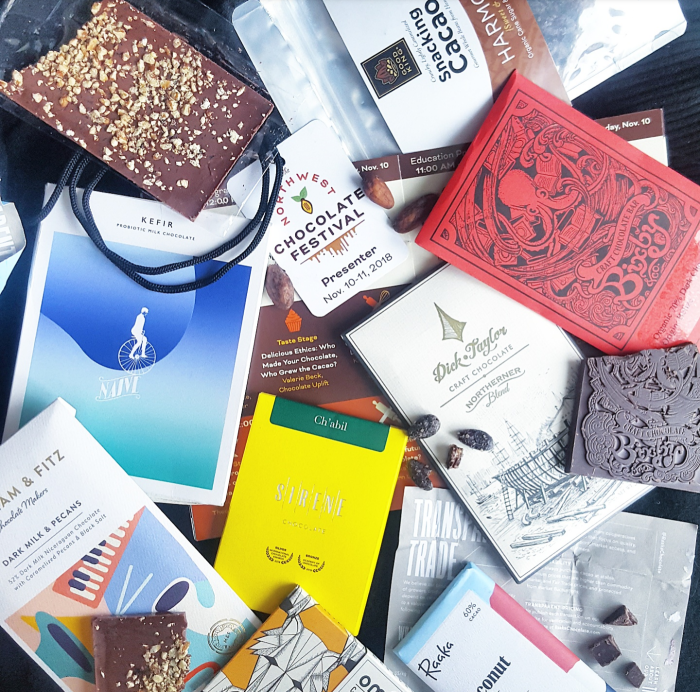
Craft chocolate and sustainable cacao for my talk at NW Choc on Delicious Ethics!

Click for the presentation I developed for my talk at the 2018 Northwest Chocolate Festival in sweet Seattle, entitled

Delicious Ethics: What’s in Your Chocolate, Who Grew Your Cacao?

To support cacao and chocolate that are slavery-free and sustainable, you can use the #chocolatefreedomproject hashtag, purchase transparent-trade chocolate, and let brands know you care about what’s in your chocolate, and who grew your cacao.

Thank you and keep eating real chocolate!

Onward and upward!

Valerie

IMG_20181109_133425_228
On my way to sweet Seattle for the talk and chocolate festival!

Valerie Beck

Founder/CEO Chocolate Uplift

www.valeriebeckchocolateuplift.com

Sustainable Chocolate Brokering, Distribution, Consulting, Speaking


Chocolate Uplift Subscription Box: Journey Through Chocolate

By “chocolate muse” Valerie Beck

Hello!

Do you remember the book of the month club? 

Or the Columbia Records tape of the month club? (A junior high school favorite!)

Are you into the contemporary subscription services, for makeup, or dog toys, or other items?

It’s fun to receive something new that you love, and to take a journey to a new adventure through this new discovery, isn’t it!


I’ve wanted to start a chocolate of the month club for quite some time, and even did for a short time back in 2007 while the 1.0 version of the original chocolate tours I founded in 2005 was running.

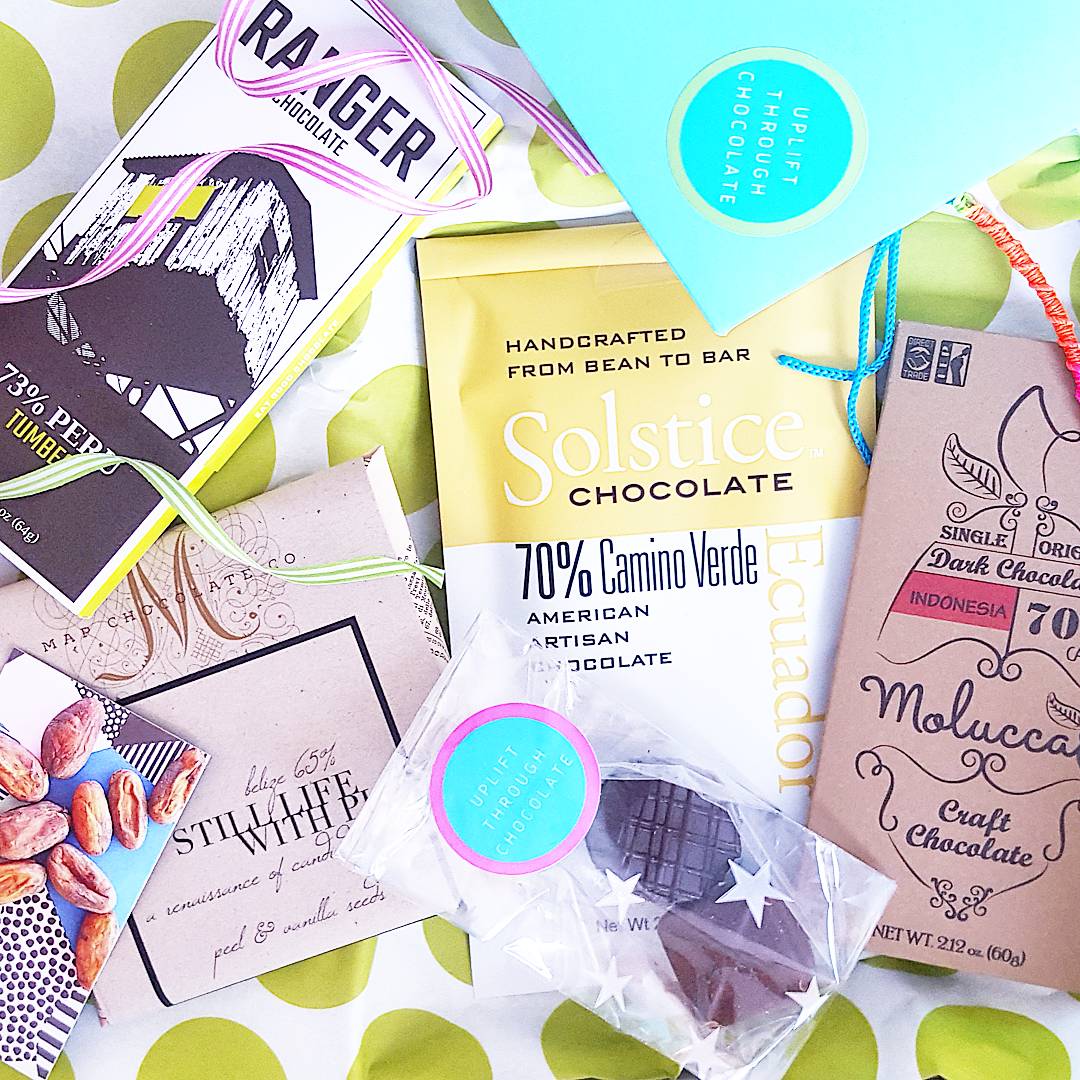
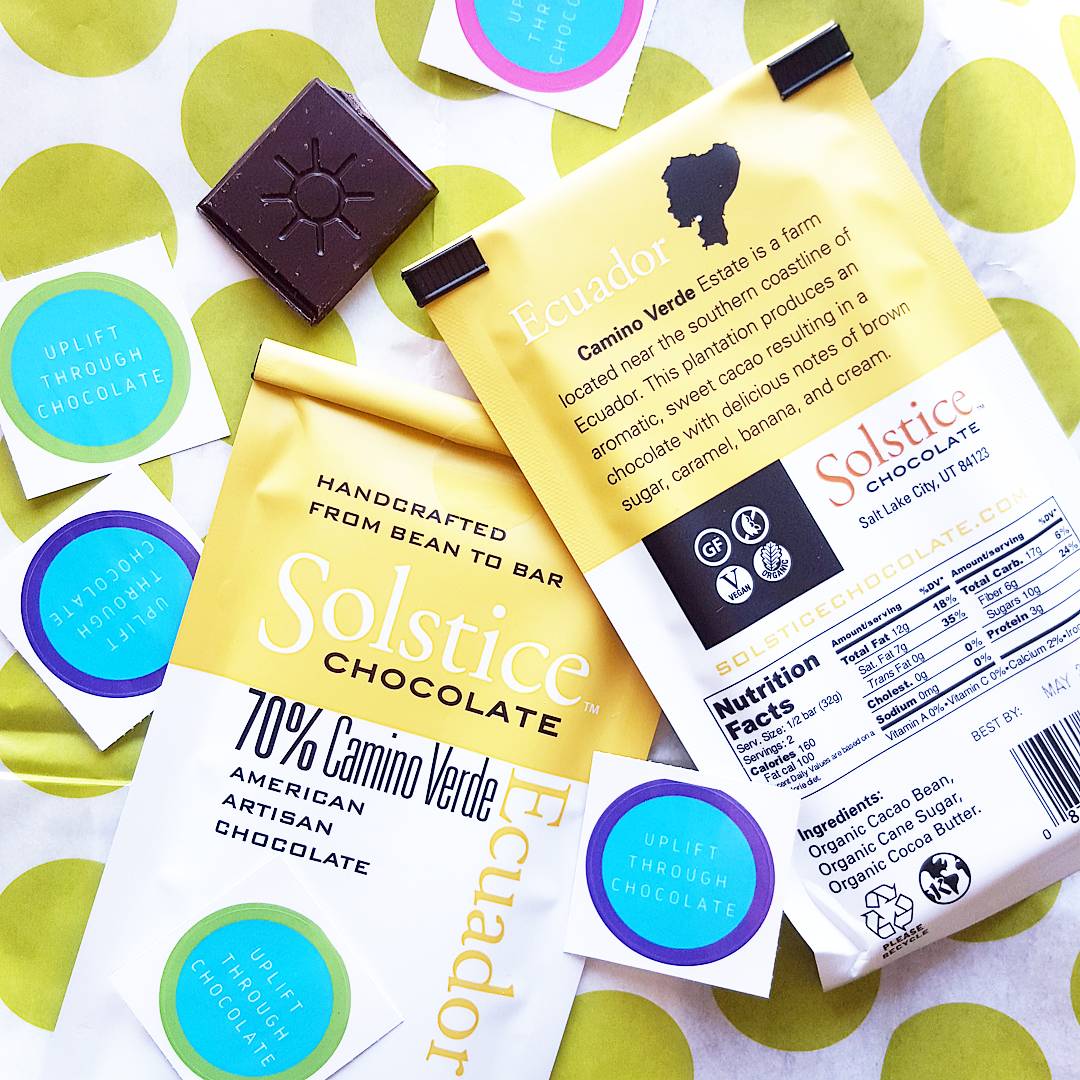
The timing has finally proved right, and I recently launched the Chocolate Uplift craft chocolate subscription box, which gives you 4 top-notch chocolate bars per month, always sustainable and child-slavery-free, soy-free, small-batch, and scrumptious! I’ve met and connected with so many innovative chocolate makers over the years, as the chocolate revolution moves forward, and it’s a blast to connect you to their delicious artistry through the box!

In addition to selecting these special and sometimes hard-to-find bars for you, and choosing the packaging and monthly theme, I donate a meal to the children of CREER Africa for every box sold, as the kids are reintegrated into health and life after being trafficked onto the child labor cacao farms in Ivory Coast that supply big chocolate brands. This one-to-one give came about when I asked the CREER founder what she needed for the kids, such as books, toys, or shoes. She said that the rescue center needs food, rice for the kids. So that’s what we give.

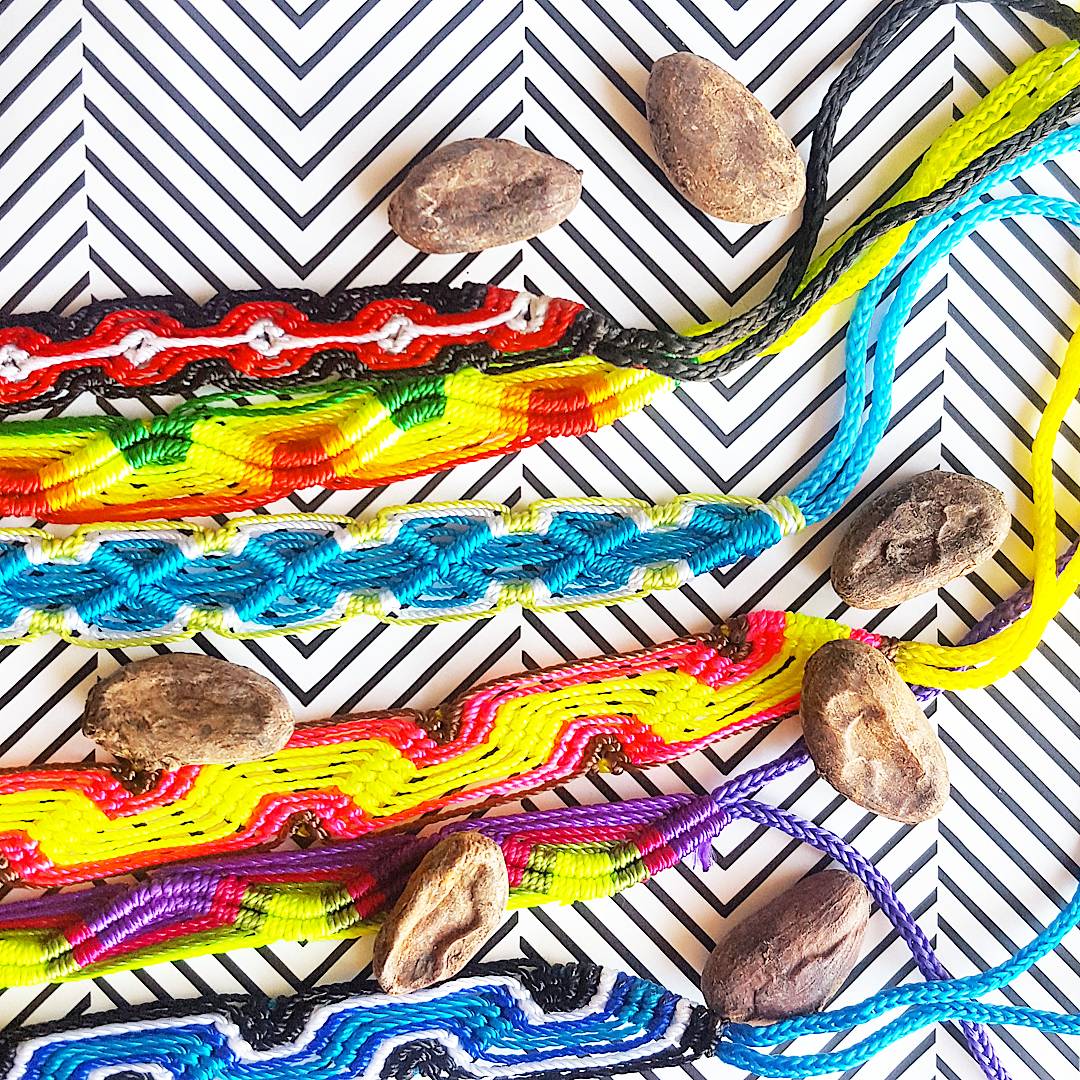
The boxes also contain a friendship bracelet from Peru, to honor the heritage of cacao, and to say an extra thanks from me to you.

You can receive boxes quarterly, monthly, or one-and-done, for yourself or a gift, for a journey through chocolate.

Click for my latest unboxing video to see what was inside the March 2017 box and hear me share some backstories about the chocolate, cacao, or chocolate makers. Thank you, and keep eating real chocolate!

Onward and upward!

Your friend in chocolate,

Valerie

Valerie Beck

Founder/CEO Chocolate Uplift and Valerie’s Original Chocolate Tours

www.valeriebeckchocolateuplift.com/subscription

@chocolateuplift

Uplift Through Chocolate!

Who Labors for Chocolate?

Hello there, and happy Labor Day in the USA!

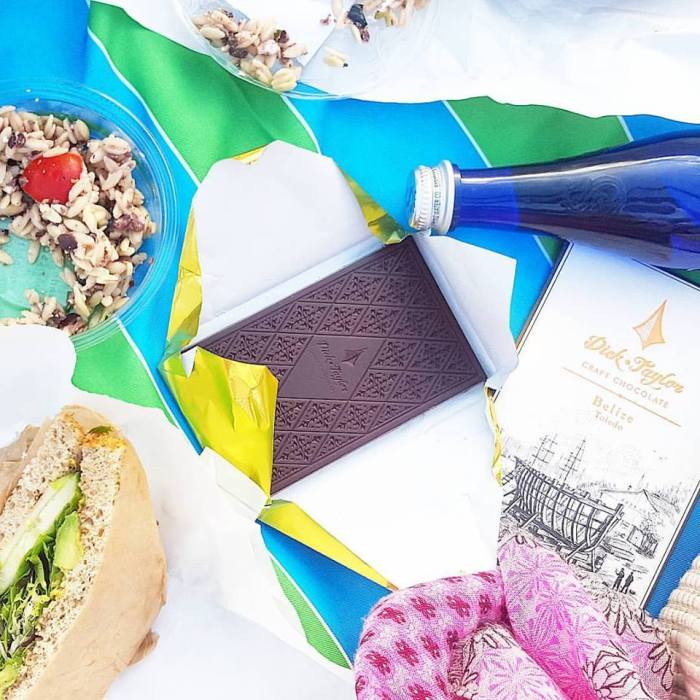
picnic
My picnic this Labor Day weekend included exquisite bean-to-bar chocolate by Dick Taylor, made from direct trade cacao from Belize!

A note on my Chocolate Freedom Project this Labor Day, which brings awareness of and alternatives to child labor on Ivory Coast cacao farms where Big Chocolate buys cocoa beans. Solutions that we can implement as customers include choosing fair trade and direct trade chocolate, which is better for foodie, farmer, family, and field.

Solutions that I recommend to my country clients and cacao farmer clients as a chocolate consultant include making chocolate in-country from sustainably grown cacao, instead of exporting all the cacao.

As this article entitled

Africa produces 75% of cocoa but gets 2% of $100b chocolate market revenue

reminds us: “The formula for the wealth of nations is clear: rich nations add value to exports, poor nations export raw materials.”

The revolution has begun! : )

Have a happy, thoughtful, and delicious Labor Day!

Cocoa
Photo: Ghana Business News article referenced above

Your friend in chocolate,

Valerie

summer 2016

Valerie Beck

Founder/CEO Chocolate Uplift and Valerie’s Original Chocolate Tours

www.valeriebeckchocolateuplift.com

www.valeriebeckchocolateuplift.com/chocolate-tours

social media: @chocolateuplift

Haiti is Here

by Valerie Beck, chocolate consultant

image
Grown in Haiti: Haitian Chocolate Project kickstarter launches Thursday 1/28

Update – click for the kickstarter campaign:

https:// http://www.kickstarter.com/projects/272592294/the-haitian-chocolate-project-bar-one

What would you say to delicious bean-to-bar chocolate made from gentle cacao grown on the lush yet historically impoverished Caribbean nation of Haiti, where cacao farmers are working to raise their families and communities out of poverty?

Fund the new Haitian Chocolate Project kickstarter campaign, launching Thursday, January 28, 2016, and you’re funding new fermentation boxes to make this good cacao better, and to further farmers’ abilities to lift their families and communities out of poverty by getting their cacao to the US market.

image
Sensational San Francisco, where I’ll lead a custom chocolate adventure for top funders

Kickstarter rewards include Bisou Chocolate made with these gentle Haitian cocoa beans, and also my new chocolate tasting video, and a trip through San Francisco’s top chocolate shops, kitchens, and bakeries led by yours truly with the Haitian Chocolate Project founders.

2016-01-27 08.43.39
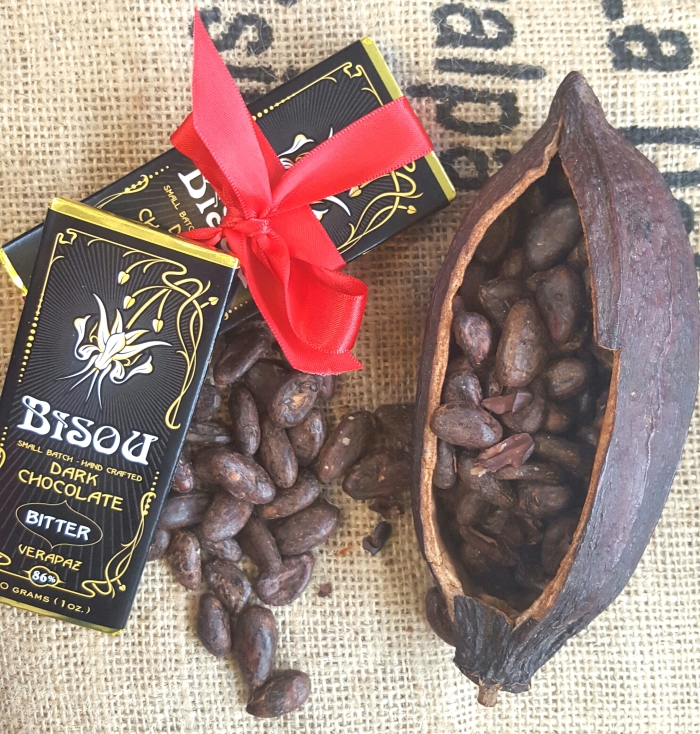
Beautiful Bisou Chocolate, making new chocolate bars from Haitian cacao for you

I’m thrilled to be an advisor to this project, and the kickstarter link is coming soon!

Update – here’s the link:

https:// http://www.kickstarter.com/projects/272592294/the-haitian-chocolate-project-bar-one

Delicious thanks!

Your friend in chocolate,
Valerie

image
In San Francisco, where I sampled our first batch of lovely Haitian cacao.  Onward and upward!

Valerie Beck
CEO/Founder Chocolate Uplift
www.valeriebeckchocolateuplift.com
www.chocolateuplift.com
social media @chocolateuplift

Best New Chocolate I Ate (Or Drank) in 2015

by Valerie Beck, chocolate expert

1538901_10152103083203426_1142920_n
Past, present, future: chocolate links us to happy memories, gives us an enjoyable present moment, and opens doors to happy adventures to come

Do you remember the first time you tasted chocolate?

I remember being 4 years old and letting my mom know that non-chocolate milk just wasn’t working for me.

debeauve et gallais
Debauve et Gallais, the Paris chocolate shop where at age 19 I tasted the bonbon that changed my life


And I remember being 19 and tasting my first piece of truly fine chocolate, in Paris, and knowing that this was going to change my life.

Tasting new chocolate can connect us to happy memories, and open the door to new adventures.

Below are a very few of my favorite chocolate creations that I tasted for the first time in 2015, narrowed down with enormous difficulty to:

* one chocolate bar,
* one hot chocolate, and
* one chocolate truffle.

I could have done the top 10 of each, and added pastries and confections and done the top 10 of each of those, and would still have had an outrageously difficult time narrowing it down from all of the amazing chocolate I’ve had the pleasure of tasting this year, in many different cities.


wp-1451604747730.jpg
Will (and do) travel for chocolate

Indeed, at one single event, World of Chocolate earlier this month, I tasted over 27 new chocolate creations as a judge!

The craft chocolate revolution continues, and talented and hard working chocolate makers, chocolatiers, and chefs continue to innovate, which means a lot of fabulous chocolate to taste and enjoy.

But this is a brief post on New Year’s Eve, typed on my phone, and so I’m sharing just a few favorite items here.
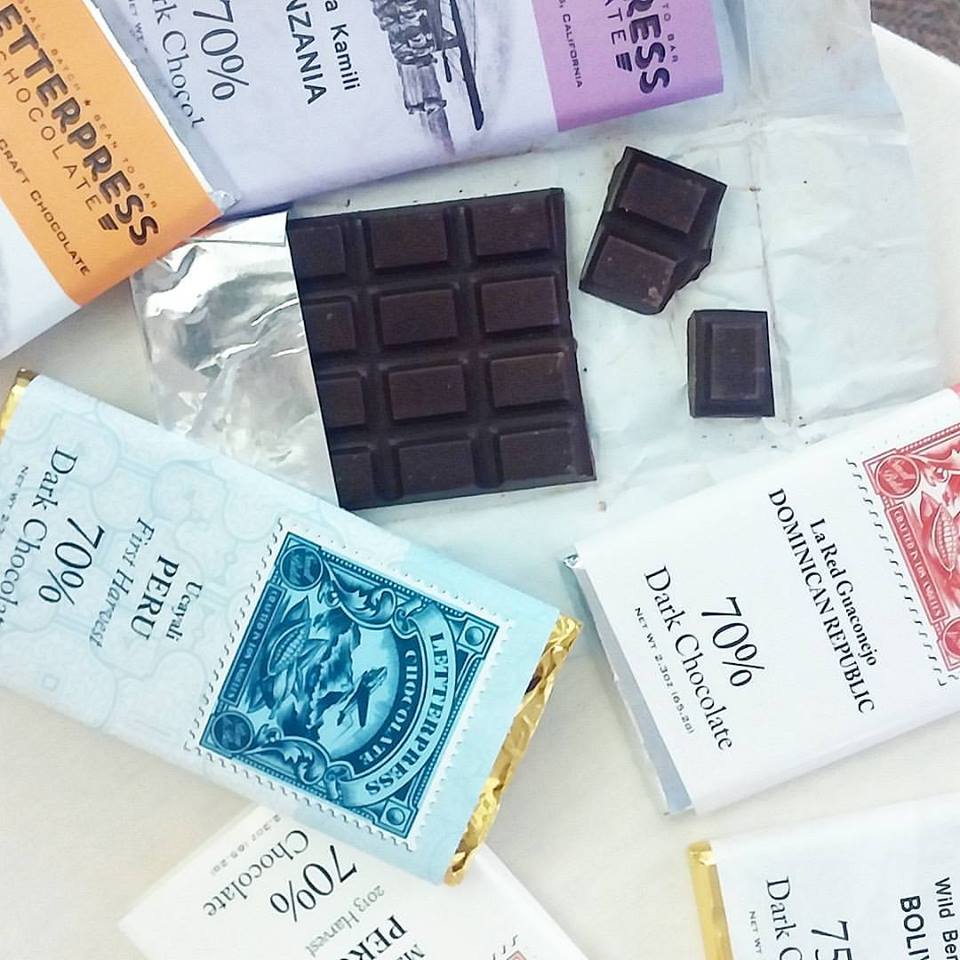
For more chocolate that I loved in 2015, see my instagram!

Meanwhile, here we go:


wp-1451599778990.jpg
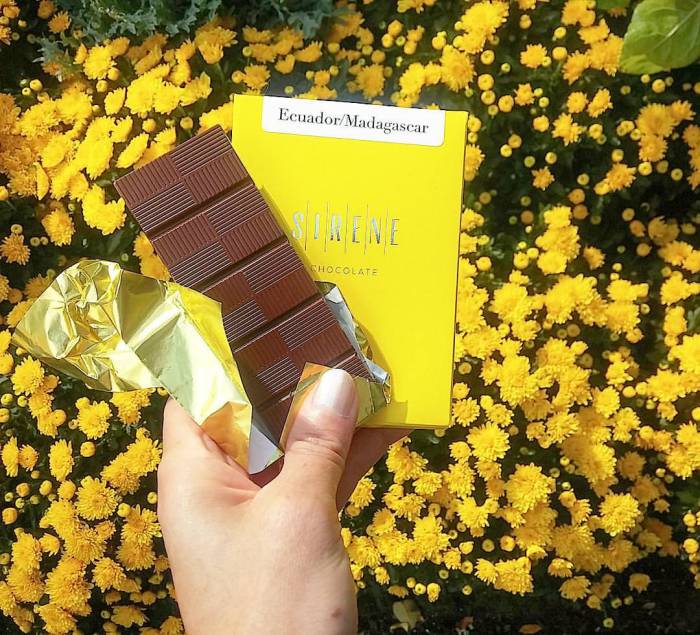
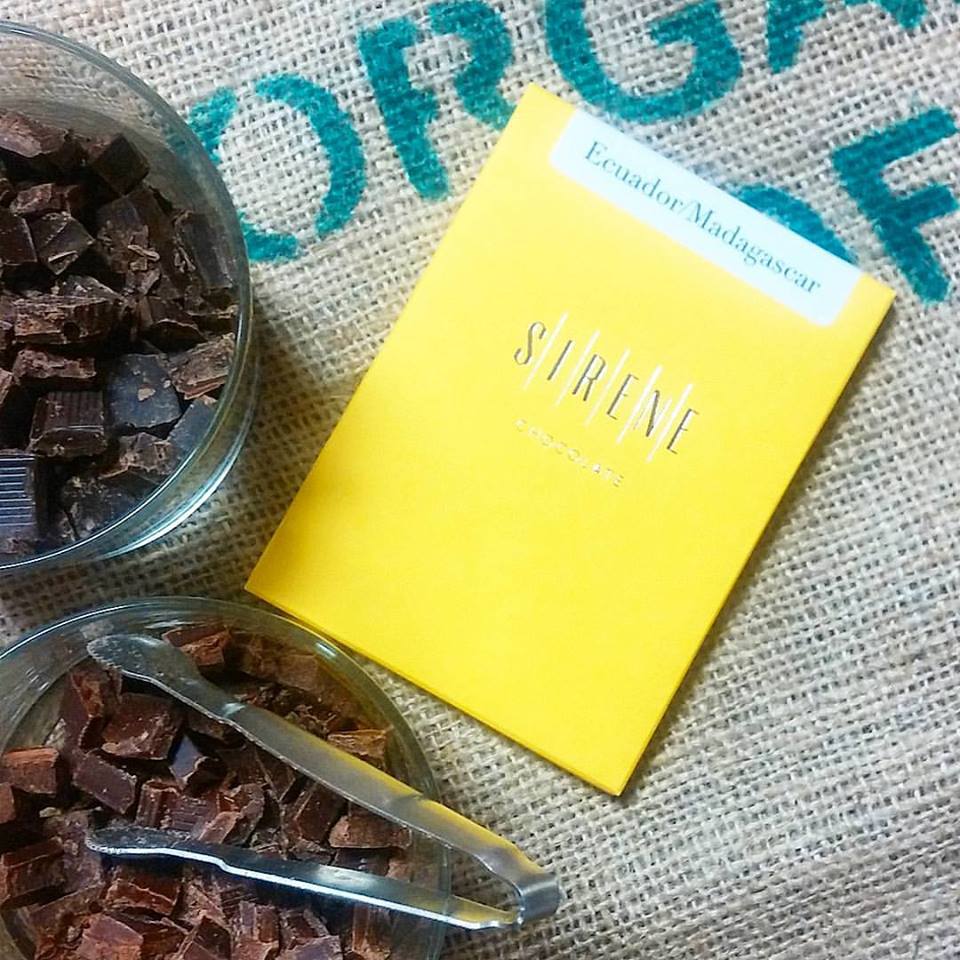
Sensational Sirene Chocolate: 2 bars in 1, each with just 2 ingredients (cacao and sugar) so you can compare flavors


Chocolate Bar: Sirene Chocolate

Crafted from just two ingredients – cacao and sugar – Sirene Chocolate epitomizes the purity of bean-to-bar chocolate.
Smooth texture and fabulous flavor, depending on the cacao origin, fermentation, roasting process, and grinding time, reveal the story that each cacao origin can tell, and reveal the artistry of chocolate maker Taylor Kennedy, from his chocolate kitchen in Victoria, British Columbia, Canada.

I sampled Sirene for the first time this past year, at the Northwest Chocolate Festival in Seattle, and was instantly impressed. I then sampled Sirene to a group at one of my Chocolate Wellness talks, in Chicago, and it is no exaggeration to say that “the crowd went wild.” After the group tasted the fleur de sel chocolate bar by Sirene, they asked for seconds, and bought out the rest of my stock.

When one audience member’s bars accidentally came home with me in my bag, I offered to drop them off to her the next day, but she preferred to come to my place and get them that same night. I would have done the same thing!


12274699_748167645313438_1342154938436561240_n
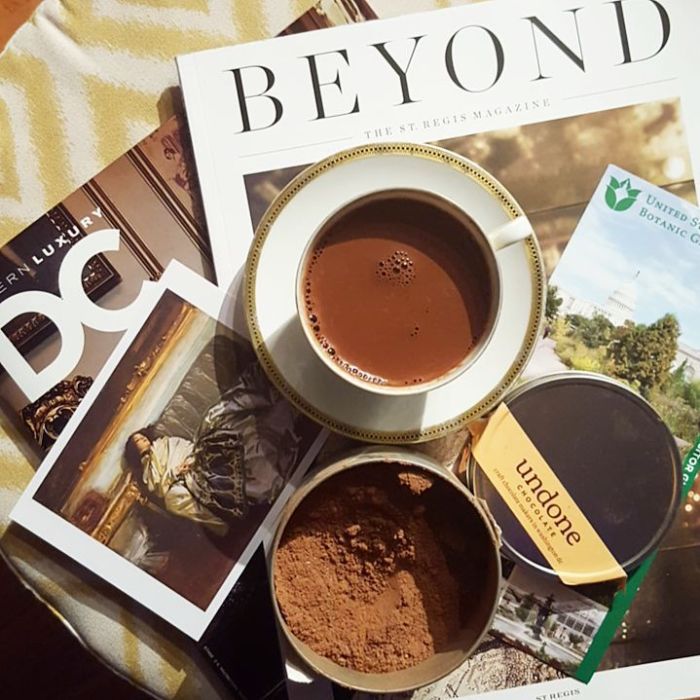
Cacao + sugar + water = some of the richest and most delicious drinking chocolate anywhere, by Undone Chocolate of Washington, DC


Hot Chocolate: Undone Chocolate

This is a personal mini list, so here’s my personal view on hot chocolate: it should be rich, chocolatey, and simultaneously comforting and exciting.

If it’s also single-origin, and made with just two ingredients (cacao and sugar), and tastes amazing in a vegan version made with water instead of milk (the traditional or ancient way to make chocolate is of course with water, not dairy), then it is truly special.

The hot chocolate by Undone Chocolate is all of those things. I already loved Undone’s chocolate bars when I visited owner Adam Kavalier and team member Merrill Dagg at Undone’s kitchen in Washington, DC, this year. What a treat to see their chocolate-making equipment in action, with sacks and sacks of Dominican Republic cacao awaiting their turn to shine.

When Adam sent me home with a tin of Undone hot chocolate mix I was grateful, and as soon as I tried it I was ecstatic.

The flavor and texture are rich and luscious with water – no milk required – so that the hot chocolate tastes not like milk but like chocolate. Call me a purist because that for me is what hot chocolate should be.


spicy passion
Spicy Passion truffle by Batch PDX: passion fruit and Oregon pepper ganache enrobed in white chocolate – sweet with heat

Truffles: Batch PDX

When I bit into a French truffle in Paris at age 19, I knew it was something exquisite.

When I bit into a Batch PDX truffle earlier this year (see my June 2015 blog post), I knew it had the same level of precision, flavor, and magic that had captivated me in Paris, only this time the truffles were made in Portland, Oregon.

Chocolatier Jeremy Karp sees himself as a craftsman, and indeed crafts bonbons of beauty and balance.

I also see him as an artist, because he sculpts with flavors and textures, telling a story of contrast and compatibility with spice and passion fruit, for example, enrobed in white chocolate for additional magic.

These glimpses of magical chocolate experiences energize me for amazing chocolate experiences in the new year and beyond.

I wish you a delicious new year and more, as you “keep eating real chocolate!”

Your friend in chocolate,
Valerie

wp-1451603995306.jpg
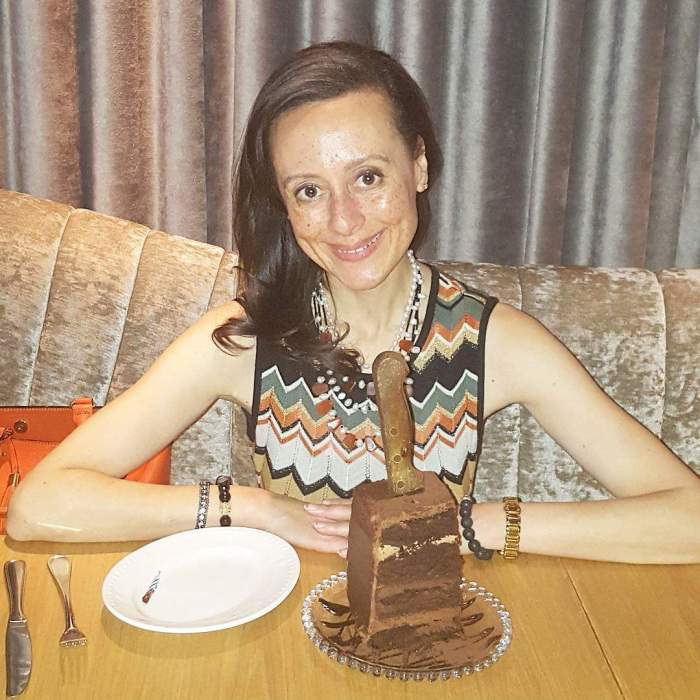
Celebrating my 2015 birthday – December 10 – at Miss Ricky’s in Chicago, with chocolate cake topped with a chocolate knife bonbon filled with chocolate caramel!


Valerie Beck
CEO/Founder Chocolate Uplift
Chocolate Consultant and Broker, Sweet Speaker
www.valeriebeckchocolateuplift.com
chocolateuplift@gmail.com
social media @chocolateuplift

“Uplift Through Chocolate!”

Original Beans: Sweet Sustainability

by Valerie Beck, chocolate expert

11069778_729734453823424_3030487642532374257_o
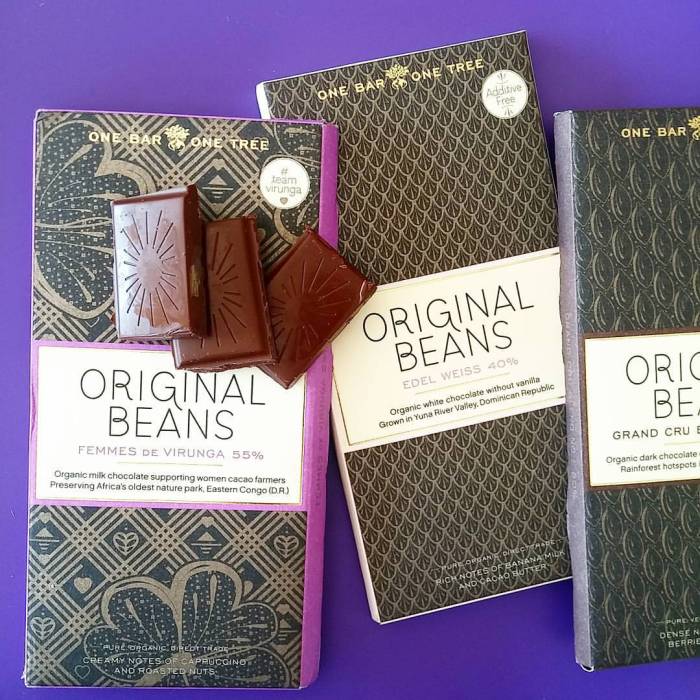
Look what arrived at the Chocolate Uplift office: elegant and delicious craft chocolate bars by Original Beans, an Amsterdam company.

A wonderful question to ask ourselves from time to time, beyond “what should I do with my life,” is “what does life ask of me.” Find a way to contribute, a problem to solve, or a hurt to heal, and you can find a fulfilling life.

Along this path of living meaningfully, we can also find pure and exquisitely delicious Original Beans chocolate, founded by entrepreneur and conservationist Philipp Kauffmann, whose bean-to-bar chocolate business plants or preserves a cacao tree for every chocolate bar purchased.

IMG_20151126_171155
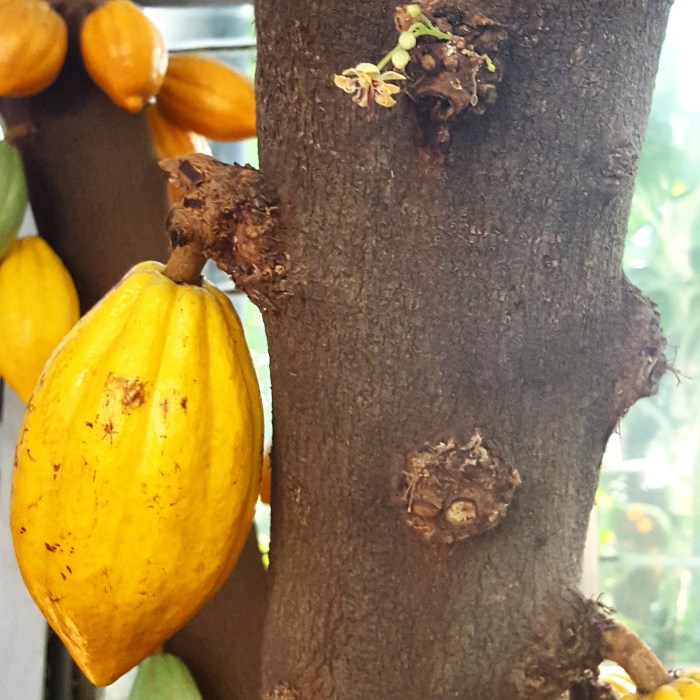
Cacao tree, with pods and flowers. Each pod holds approximately 40 cocoa beans on average. This particular tree is in the US Botanic Garden in Washington DC; I visited the Garden most recently over Thanksgiving 2015 to see how this beauty was doing! Cacao trees generally grow in rainforests, within 20 degrees of the Earth’s equator. This one is in a greenhouse, for the public to view and admire.

Chocolate done right is not candy. It is food, glorious food, made from the cocoa bean (cacao), which is the seed of the fruit of the cocoa tree. Chocolate is agricultural.

20151119_092839
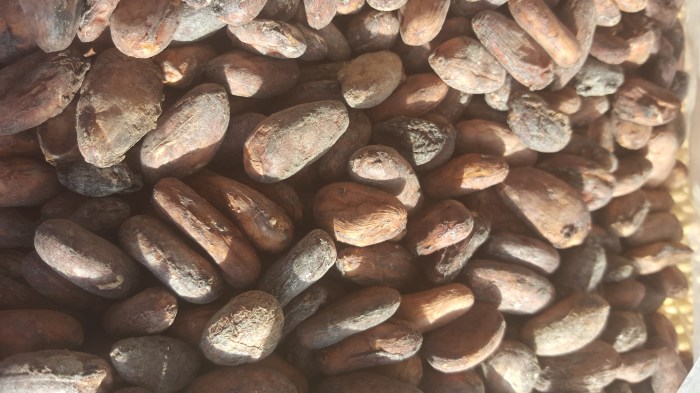
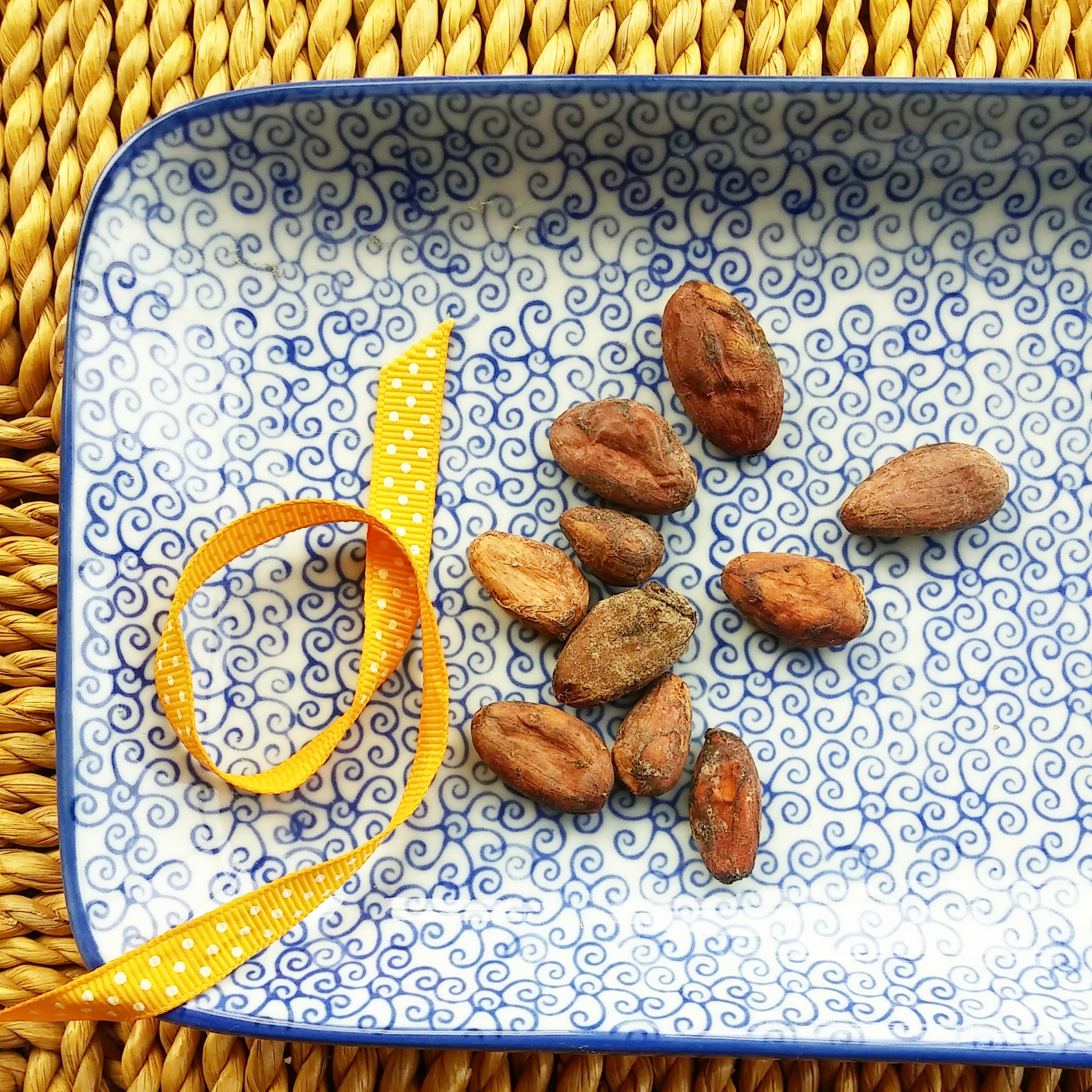
Cocoa beans, around the size of almonds. These are from Venezuela.

The cocoa bean is basically a multivitamin. Rich in vitamins, minerals, antioxidants, and fiber, cacao is a superfood that needs no artificial ingredients, preservatives, fillers, or unpronounceables to turn it into chocolate. Add a touch of sugar to the meticulous process of fermenting, roasting, and grinding the cacao, and you have craft chocolate. Real chocolate. From there you can add milk to make milk chocolate, or add inclusions such as nuts or sea salt. Real chocolate starts with and stays close to the cocoa bean.

12038412_735250483271821_8157419330392597672_n
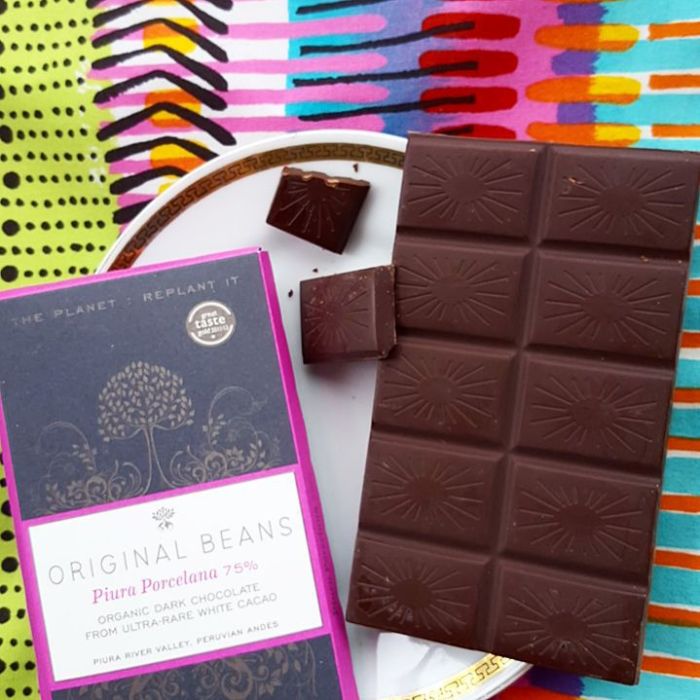
Outrageously exquisite Piura Porcelana 75% chocolate bar by Original Beans, super smooth, with surprising but gentle notes of lime. Just 2 ingredients: cacao (from Peru in this case) and sugar. This means the chocolate is vegan, and gluten free. It’s also organic of course. And did I mention delicious! If you’re not a dark chocolate lover, this non-bitter bar will change your mind.

Original Beans highlights the link between craft chocolate and sustainability with its brilliant “one bar, one tree” initiative. Buy a bar, and a tree is planted or maintained, for future chocolate lovers. Eat it forward.

Indeed, all of the craft chocolate makers I meet or represent believe in the social responsibility aspects of making chocolate, such as using cacao from direct trade or fair trade sources instead of from the child slave labor sources that Big Chocolate relies on.

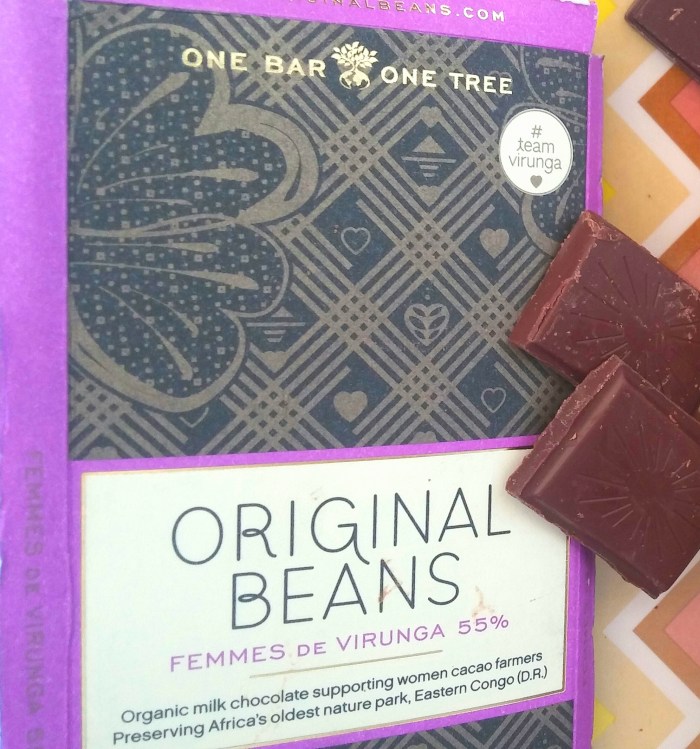
One way Original Beans extends its sustainability platform explicitly into social justice is through its delicious Femmes de Virunga chocolate bar, which provides female cacao growers in the Congo with seedlings, education, and a local radio program, supporting Congolese women’s participation in the local and global economy. That’s “Uplift Through Chocolate,” and that’s the kind of theme I touch on in my Chocolate Wellness talks and tastings.

2015-11-28 12.54.12
Social justice in edible form, this luscious Femmes de Virunga dark milk chocolate bar by Original Beans is ultra creamy, organic, and made with nothing other than cacao, milk, and sugar. Nothing artificial, nothing made in a lab, nothing unpronounceable. Purchase of this bar helps women cocoa farmers and Virunga National Park in the Democratic Republic of Congo. And did I mention it’s delicious!

Search #teamvirunga and #onebaronetree on social media for more details, and check out my #chocolatefreedomproject for ways to participate in the ethical chocolate movement. (Jump into all of it through my Instagram.)

Flavor is king, you say? Don’t worry, you’ll love the rich, pure, creamy flavors of Original Beans chocolate bars. There’s an elegance to the flavor profiles that is completely enchanting.

2015-11-28 12.52.28
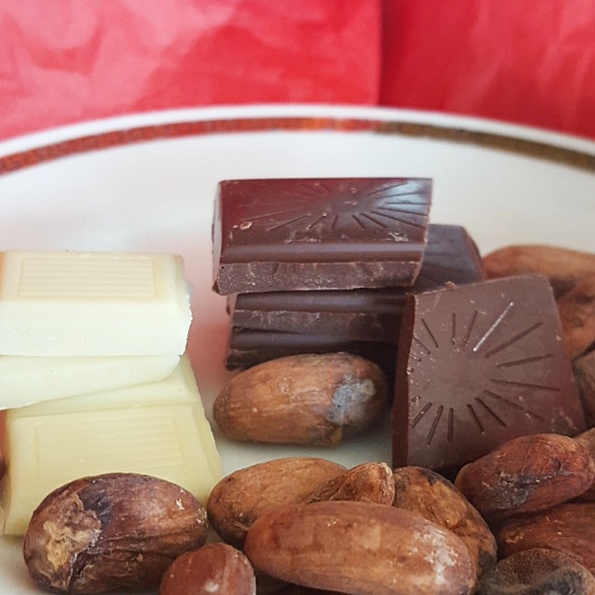
White chocolate splendor: Edel Weiss 40% by Original Beans, with no vanilla, lecithin, or other additives. Just cocoa butter (from cocoa beans from the Dominican Republic for this bar), sugar, and milk. All organic. If you don’t like white chocolate, this one will change your mind. Pure tastes better. Delicious!

Real chocolate tastes better, and is better for you, for the growers, and for the environment.

What does life ask of you? Part of the answer: eat real chocolate!

Your friend in chocolate,

Valerie

Valerie Beck

CEO / Founder Chocolate Uplift

chocolate brokering and consulting services, and sweet speaking

www.valeriebeckchocolateuplift.com

chocolateuplift@gmail.com

@chocolateuplift on Instagram, twitter, and Facebook

Uplift Through Chocolate!

IMG_20151128_145033
Original Beans, and cocoa beans: a virtuous circle of deliciousness and sustainability.

In With The New: Northwest Chocolate Festival

by Valerie Beck, chocolate broker, chocolate consultant, sweet speaker

A mere fraction of what I brought back from the NW Chocolate Festival in Seattle.
A mere fraction of what I brought back from the Northwest Chocolate Festival in Seattle, founded by Brian Cisneros.
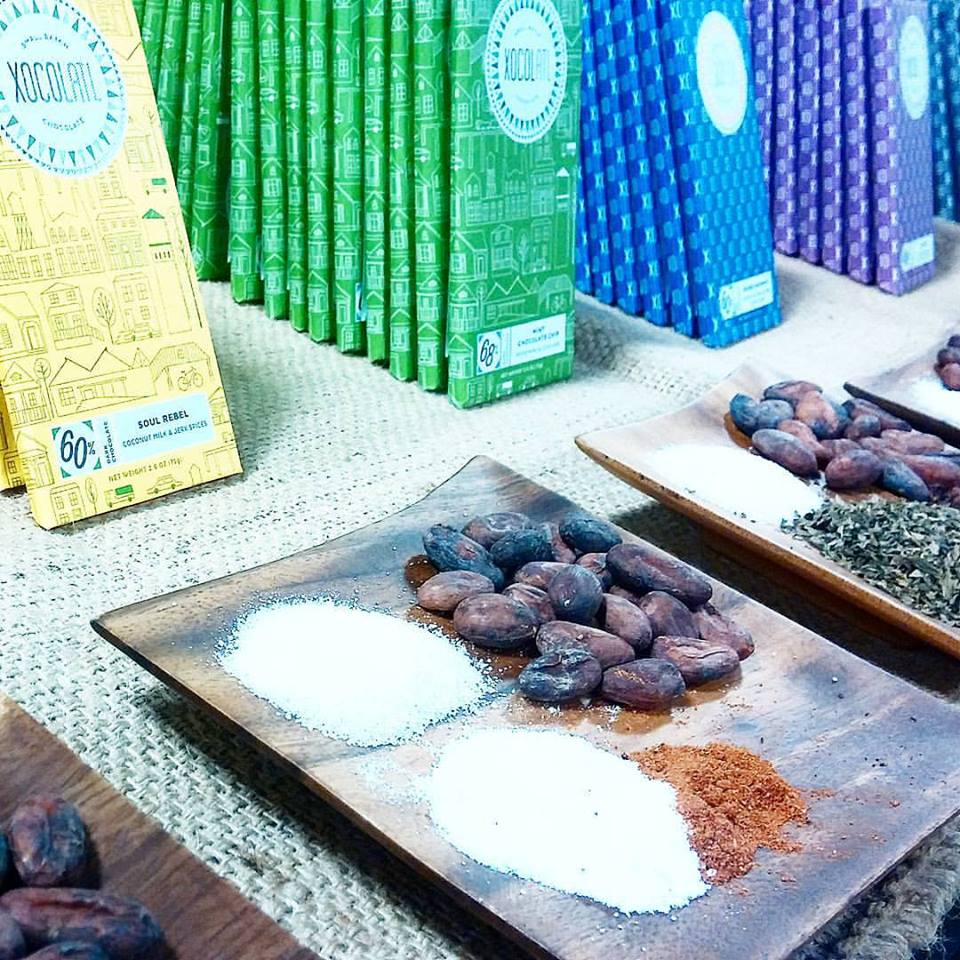
Pure ingredients on display, along with delicious chocolate and beautiful packaging, by Xocolatl at the NW Chocolate Festival
Pure ingredients on display, along with delicious chocolate and beautiful packaging, by Xocolatl of Atlanta at the NW Chocolate Festival. Cacao, sugar, here a little spice. Pure, delicious, healthful.

You never change things by fighting the existing reality. To change something, build a new model that makes the existing model obsolete.” ~ Buckminster Fuller 

Chocolate makers, entrepreneurs, professionals, and customers at the Northwest Chocolate Festival came together in Seattle earlier this month to celebrate craft chocolate, or bean-to-bar chocolate, which means chocolate made with ethical cocoa beans, a short supply chain, and a lot of hands-on work. The results:

  • infininitely better flavor than industrial chocolate bars,
  • real health benefits, and
  • social justice for cacao growers and consumers.
Exquisite Sirene Chocolate, a NW Chocolate Festival award winner
Exquisite Sirene Chocolate of Victoria, Canada, a NW Chocolate Festival award winner, made with just 2 ingredients, cacao and sugar, for purity of flavor plus luscious smoothness. Just as a wine maker controls the process to deliver different flavors depending on the grape, soil, casks, and more, the chocolate maker creates a flavor story depending on the cacao and the soil, plus the fermentation, roasting, and grinding of the cacao, and more.
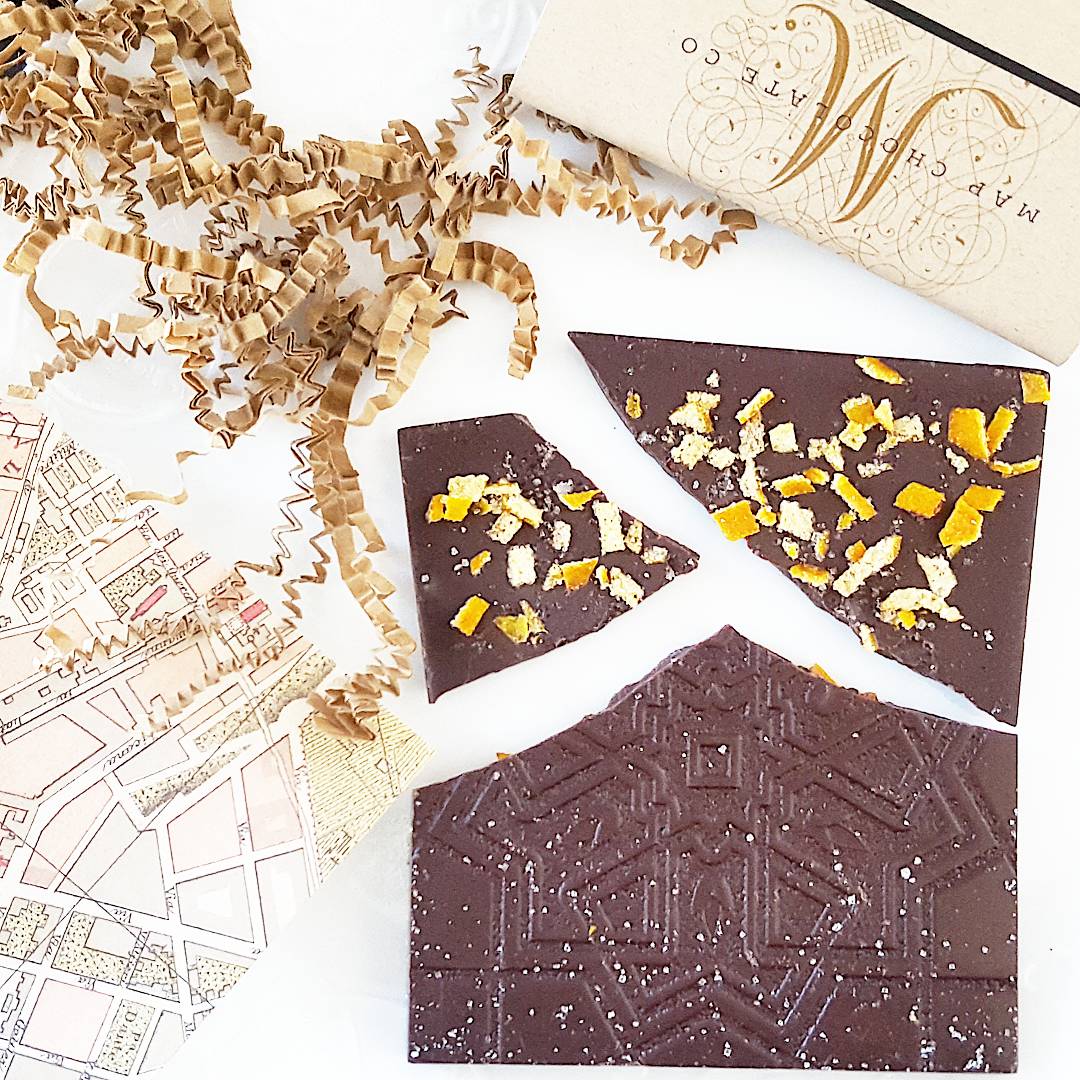
Loved meeting and sampling with instagram friends Map Chocolate and Letterpress Chocolate: each creative, unique, delicious.
Loved meeting and sampling with instagram friends Mackenzie of Map Chocolate of Oregon (above) and David of Letterpress Chocolate of Los Angeles (below). Creative, unique, delicious.

11222894_728034780660058_4786741230765459106_n

As I ask audiences at my Chocolate Wellness talks: you know where your cup of coffee this morning came from, whether Ethiopia, Colombia, or elsewhere, and you know where your glass of wine last night came from, right down to the name of the vineyard in California or the estate in France, but where did your chocolate bar that you packed in your child’s lunch or that you had after dinner come from?

If the label doesn’t tell you, it speaks volumes, because 2/3 of the world’s chocolate is made from cocoa beans harvested by child slaves in West Africa. There are many ways to solve this abominable human rights problem, one of which is to choose craft chocolate made with cacao from farms that grow healthy and delicious cacao in an ethical manner. Look for labels that tell you the origin of the cacao, whether Ecuador, Madagascar, Venezuela, Bolivia, Tanzania, the Dominican Republic, Vietnam, or elsewhere – even Hawaii!

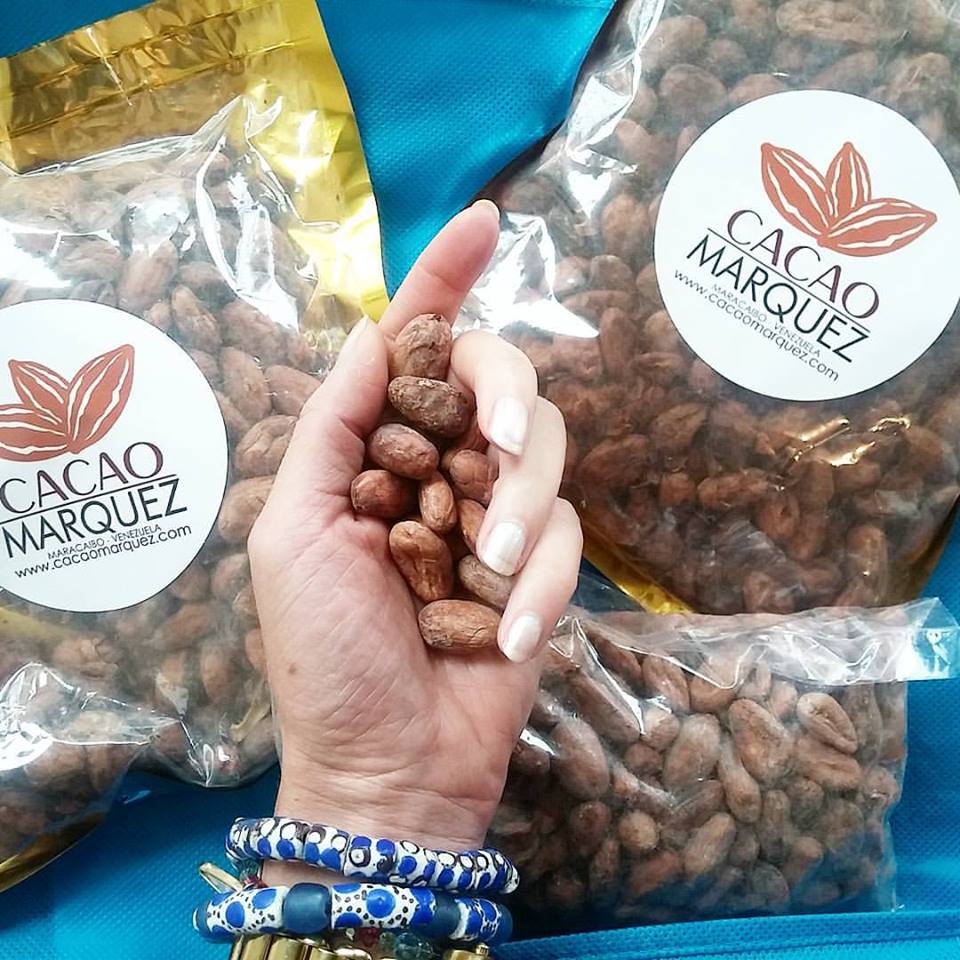
Venezuelan cacao from Cacao Marquez, which the owner gave me at the Festival, to sample for and with clients, after we'd connected on instagram
Venezuelan cacao from Cacao Marquez, which the owner gave me at the Festival, to sample for and with clients, after we’d connected on instagram.

With ethical cacao, farmers make money, kids go to school, craft chocolate makers exercise their artistry, and we all enjoy delicious and sustainable chocolate that is better for foodie, farmer, and field.

That’s what we did at the NW Chocolate Festival, which consisted of an “un-conference” for craft chocolate makers to share best practices, an awards ceremony to recognize some of the best chocolate on Earth, an expo for the public and the trade to sample and shop amazing chocolate, and workshops for everyone to learn and share more about the endlessly fascinating world of cacao and chocolate.

Favorite workshop: “one bean, six makers,” where six different chocolate makers, who had been given the same cocoa beans from Belize, explained their very different processes – such as the many many multiple steps and custom tools and devices by delicious Dick Taylor Chocolate – and sampled their very different end result chocolate bars. That’s the magic of craft chocolate!

Marvelously silky and flavorful Madre Chocolate of Hawaii, made from Hawaiian cacao and sugar.
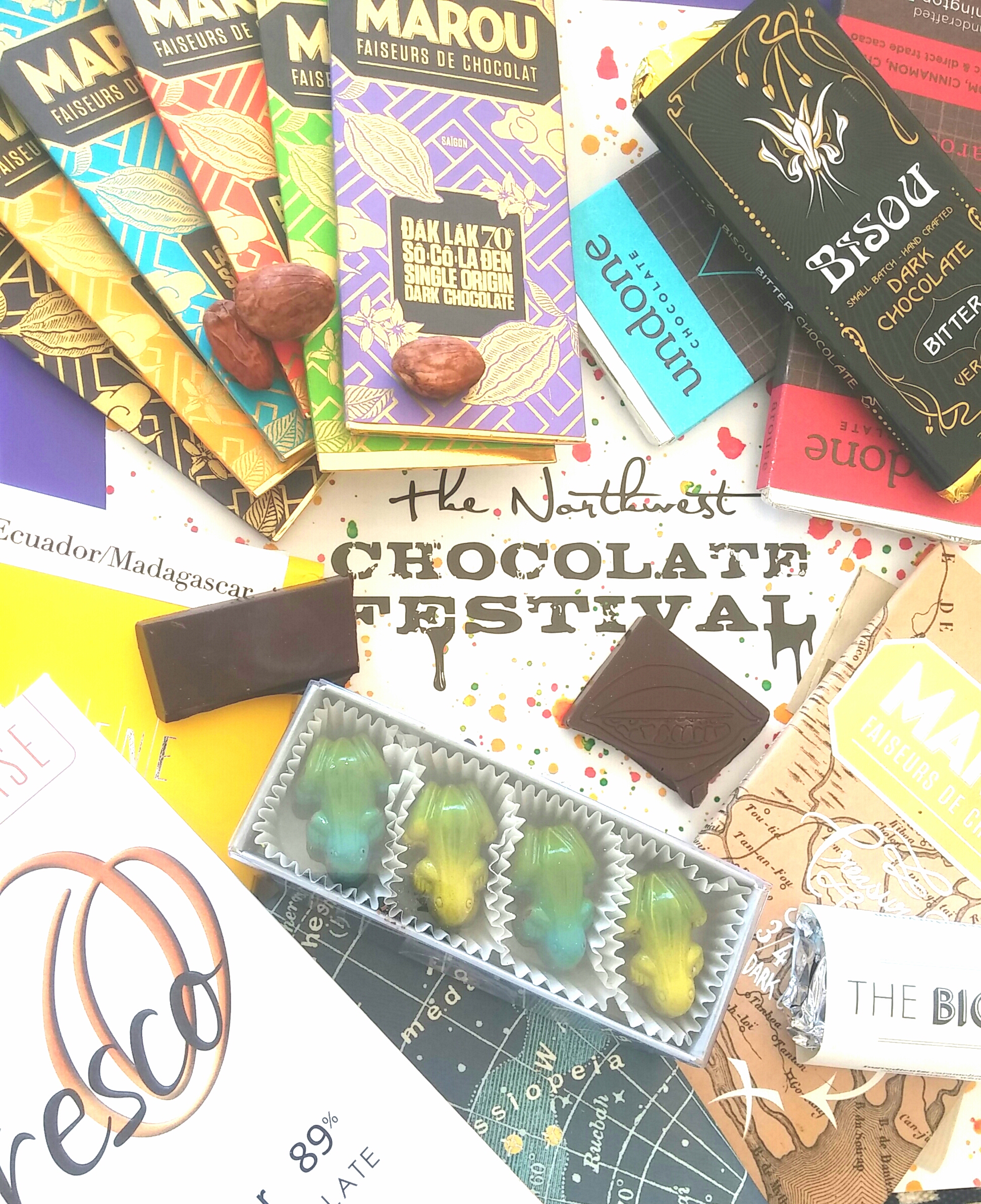
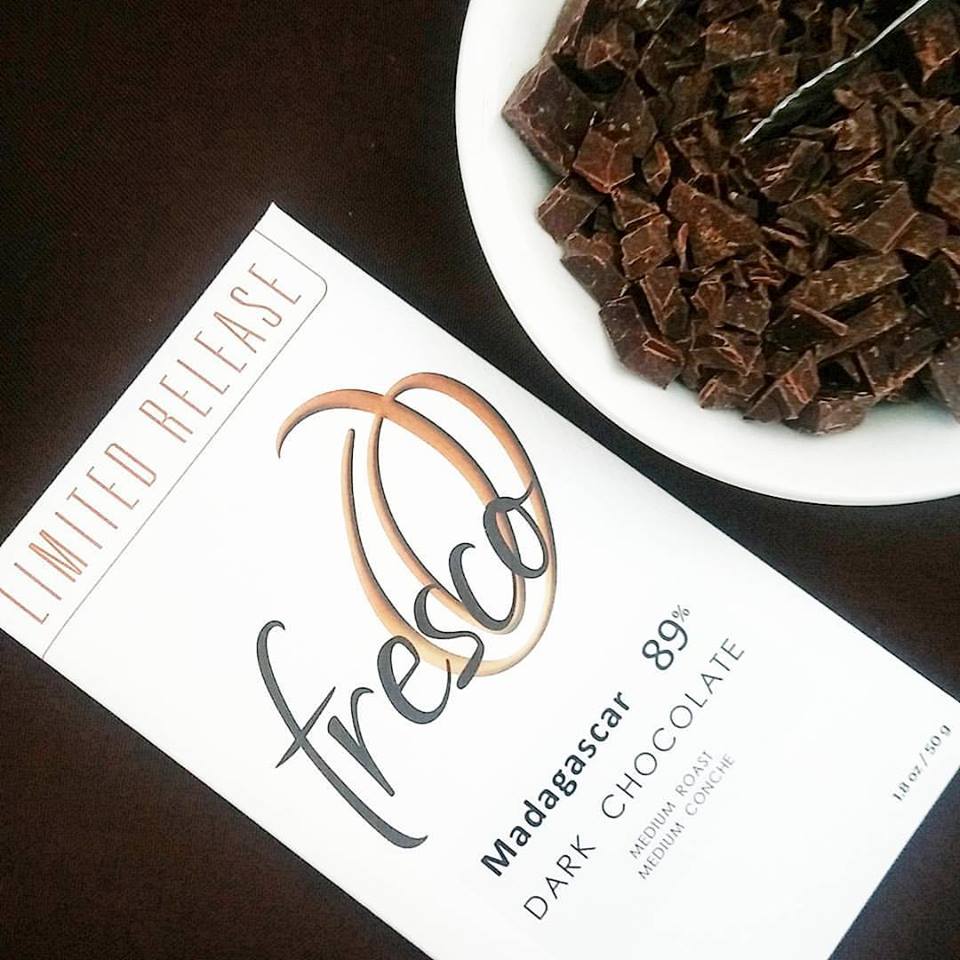
Woman-owned Fresco Chocolate: love the bright zingy flavor and smooth texture of the Madagascar 89%.
Fresco Chocolate from Washington state: love the bright zingy flavor and smooth texture of the Madagascar 89%.
Spectacular Seattle: festival with a view.

My favorite part of the Festival overall – aside from sampling exquisite chocolate and filling the extra suitcase I brought to take it all home – was connecting with old friends and existing clients, meeting in person people I’d connected to on instagram, and coming away with new friends in the chocolate world who are as kind as they are talented.

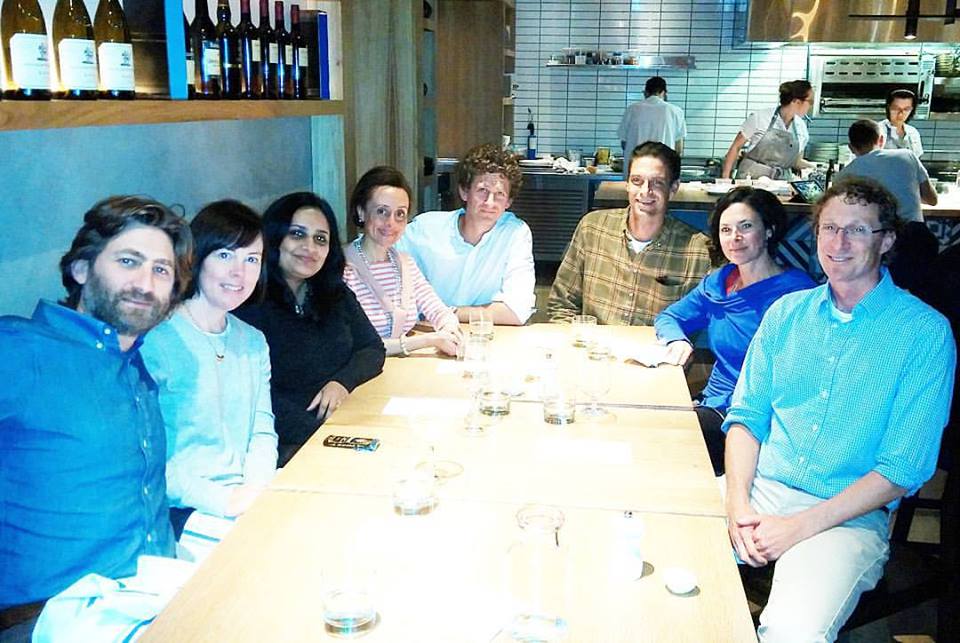
Had a blast at the very impromptu first annual Chocolate Uplift dinner at the NW Chocolate Festival, with (left to right) Marc of Teuscher Beverly Hills, Courtney of TSG Birmingham and an aspiring chocolate maker, my new friend Dipa from the plane, yours truly, Phil of Teuscher Beverly Hills, ___ and ___ of Bisou Chocolate, and Taylor of Sirene Chocolate.
Had a blast at the very impromptu first annual Chocolate Uplift dinner at the NW Chocolate Festival, with (left to right) Marc of Teuscher Beverly Hills, Courtney of TSG Birmingham and an aspiring chocolate maker, my new friend Dipa from the plane, yours truly, Phil of Teuscher Beverly Hills, Eli and Tracey of Bisou Chocolate, of Berkeley, CA, and Taylor of Sirene Chocolate.
Chocolate all day, chocolate all night: loved sampling Bisou Chocolate at dinner.

Onward and upward! Enjoy more Festival photos below, and keep eating real chocolate as we move ever deeper into the new chocolate model!

Your friend in chocolate, 

Valerie

With dear friend Ricardo of Cao Chocolates, and instagram friends Tyler of 5150 and Roger of Cacao Prieto, at the NW Chocolate Festival awards reception.
Cheers to chocolate: With dear friend Ricardo of Cao Chocolates, and instagram-now-in-person friends Tyler of 5150 of Florida and Roger of Cacao Prieto of Brooklyn, at the NW Chocolate Festival awards reception.

Valerie Beck

CEO / Founder Chocolate Uplift

chocolate brokering and consulting services, and sweet speaking

www.valeriebeckchocolateuplift.com 

chocolateuplift@gmail.com

@chocolateuplift on instagram, twitter, and Facebook

Uplift Through Chocolate!

12122827_728578780605658_6933531696179739538_n 12096490_728937873903082_2492610697096920602_n 11225083_728874777242725_8828241020119118012_n12122533_728650443931825_1409796742629321921_n

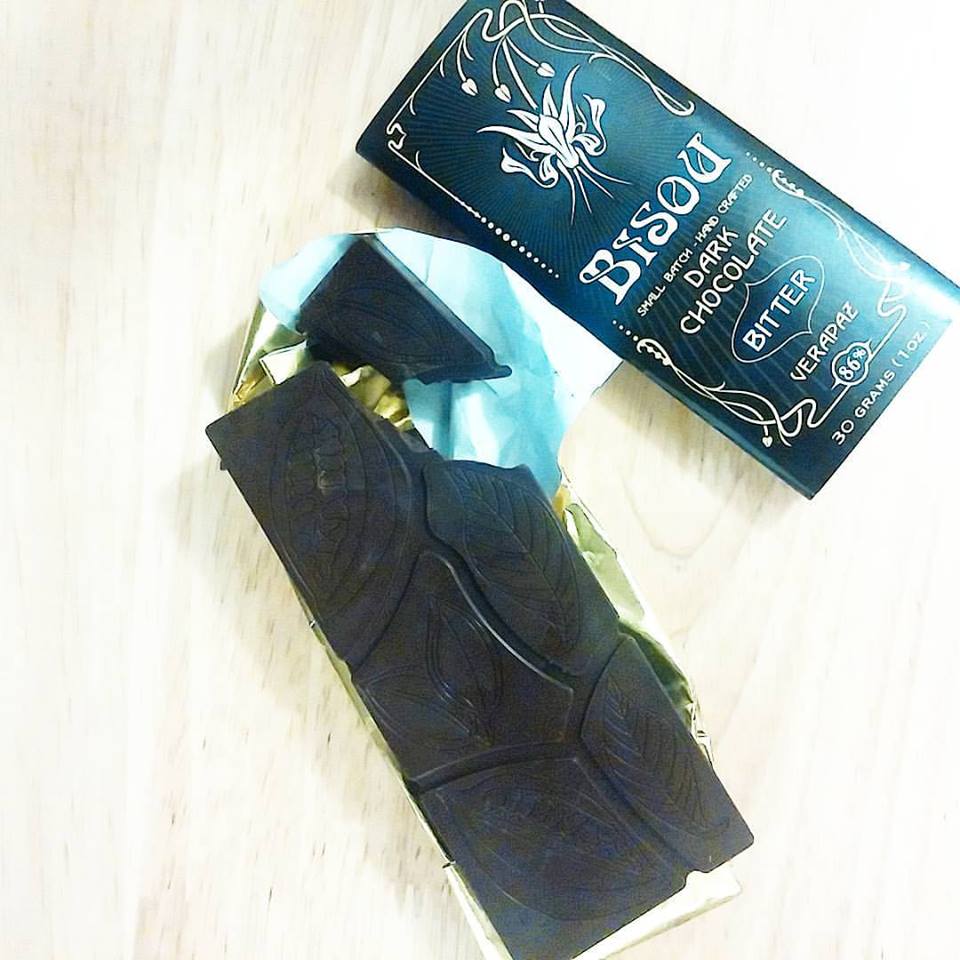
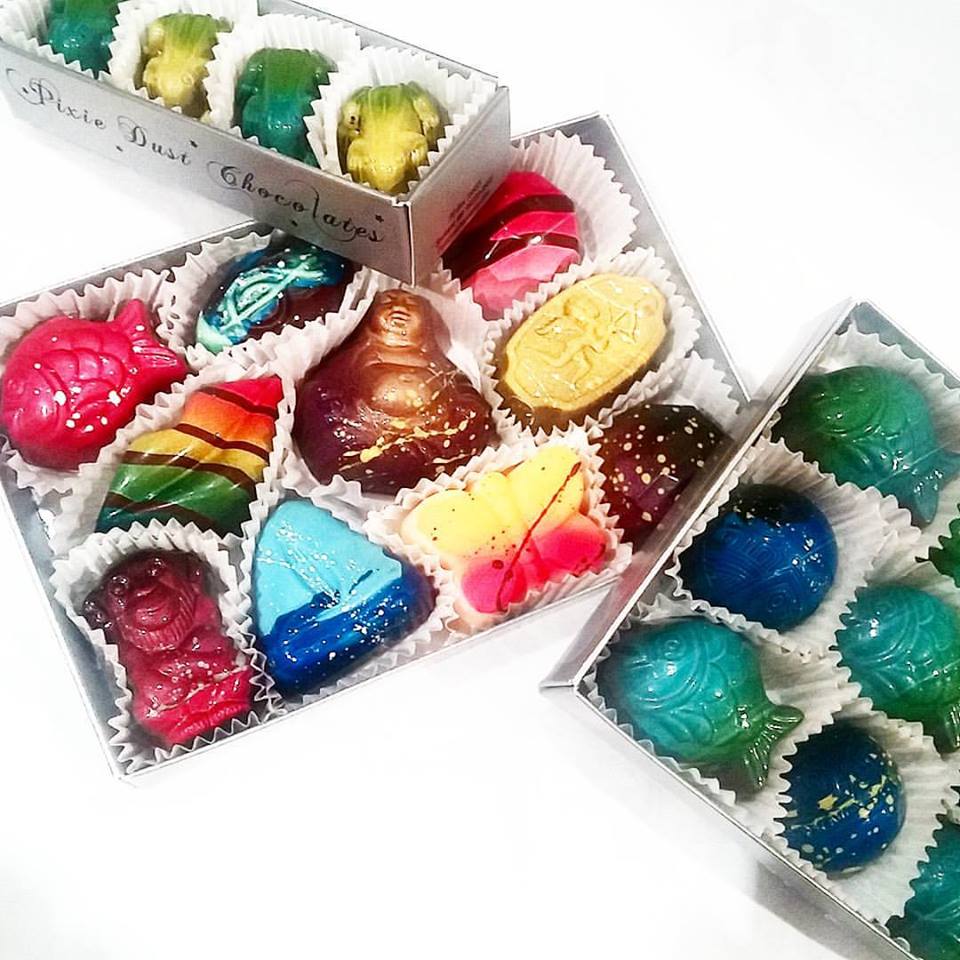
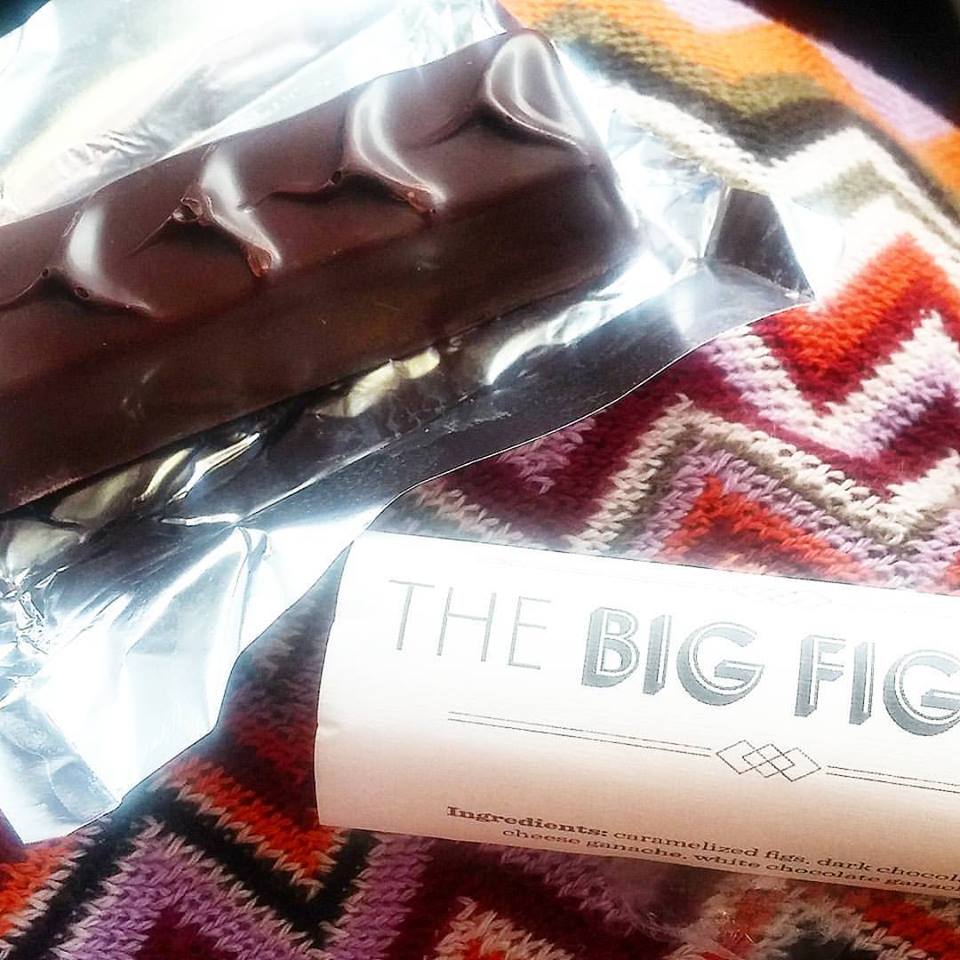
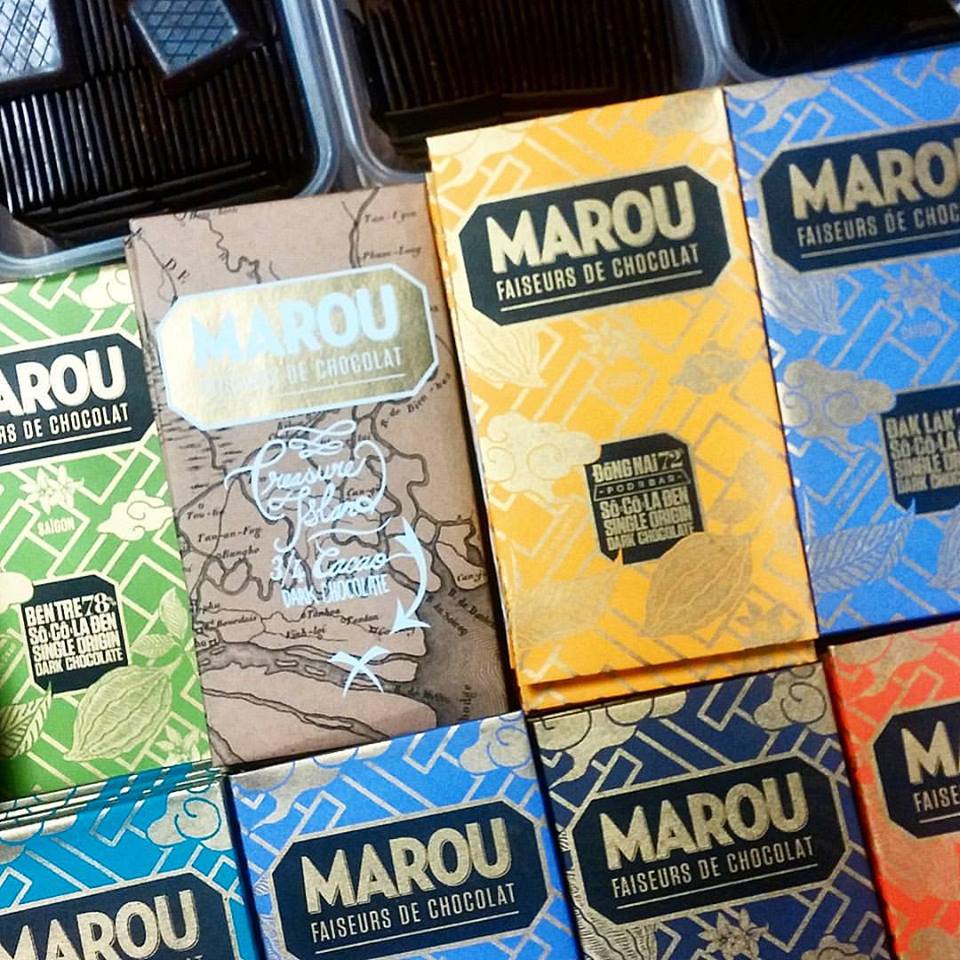
Cao Chocolates, Pixie Dust Chocolates, Videri Chocolate, Mar out Chocolate. See you next time, sweet spectacular Seattle!
Clockwise from upper left: Cao Chocolates (exciting Miami truffles), Pixie Dust Chocolates (artistry from Washington state), Videri Chocolate Factory (from Raleigh, NC, their Big Fig bar was my designated in-flight snack on the way home), Marou Chocolate (made in Vietnam from Vietnamese cacao, elegant packaging matches elegant flavors). See you at next year’s NW Chocolate Festival, sweet spectacular Seattle!

5 Chocolate Facts

by Valerie Beck, chocolate expert

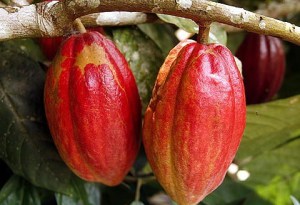
Cocoa beans, also called cacao, from which chocolate is made
  1. Chocolate comes from fruit

Chocolate is made from cocoa beans – also called cacao – which are the seeds of the fruit of the cocoa tree, native to South America. That’s why real chocolate (artisan chocolate, not industrial chocolate) is high in antioxidants, magnesium, fiber, vitamins, and other nutrients, making it a “superfood.”

Askinosie chocolate bar, made from Ecuador cacao and topped with cocoa nibs
  1. Real chocolate is low in sugar

An entire bar of artisan dark chocolate has less sugar than one serving of commercial yogurt, tomato sauce, or breakfast cereal. “Bean-to-bar” chocolate, also called craft chocolate, is a back-to-basics trend resulting in delicious artisan chocolate. It’s made with only two ingredients: cocoa beans and sugar. There’s no need for palm oil, soy lecithin, or any harmful or unpronounceable ingredients!

Chocolate heart by Chocolatasm
  1. You don’t want to risk not eating chocolate

Artisan dark chocolate can lessen the risk of death by stroke and heart disease by up to 45% according to a recent study. Also, people who eat dark chocolate at least once a week have a lower body mass index than people who never eat chocolate, because cacao boosts your metabolism. Hence the name of my popular talk: “Eat Chocolate, Be Skinny!” Why are the health benefits in dark chocolate, by the way, and not milk chocolate? Because milk blocks the body’s ability to absorb chocolate’s nutrients.

Kids should go to school
  1. You can avoid slavery chocolate

Today, 70% of the world’s cacao comes from West Africa, where 2 million children are forced to work in hazardous conditions on cocoa farms, so that the developed world can have cheap chocolate. Moreover, most West African cocoa beans are of lower quality due to climate change and diseased cocoa trees. Choose fair trade or “ethical chocolate” instead of “slavery chocolate,” and look for labels that indicate the origin of the cacao, just as you would for wine or coffee. This way, you and your family will enjoy delicious and sustainably made chocolate that’s good for farmer, foodie, and field. Ethical chocolate costs more, but it lasts longer – you might eat a bar in a week, instead of 30 seconds – it’s better for your body, and it lets kids go to school instead of to unpaid labor.

A small sample of the wide array of ethical chocolate
  1. The Chocolate Freedom Project is coming to a school or office near you

What is the Chocolate Freedom Project? It’s walking and talking to raise public awareness of where chocolate comes from. I’m planning to walk to Hershey, Pennsylvania, to raise awareness of child slavery on West African cocoa farms, and to promote ethical chocolate brands. Along the way, I’ll speak at schools, offices, chambers of commerce, and associations, and to food bloggers and community groups. Visit www.valeriebeckchocolateuplift.com, or contact me at chocolateuplift@gmail.com to schedule a presentation anywhere, schedule permitting.

Keep eating chocolate, and eat real chocolate!

Your friend in chocolate,

Valerie

3rd from right after speaking in Springfield Illinois
3rd from right after speaking in Springfield, Illinois
Fruit meets fruit with a Dorite doughnut at the Chicago Federal Plaza farmers market
Another way to enjoy fine chocolate: fruit meets fruit with a Dorite doughnut at the Chicago Federal Plaza farmers market
Handmade chocolate raspberry caramel candy bar by Whimsical Candy
Great chocolate is great in any delivery mechanism: handmade chocolate raspberry caramel candy bar by Whimsical Candy

Valerie Beck, The Chocolate Queen

CEO/Founder Chocolate Uplift

www.valeriebeckchocolateuplift.com

chocolateuplift@gmail.com

Instagram: @chocolateuplift

Nibmor Chocolate: Accessible Ethics

by Valerie Beck

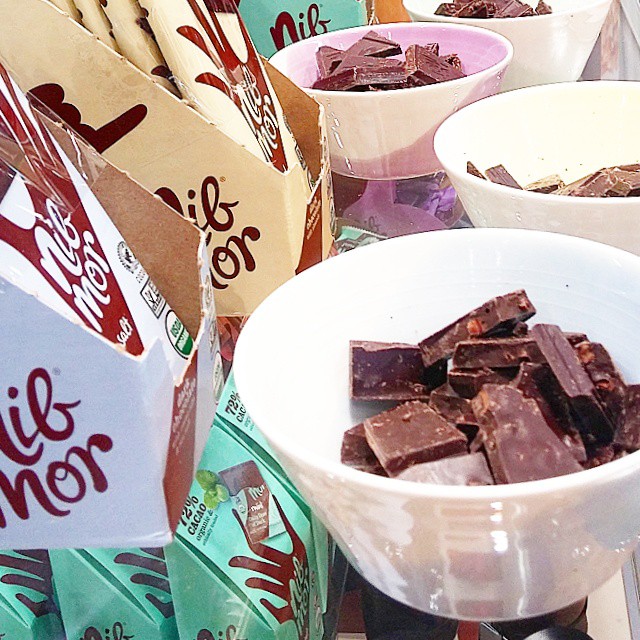
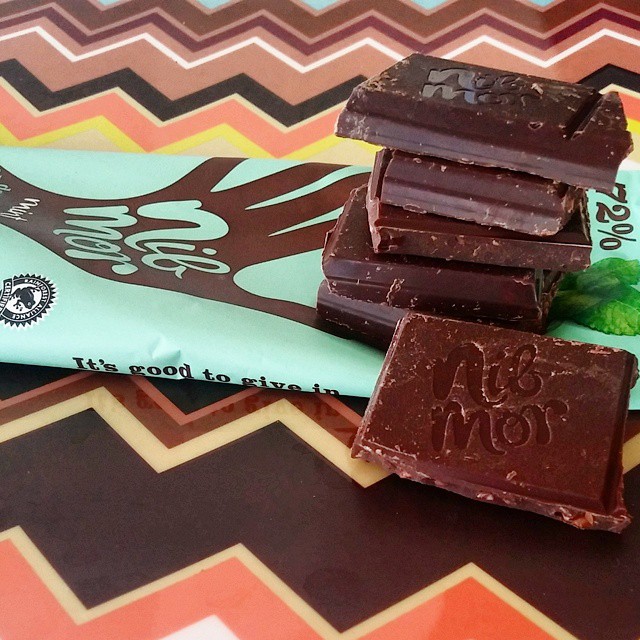
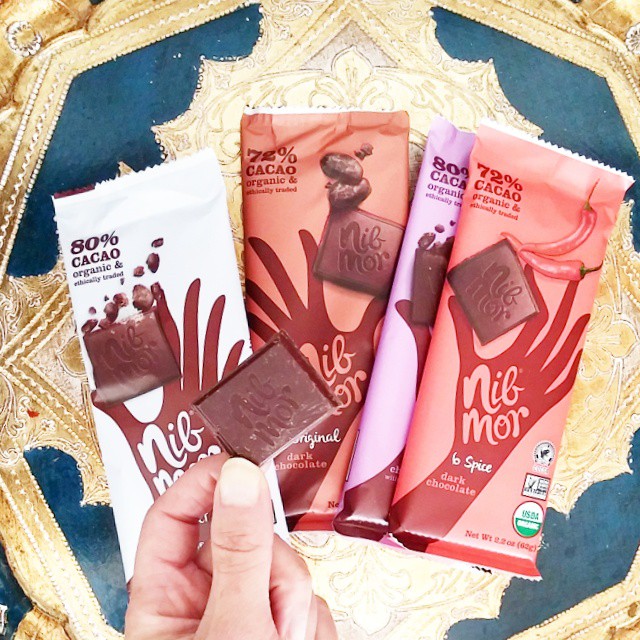
Smooth and flavorful Nibmor Chocolate.

“Do the right thing, and the right thing will come back to you.”

I’m reminded of these words of wisdom as I start this post, because Nibmor Chocolate (short for “nibble more”) is a delicious example of a business that has found success through ethics.

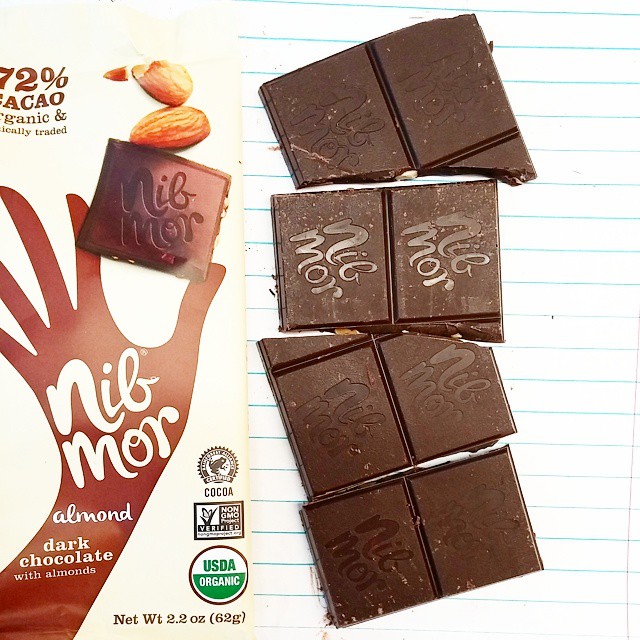
Certified ethical chocolate.
Certified ethical chocolate. And certified delicious by my Kendall College students and me; check out my #onthenotebook hashtag on Instagram.

Nibmor Chocolate is fair trade certified, so farmers are paid a fair wage for the cacao that they grow, and there’s no child slave labor in the supply chain as with most large commercial brands. Nibmor Chocolate is Rainforest Alliance certified, so the environment is not harmed. Nibmor Chocolate is certified organic and GMO-free, so chocolate eaters are not fed pesticides or genetically modified industrial food substitutes.

And, Nibmor Chocolate is priced accessibly, at 65 cents per “daily dose” square.

That’s accessible ethics!

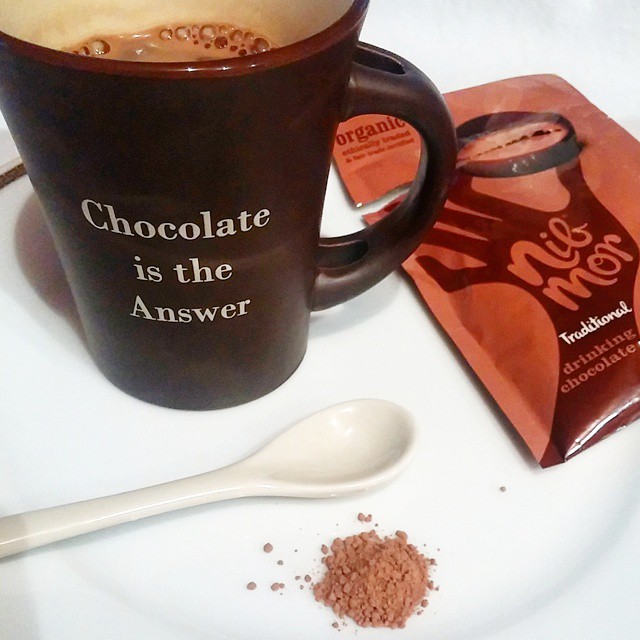
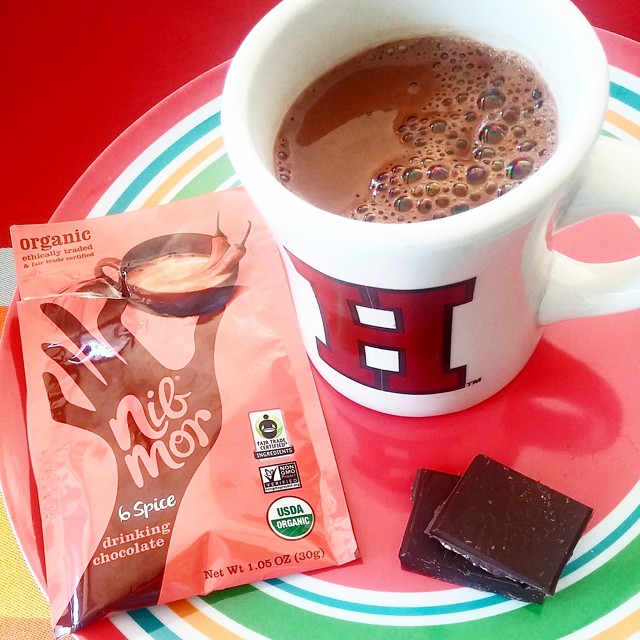
I made delicious vegan drinking chocolate with Nibmor and water. Nibmor founder Heather Terry recommends coconut milk too.
I made delicious vegan drinking chocolate with Nibmor drinking chocolate and water. Nibmor founder Heather Terry recommends coconut milk too.

And, Nibmor Chocolate is delicious. Let’s face it: flavor is king. Ethics and accessibility don’t necessarily guarantee success. Deliciousness guarantees smiles.

Refreshing Nibmor mint.
Refreshing Nibmor mint chocolate bar. Someone with whom I shared this bar said it tasted like Girl Scout cookies without the questionable ingredients, and I agree!
Particularly enjoyed the surprisingly mild Nibmor 80% with sea salt and nibs.
I particularly enjoyed the surprisingly mild Nibmor 80% with sea salt and nibs.
Yes, I put Nibmor eating chocolate into Nibmor drinking chocolate, and yes it was wonderful.

Onward and upward!

Your friend in chocolate,

Valerie

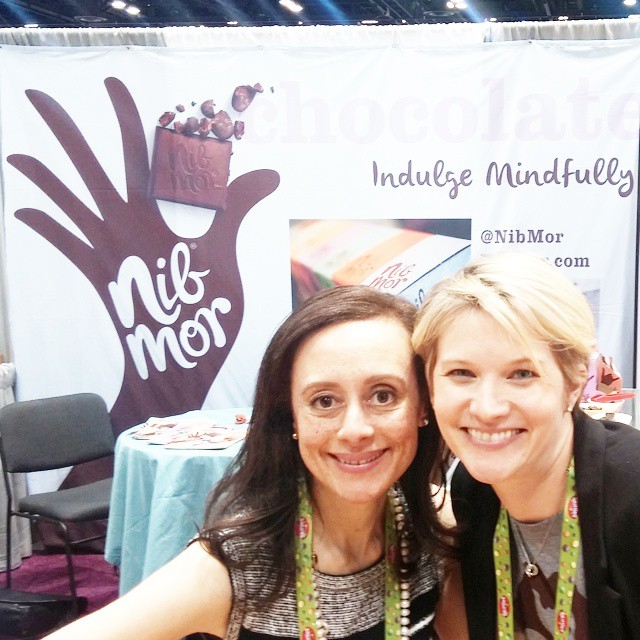
With Nibmor founder Heather Terry (right) at the Sweets and Snacks Expo.
With Nibmor founder Heather Terry (right) at the 2015 Sweets and Snacks Expo.

Valerie Beck, “The Chocolate Queen”

Chocolate Expert, Chocolate Consultant, Sweet Speaker

www.valeriebeckchocolateuplift.com

Instagram: chocolateuplift